
Your deck sits in full sun all day, and last year’s sealer has already turned gray and patchy. The choice isn’t about finding one perfect product. It’s about matching formula to your deck and your maintenance tolerance.
Oil-based penetrating sealers with UV-blocking pigments last longest. Water-based options make recoating simpler when that full-sun cycle comes around faster than you’d like.
Key Takeaways
- Full-sun decks need UV-inhibiting pigments in the form of transparent zinc oxide or iron oxide. Clear sealers without pigment gray and fail quickly.
- Semi-transparent and semi-solid stains outlast clear sealers in direct sun by 1-2 years because higher pigment loads block more UV damage.
- Oil-based sealers penetrate deeper into wood grain for longer protection. Water-based sealers form a film that’s easier to clean up and recoat without stripping.
- Recoat cycles shrink dramatically in full sun. Expect 1-3 years between applications versus 3-5 years for shaded decks with identical products.
- Wood condition determines product compatibility. New pressure-treated lumber needs breathable formulas, while old weathered decks benefit from thicker paraffin-modified oils that fill cracks.
- Climate shifts which formula works best. Humid Gulf Coast decks need mildew inhibitors alongside UV blockers. Dry Western sun prioritizes moisture retention over fungal resistance.
- Application timing drives penetration and lifespan. Applying in midday heat causes flash drying that prevents proper penetration and cuts lifespan by half.
Related Reading
A focused guide on choosing sealers specifically formulated for composite decking and sun-exposed surfaces.
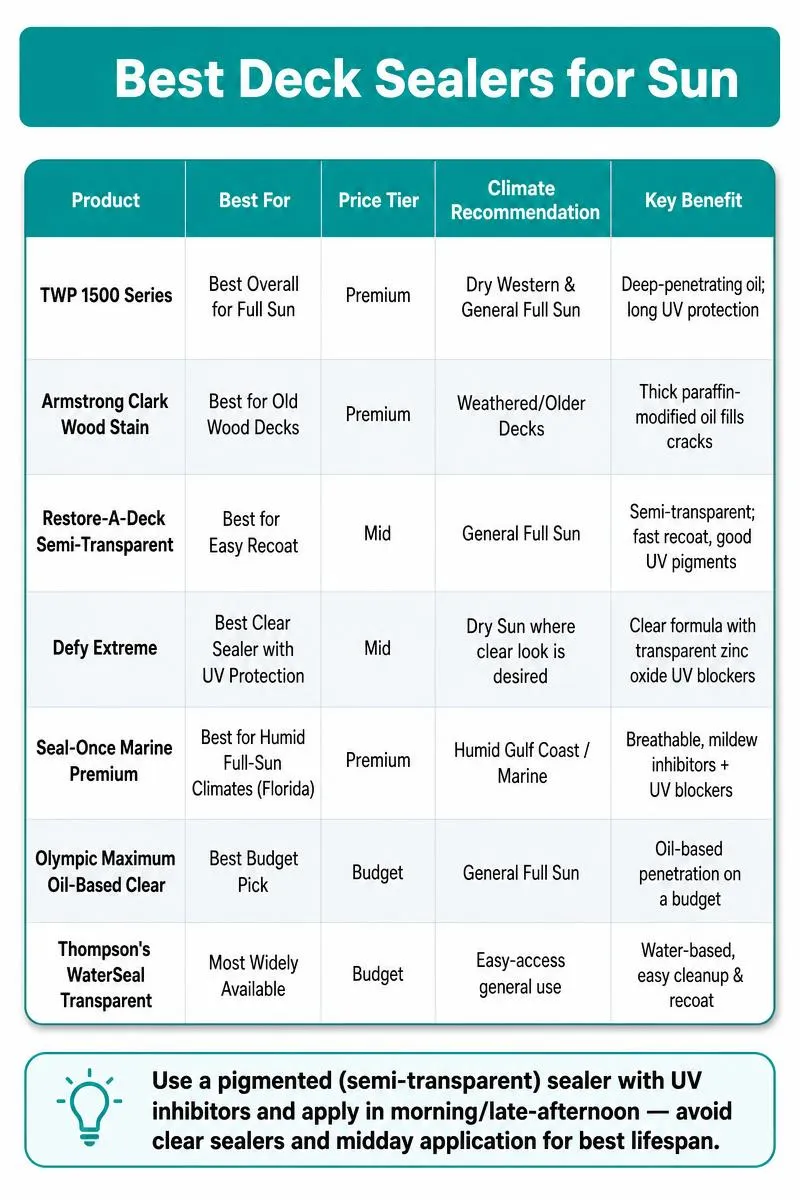
Quick Comparison: Best Deck Sealer For Full Sun
| Product | Best For | Price Tier | Climate Recommendation | Key Benefit |
|---|---|---|---|---|
| TWP 1500 Series | Best Overall for Full Sun | Premium | Dry Western & General Full Sun | Deep-penetrating oil; long UV protection |
| Armstrong Clark Wood Stain | Best for Old Wood Decks | Premium | Weathered/Older Decks | Thick paraffin-modified oil fills cracks |
| Restore-A-Deck Semi-Transparent | Best for Easy Recoat | Mid | General Full Sun | Semi-transparent; fast recoat, good UV pigments |
| Defy Extreme | Best Clear Sealer with UV Protection | Mid | Dry Sun where clear look is desired | Clear formula with transparent zinc oxide UV blockers |
| Seal-Once Marine Premium | Best for Humid Full-Sun Climates (Florida) | Premium | Humid Gulf Coast / Marine | Breathable, mildew inhibitors + UV blockers |
| Olympic Maximum Oil-Based Clear | Best Budget Pick | Budget | General Full Sun | Oil-based penetration on a budget |
| Thompson’s WaterSeal Transparent | Most Widely Available | Budget | Easy-access general use | Water-based, easy cleanup & recoat |
What Makes a Deck Sealer Work in Full Sun?
UV inhibitors are the only thing standing between your deck and rapid graying. Pigments scatter UV rays before they break down lignin, the natural polymer that gives wood its color. Clear sealers without these pigments might repel water, but they do almost nothing to slow photodegradation.
The opacity spectrum runs from transparent to semi-transparent to semi-solid to solid stain. More pigment means better UV protection but less visible wood grain. Semi-transparent hits the sweet spot for most full-sun decks, extending life to 2-3 years while keeping the natural wood pattern visible.
The base chemistry splits into oil-based and water-based formulas, and each behaves differently under constant sun exposure.
1. Oil-Based Sealers
Oil-based products penetrate deep into wood fibers rather than sitting on the surface. This gives them better durability in full sun because there’s no film to peel or flake off. You’ll see the grain clearly since oil enhances rather than covers wood texture.
The tradeoff is a 24-48 hour cure time and cleanup that requires mineral spirits. Recoating gets complicated because you typically need to strip or heavily sand the old coat before applying fresh sealer. The oil fills wood pores so thoroughly that new product can’t penetrate over the old layer.
2. Water-Based Sealers
Water-based sealers form a thin protective film on the wood surface. This makes them easier to clean up with soap and water and allows recoating without stripping in most cases. They dry in 2-4 hours, so you can finish a deck in one day.
The film can wear unevenly in high-traffic areas, especially where full sun combines with foot traffic on stairs or main walkways. You’ll see lighter patches where the coating has worn through before the rest of the deck needs attention.
Top 7 Deck Sealers for Full Sun
These seven products cover the range of opacity levels, base chemistries, and price points for full-sun deck protection.
1. TWP 1500 Series: Best Overall for Full Sun
This semi-transparent oil-based sealer delivers the longest protection cycle you’ll find without going to a solid stain. UV-blocking pigments slow graying for 2-3 years even on decks with 8+ hours of daily direct sun. The oil base penetrates pressure-treated lumber and older weathered wood equally well.
You’ll need to clean the deck thoroughly before application since TWP won’t bond over dirt or previous film-forming sealers. Once it’s down, the protection holds up through intense sun better than most premium competitors.
2. Armstrong Clark Wood Stain: Best for Old Wood Decks
Paraffin-modified oil fills cracks and weathered grain that develop in decks after years of sun exposure. This sealer hides surface imperfections while delivering serious UV protection through its semi-transparent pigment load. The oil base soaks into sun-damaged wood fibers that water-based products can’t reach.
Application goes on thicker than standard oils, which means you’re covering imperfections and blocking UV in one step. Expect a 2-3 year cycle before recoating, and plan for stripping or heavy sanding when that time comes.
3. Restore-A-Deck Semi-Transparent: Best for Easy Recoat
This water-based option solves the biggest headache with oil sealers. You can recoat without stripping first. Clean the deck, let it dry, and apply the new coat.
UV resistance holds up well for a water-based product, though you’re looking at a 1-2 year recoat cycle in full sun. Oil-based products deliver 2-3 years instead.
The film can show uneven wear on stair treads and high-traffic zones. But the easy recoat process means touching up takes hours not a weekend.
4. Defy Extreme: Best Clear Sealer with UV Protection
Zinc oxide blocks UV rays in a water-based clear formula, which is rare at this price point. Most clear sealers offer zero UV protection and fail within a year in full sun. Defy Extreme extends that to 18-24 months while keeping wood grain fully visible.
You’re still recoating more often than semi-transparent options. But if you want natural wood appearance with actual sun protection instead of just water repellency, this is the product that delivers both.
5. Seal-Once Marine Premium: Best for Humid Full-Sun Climates (Florida)
Marine-grade formula combines UV and mildew resistance specifically engineered for Gulf Coast and Southern humidity. Standard deck sealers focus only on UV and water. In Florida’s climate, mold growth destroys unprotected wood as fast as sun damage.
This water-based sealer addresses both threats. The finish stays cleaner longer in humid environments where other sealers develop black spotting within months. The deck stays protected from sun and mold with recoating every 1-2 years.
6. Olympic Maximum Oil-Based Clear: Best Budget Pick
You’ll find this at every big-box store. Oil base outperforms cheaper alternatives at the same price for waterproofing and UV protection. It won’t last as long as TWP or Armstrong Clark.
Expect 12-18 months in full sun before needing a fresh coat. The lower upfront cost and wide availability make it workable for budget-conscious homeowners. Application and cleanup follow standard oil-based procedures with mineral spirits and longer dry times.
The durability gap between this and premium oils becomes obvious after year two.
7. Thompson’s WaterSeal Transparent: Most Widely Available
This entry-level clear sealer sits on every hardware store shelf. It requires annual recoating in sun to prevent graying. It’s the baseline product most homeowners try first before realizing clear sealers can’t handle all-day sun.
Water repellency works fine, and the price is low. Plan on this being a temporary solution before upgrading to a product with real UV-blocking chemistry.
How to Choose the Right Sealer for Your Deck
Consider these factors when choosing your sealer:
- Wood type drives formula selection. New pressure-treated lumber needs breathable oils that soak in as the wood dries over 6-12 months, while old weathered decks benefit from thick paraffin-modified oils. Cedar and redwood take both oil and water-based products well.
- Opacity preference controls grain visibility. Semi-transparent shows natural patterns while blocking UV for 2-3 years, and semi-solid covers more flaws while lasting slightly longer. Transparent products keep full grain visibility but cut durability to 1-2 years even with UV inhibitors.
- Climate changes which properties matter. Humid Gulf Coast decks need mildew resistance alongside UV blocking. Dry Southwestern heat prioritizes moisture retention, while Northern partial-shade decks can use lighter UV protection.
- Maintenance tolerance is the question. Would you rather do an easy annual recoat with a water-based product, or a heavier strip-and-recoat job every 2-3 years with oil-based durability? Both approaches work with different time commitments.
Related Reading
Transparent deck stain options
Comparisons of clear and transparent stains that explain how they perform under heavy UV exposure.
Application Tips for Full-Sun Decks
Apply sealer in early morning before 10 AM or after 4 PM when direct sun isn’t heating the deck surface. Midday heat causes flash drying that prevents proper penetration and cuts lifespan in half. The deck should be cool to the touch when you start.
Prep determines how long your sealer lasts more than product choice does. Follow these steps:
- Clean with a deck cleaner to remove dirt and mildew, then apply a wood brightener to open the grain. Let the wood dry completely for 24-48 hours before sealing. Moisture trapped under the sealer leads to early failure.
- Back-brushing drives sealer deeper even if you’re applying with a roller or sprayer. Spray or roll a section, then immediately brush perpendicular to the grain to work product into the wood fibers. This step matters most with full-sun decks because deeper penetration means longer UV protection.
- Two thin coats block UV better than one thick coat. The first coat soaks in and the second builds surface protection without creating thick spots that cure unevenly or stay tacky in the heat.
FAQs
What is the longest lasting deck sealer for full sun?
TWP 1500 Series and Armstrong Clark both deliver 2-3 year protection cycles in full sun. That’s about as long as you’ll get from a penetrating sealer before UV breaks down the protective layer. Solid stains last longer but completely hide wood grain.
Is there anything better than Thompson’s WaterSeal for UV protection?
Nearly every product on this list outperforms Thompson’s for UV protection. Thompson’s is a water repellent with minimal UV blockers. Products like TWP 1500, Armstrong Clark, and Defy Extreme include pigments that scatter UV.
How do I protect my deck from the sun?
Apply sealer with UV-inhibiting pigments like transparent zinc oxide or iron oxide, not just a water repellent. Semi-transparent or semi-solid stains provide better protection than clear sealers. Recoat on schedule before the old sealer fails completely, usually every 1-3 years for full-sun exposure.
Is oil-based or water-based deck stain better for full sun?
Oil-based penetrates deeper and lasts 2-3 years in full sun, but requires stripping before recoating. Water-based lasts 1-2 years but you can recoat without stripping. Choose oil-based for maximum durability, water-based for easier maintenance.
What deck stains will protect from UV graying?
Any sealer with semi-transparent or higher opacity that lists UV inhibitors or UV blockers in the formula. TWP 1500, Armstrong Clark, Restore-A-Deck Semi-Transparent, and Defy Extreme all include pigments that slow graying. Clear sealers like Thompson’s offer minimal UV protection.
How often should you re-stain a deck in full sun?
Every 1-3 years depending on the product and opacity level. Semi-transparent oil-based sealers like TWP last 2-3 years, while water-based products need recoating every 1-2 years. Clear sealers require annual maintenance, and shaded decks with the same products last 3-5 years.
Can you stain over old deck stain without stripping?
Water-based sealers recoat without stripping if you’re using products like Restore-A-Deck. Oil-based sealers typically require stripping or heavy sanding because the saturated wood won’t absorb new product over the old penetrating layer. Check the product instructions, as some newer oils allow light recoating.
Are expensive deck stains worth it for sunny decks?
Yes, premium sealers with real UV blockers last noticeably longer than budget options in full sun. You’ll recoat less often with premium products. This saves labor time and total product cost over a decade.
What is the best deck sealer for full sun in Florida?
Seal-Once Marine Premium combines UV protection with mildew resistance for Florida’s humid climate. TWP 1500 also works well if you add a separate mildew treatment. Avoid products without fungal inhibitors since humidity causes mold as fast as sun causes graying.
How long should you wait to seal a new deck?
Wait for pressure-treated to dry before sealing, typically 3-6 months so the wood can release treatment chemicals and moisture. Test by sprinkling water on the surface, and if it beads up, the wood is still too wet. Cedar and redwood can be sealed immediately if dry.
Final Verdict
TWP 1500 and Armstrong Clark lead the full-sun category for durability without hiding your wood grain completely. Both deliver 2-3 year protection cycles with proper application. The oil base penetrates deep enough to handle sun exposure that destroys cheaper sealers in 12 months.
If you have an older deck with visible weathering, Armstrong Clark fills damage while blocking UV. Its paraffin-modified formula soaks into weathered grain that other products can’t reach.
Defy Extreme is the clear winner for homeowners who want natural wood appearance with real UV protection. You’ll recoat more often than with semi-transparent oils, but zinc oxide actually blocks UV instead of just repelling water.
Match your product choice to your wood condition and how often you’re willing to recoat. A water-based sealer you can maintain easily beats a premium oil product you’ll avoid reapplying because the prep work is too intensive.
If your full-sun deck is in the Fish Hawk, FL metro area and you want it done right the first time, our team handles deck prep and sealing with products suited to Florida sun and humidity. See how we approach weatherproofing and finishes with our deck refinishing services, and we will evaluate your wood and recommend the right sealer without guesswork. Call to schedule an assessment at 813-860-8661.
Related Reading
Recommendations tailored to redwood decks, including UV protection and maintenance tips for sunny climates.