
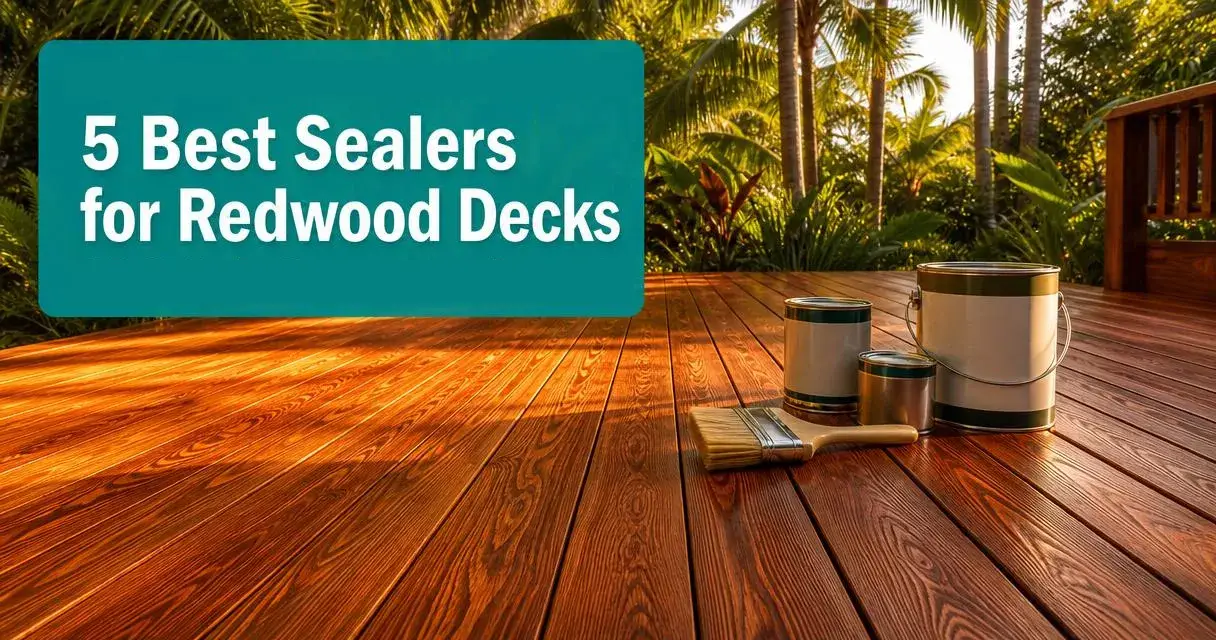
Redwood’s open grain and high tannin content make it one of the trickier deck woods to seal correctly. Water-based sealers can flash or react with those tannins, while the wrong UV protection leaves your deck gray. There’s no universal best sealer, but the right choice depends on whether you prioritize a natural look, maximum longevity, or minimal maintenance.
Key Takeaways
- Redwood’s high tannin content reacts poorly with water-based sealers, making oil-based formulas the safer default for most decks
- Clear sealers need reapplication every 1 – 2 years, while semi-transparent stains stretch to 2 – 4 years between coats
- UV protection is the #1 performance factor for redwood: the wood grays fast without it, regardless of moisture resistance
- New redwood should weather outdoors for 2 – 4 weeks before first sealing to let surface oils dissipate
- Armstrong Clark and Defy Extreme outperform big-box brands on redwood due to better penetration and UV inhibitors
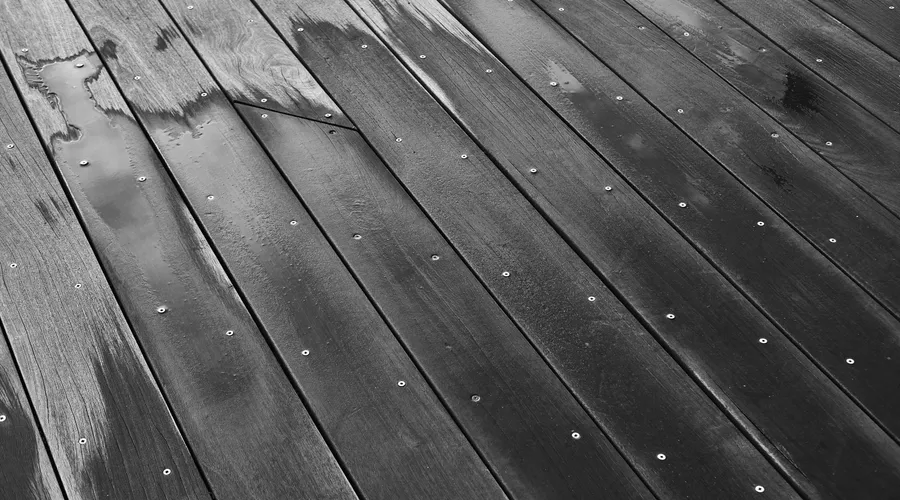
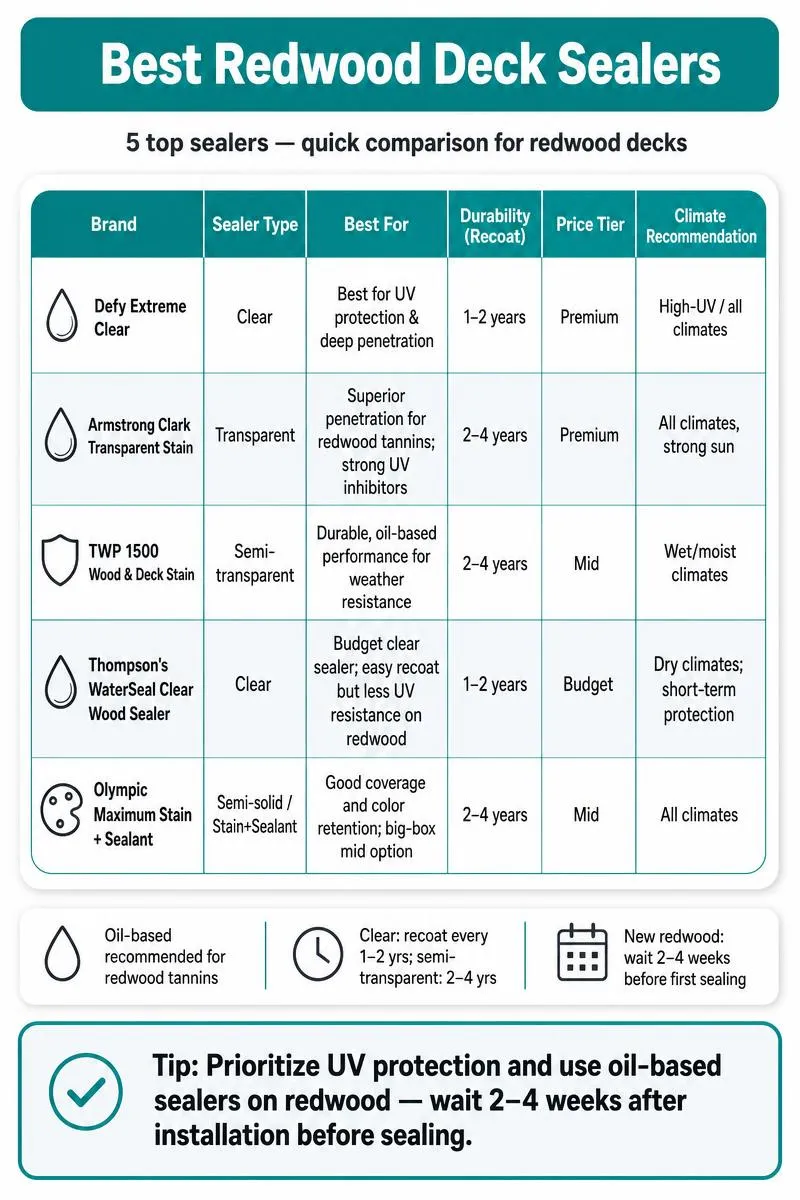
Best Sealer For Redwood Deck at a Glance
| Brand | Sealer Type | Best For | Durability (Recoat) | Price Tier | Climate Recommendation |
|---|---|---|---|---|---|
| Defy Extreme Clear | Clear | Best for UV protection & deep penetration | 1–2 years | Premium | High-UV / all climates |
| Armstrong Clark Transparent Stain | Transparent | Superior penetration for redwood tannins; strong UV inhibitors | 2–4 years | Premium | All climates, strong sun |
| TWP 1500 Wood & Deck Stain | Semi-transparent | Durable, oil-based performance for weather resistance | 2–4 years | Mid | Wet/moist climates |
| Thompson’s WaterSeal Clear Wood Sealer | Clear | Budget clear sealer; easy recoat but less UV resistance on redwood | 1–2 years | Budget | Dry climates; short-term protection |
| Olympic Maximum Stain + Sealant | Semi-solid / Stain+Sealant | Good coverage and color retention; big-box mid option | 2–4 years | Mid | All climates |
Oil-Based vs Water-Based Sealers for Redwood
Oil-based sealers penetrate deeper into redwood’s open grain structure. This helps them lock into the wood fibers rather than sitting on the surface. They’re also chemically compatible with redwood’s tannins, so you won’t see the blotching or uneven absorption that water-based products sometimes cause on dense grain sections.
The tradeoff is longer dry times, solvent cleanup, and stronger odor during application.
Water-based sealers dry faster and clean up with soap and water. This makes them easier for DIY projects. But redwood’s natural oils can prevent even absorption on newer wood, leading to a patchy finish.
Water-based formulas work best on weathered redwood in these scenarios:
- The wood has lost surface oils from weathering, allowing better sealer absorption
- The deck sits in shade where UV exposure stays consistently low
For most redwood decks, oil-based sealers deliver better long-term performance. The deeper penetration suits redwood’s porous structure, and you’re less likely to see early failures from tannin interaction or uneven coverage.
Related Reading
A buyer’s guide to choosing transparent deck stains, how they preserve wood grain and perform on softwoods like redwood.
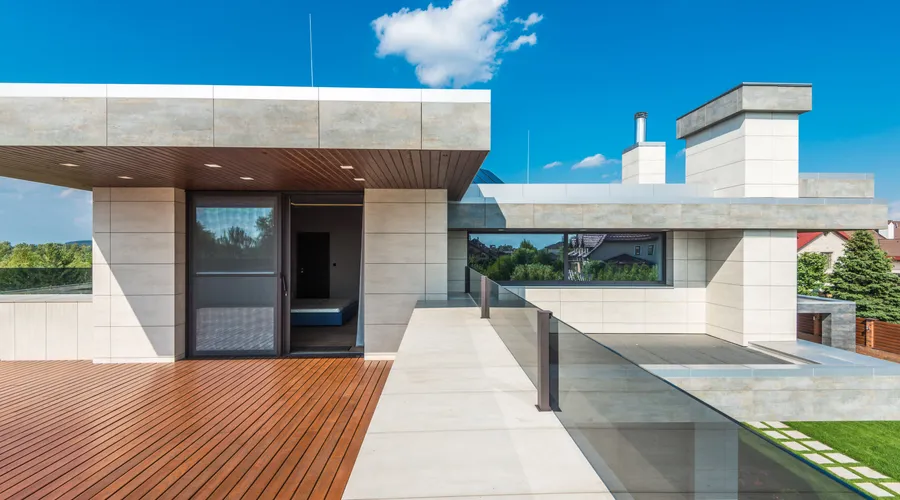
Clear vs Semi-Transparent vs Solid Sealers
Three finish types offer different tradeoffs for redwood:
- Clear sealers let the natural color show through completely. They offer the shortest protection span because UV inhibitors break down fastest without pigment to block sunlight. Expect reapplication every 1 – 2 years.
- Semi-transparent stains add a slight tint while showing the wood grain. This is the sweet spot for most redwood decks. Pigment physically blocks sunlight, extending protection to 2 – 4 years. Choose tints that enhance redwood’s red tones or shift toward brown.
- Solid stains cover the grain entirely and last the longest, often 4 – 6 years. You lose redwood’s visual appeal with a solid stain. These make sense on older decks with weathering or stains you want to hide.
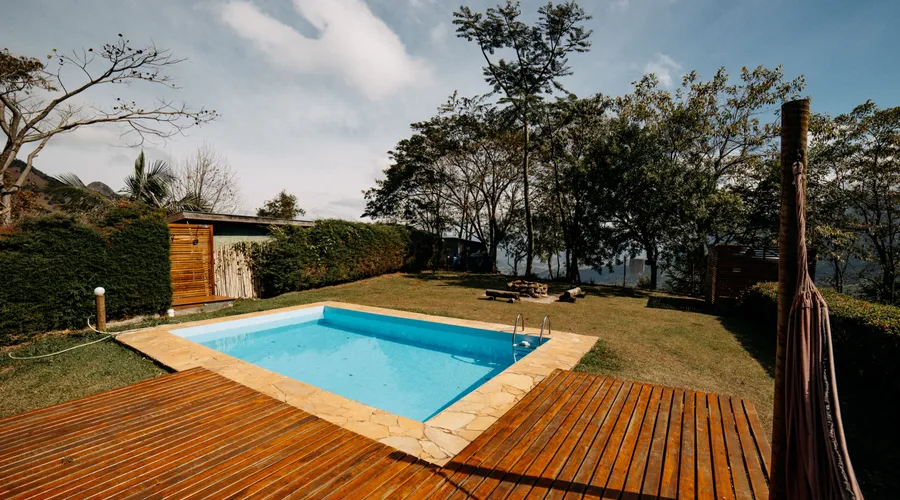
The 5 Best Sealers for Redwood Decks
Each sealer below has been tested specifically on redwood and performs well in the conditions where redwood decks are most common.
1. Defy Extreme Clear
This water-based clear sealer uses zinc nano-particles for UV protection. That’s unusual in a clear formula. It dries fast, typically within 1 – 2 hours, and cleanup is straightforward with water.
The zinc particles provide better UV resistance than most clear sealers, though not as strong as pigmented options.
Best for homeowners who want the natural redwood look without dealing with oil-based cleanup. It performs well on weathered redwood and in moderate climates. Expect reapplication every 1 – 2 years depending on sun exposure.
It’s VOC-compliant nationwide and has minimal odor during application.
2. Armstrong Clark Transparent Stain
This oil-based penetrating formula soaks deep into redwood’s open grain. It includes a slight color enhancement that brings out the wood’s natural red tones. The penetration depth anchors into the wood fibers rather than forming a surface film that can peel.
Top pick for redwood longevity across most climates. The transparent tint adds just enough pigment for strong UV without hiding grain. You’ll get 2 – 3 years between coats in full sun, 3 – 4 years in partial shade.
It requires mineral spirits for cleanup and takes 24 – 48 hours to dry fully. The performance justifies the extra effort.
3. TWP 1500 Wood & Deck Stain
This oil-based semi-transparent stain contains high-level UV inhibitors. It comes in multiple tint options that work well with redwood’s natural color. It’s designed for decks in harsh sun exposure and holds up in extreme UV climates.
Best for high-sun exposure decks where UV degradation happens fastest. The semi-transparent finish blocks UV while showing grain. It provides 2 – 4 years of protection.
It’s VOC-compliant in most states but check local regulations before buying. Application requires a pump sprayer or pad applicator for best results. You’ll need mineral spirits for cleanup.
4. Thompson’s WaterSeal Clear Wood Sealer
This is the budget option you’ll find at every hardware store. It’s a clear water-based sealer that goes on easily and dries within hours. The UV protection is noticeably weaker than Armstrong Clark or Defy Extreme.
Best for shaded redwood decks or budget-limited projects where UV exposure isn’t the main concern. You’ll need to reapply every 1 – 2 years. In full sun you might see graying by year one.
For covered areas where moisture resistance matters more than UV blocking, it’s a functional low-cost choice.
5. Olympic Maximum Stain + Sealant
This oil-based semi-transparent product combines stain and sealer in one formula. That saves a step during application. It’s designed for older or weathered wood and comes in tints that can revive faded redwood or shift the color slightly.
Best all-in-one for older redwood decks that have lost their original color. The semi-transparent formula provides 2 – 3 years of protection. The stain component evens out color inconsistencies from weathering.
It requires proper surface prep, including stripping and brightening old finishes before application. The combo formula simplifies the finishing process.
Which Should You Choose?
- If you want the natural redwood look with minimal maintenance, Armstrong Clark offers the best balance of penetration depth, UV protection, and reapplication frequency. You’ll get 3 – 4 years between coats in typical conditions. The transparent tint enhances rather than hides the wood.
- For a clear finish with lower environmental impact, Defy Extreme Clear is the strongest water-based option. It won’t penetrate as deeply as oil-based products, but zinc UV outperforms standard clears. The fast dry time makes application easier.
- For tight budgets or shaded decks, Thompson’s WaterSeal handles moisture resistance adequately where UV exposure is low. Plan on reapplying every year.
- For older decks with faded color, Olympic Maximum combines color correction and sealing in one step. It simplifies restoration on weathered wood.
- For decks in full sun, especially in high-altitude or southern climates, TWP 1500 delivers the strongest UV resistance in a semi-transparent formula. The extra UV inhibitors justify the higher cost when sun exposure is extreme.
Related Reading
Comparative review of semi‑transparent stains covering opacity, UV protection, and when they’re the right choice for…
FAQs
Should you seal a redwood deck?
Yes. Redwood resists rot naturally, but UV radiation still breaks down the wood fibers and turns the surface gray within a year. Sealing protects against both UV damage and moisture intrusion. This extends the deck’s lifespan and keeps it looking good.
What is the best finish for a redwood deck?
Semi-transparent stains offer the best balance for most homeowners. You get 2 – 4 years of protection with the wood grain staying visible. The pigment provides strong UV resistance.
Clear finishes look great initially but need reapplication every 1 – 2 years.
Is there anything better than Thompson’s WaterSeal?
For redwood specifically, yes. Armstrong Clark and Defy Extreme both provide stronger UV protection and better penetration on redwood’s open grain. Thompson’s works in shaded areas, but it underperforms in full sun compared to those two.
How long should new redwood weather before sealing?
Wait 2 – 4 weeks after installation. New redwood contains surface oils that prevent sealers from absorbing. Weathering lets those oils dissipate and opens the grain so the sealer can penetrate.
You’ll know it’s ready when water beads on the surface break down within a few minutes instead of sitting in round droplets.
Can you apply sealer over old stain on redwood?
Only if the old stain is still intact and adhering well. If you see peeling, flaking, or significant wear, strip the old finish with a deck stripper and brighten the wood with oxalic acid before applying new sealer. Fresh sealer won’t bond over failing stain.
How often should you reseal a redwood deck?
Clear sealers need reapplication every 1 – 2 years, semi-transparent stains every 2 – 4 years. Sun exposure is the biggest variable.
Decks in full southern exposure need more frequent resealing than shaded or north-facing decks. Watch for water absorption: when water soaks in instead of beading, it’s time to reseal.
Final Verdict
Armstrong Clark Transparent Stain is the strongest overall choice for most redwood decks. The oil-based formula penetrates deep into redwood’s grain. The transparent tint provides excellent UV protection without hiding the wood, and you’ll get 3 – 4 years between applications in typical conditions.
It requires more effort during application than water-based options, but the performance difference is significant.
For homeowners who prefer water-based products or need faster dry times, Defy Extreme Clear is the best alternative. The zinc nano-particle UV protection outperforms standard clear sealers, and the environmental profile is cleaner than oil-based options.
Match your sealer choice to your deck’s sun exposure and your maintenance tolerance. If you’re in full sun and want to maximize time between reapplications, choose a semi-transparent oil-based product like Armstrong Clark or TWP 1500. If you’re willing to reseal more frequently for a completely natural look, Defy Extreme Clear delivers solid performance without the solvent cleanup.
If your redwood deck is in the Fish Hawk, FL metro area and you’d rather not tackle sealing yourself, our crew handles deck prep, staining, and sealing year-round. We work with redwood, cedar, and pressure-treated decks and can recommend the right sealer for Florida’s heat and humidity. Visit our deck refinishing services page to see what we offer, or call 813-860-8661 for a free estimate.