
Most composite decking manufacturers tell you their boards are maintenance-free. If you own a deck built before 2010 or live in a high-UV climate, you’ve probably noticed fading, mold stains, and water absorption.
Modern capped composite like Trex Transcend or TimberTech AZEK has a protective polymer shell that makes sealing unnecessary and often harmful. Older uncapped composite benefits from the right penetrating sealer.
Key Takeaways
- Capped composite decking (post-2010 Trex, TimberTech) has built-in protection, and sealing voids warranty and traps moisture underneath
- Uncapped or first-generation composite (pre-2010) absorbs water and benefits from penetrating sealers with nano-technology or siloxane protection
- Nano-particle and siloxane sealers block UV and moisture without creating a film that peels or cracks
- Film-forming sealers like polyurethane and acrylic trap moisture and peel quickly, causing more damage than they prevent
- Sealing won’t fix scratches or structural damage already present in the boards
- Expect to reseal uncapped composite every 2-3 years in high-sun climates like Florida, longer in moderate conditions
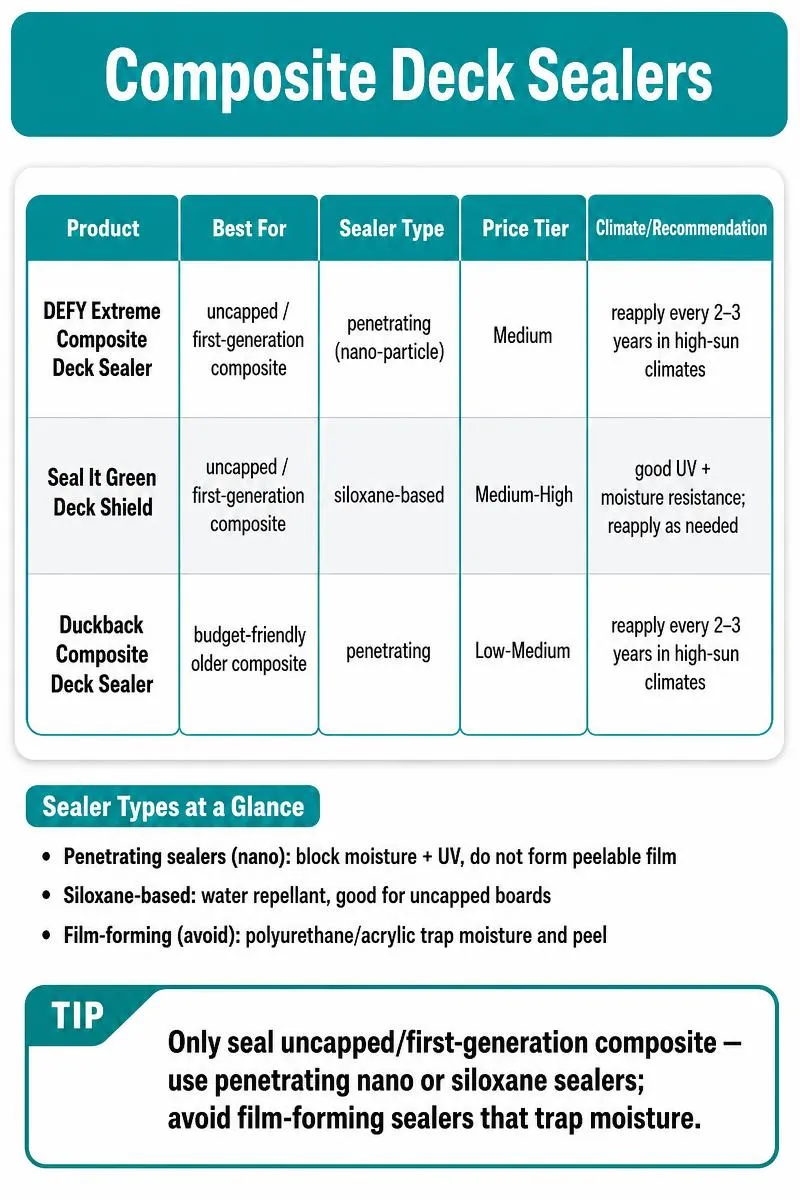
Quick Comparison: Best Sealer For Composite Decking
| Product | Best For | Sealer Type | Price Tier | Climate/Recommendation |
|---|---|---|---|---|
| DEFY Extreme Composite Deck Sealer | Uncapped / 1st-gen composite | Penetrating (nano) | Medium | Reapply every 2–3 years in high-sun climates |
| Seal It Green Deck Shield | Uncapped / 1st-gen composite | Siloxane-based | Medium-High | Good UV + moisture resistance; reapply as needed |
| Duckback Composite Deck Sealer | Budget-friendly older composite | Penetrating | Low-Medium | Reapply every 2–3 years in high-sun climates |
Do You Actually Need to Seal Composite Decking?
Most modern composite decking doesn’t need sealing and actively rejects it. If you have Trex Transcend, Trex Enhance, Trex Select, TimberTech AZEK, or Fiberon Horizon, the polymer cap does the job a sealer would do. Applying sealer to these boards voids your warranty and traps moisture under the sealer, creating mold problems that wouldn’t exist otherwise.
Sealing makes sense when you have uncapped or first-generation composite that’s showing gray weathering, absorbing water, or developing mold stains in the board pores. High-traffic areas where food and beverage spills penetrate the surface also benefit from a water-repellent barrier. Florida and coastal climates with intense year-round UV accelerate fading on porous composite, making sealing a practical maintenance step.
Penetrating sealers do several things for uncapped composite:
- Reduce UV fading and block tannin bleed from wood fibers inside the boards
- Prevent mold spores from colonizing porous surfaces
- Make routine cleaning faster by creating a water-repellent barrier
They don’t restore color or fix structural issues. They slow down water and sun damage over time.
Related Reading
Best semi-transparent deck stain
Compare top semi-transparent deck stains and how they balance grain visibility with protection — useful if you’re…

Types of Composite Deck Sealers
Not all sealers work the same way on composite materials. The chemistry matters more than the brand name.
1. Penetrating Sealers with Nano-Particles
Products like DEFY Extreme Composite Deck Sealer and Deck Shield use nano-particle technology that soaks into porous composite without leaving a surface film. DEFY uses zinc nano-particles that actively resist mold and algae at a molecular level. These sealers block moisture and UV penetration deep in the board, not just on the surface where film products sit.
You won’t see a shiny finish or color change with nano-sealers. They’re designed for older Trex, generic composite brands, and any uncapped board that absorbs water. If your deck has recurring mold even after cleaning, nano-particle formulas make surfaces inhospitable to spores.
2. Siloxane-Based Sealers
Siloxane chemistry creates a water-repellent barrier that lets moisture vapor escape from below, preventing the trapped-water problems film sealers cause. These products typically last 2-3 years before you need to reapply, and reapplication doesn’t require stripping or sanding. You clean the deck and apply a fresh coat.
Siloxane sealers work well in rainy or humid climates where composite stays damp for extended periods. They’re also easier for DIY application than solvent-based products because most siloxane formulas offer water-based cleanup without solvents.
3. Film-Forming Sealers (Avoid)
Polyurethane, acrylic, and oil-based deck stains marketed for composite create a surface layer that looks good for a few months, then fails catastrophically. Composite expands and contracts more than wood as temperature changes. Film products crack and peel as boards move, and once the film breaks, water gets underneath and stays trapped.
Never use Thompson’s Water Seal, traditional deck stains, or anything that requires chemical stripping before you can recoat. These products were designed for wood, not plastic-wood composites, and the failure mode creates more work than doing nothing.
Top Composite Deck Sealers Compared
These three products represent different approaches to protecting uncapped composite, each with specific advantages.
1. DEFY Extreme Composite Deck Sealer
DEFY uses zinc nano-particles that resist mold and algae growth with a clear finish that doesn’t alter your deck’s appearance. Coverage runs 150-250 square feet per gallon depending on how porous your boards are. First-generation composite soaks up more product than newer uncapped boards.
This sealer excels in Florida and coastal areas where mold grows aggressively and UV exposure is year-round. If you’ve cleaned your deck three times in one summer and mold keeps coming back, DEFY’s active mold resistance stops recurring mold growth.
2. Seal It Green Deck Shield
Deck Shield combines nano-particle water barriers with UV blockers in a non-toxic formula that protects nearby plants and pets during application. The manufacturer claims 3+ years of protection, and users in dry climates report even longer performance. Humid areas see closer to 2-3 years before water stops beading.
Eco-conscious homeowners prefer this option when decks are close to landscaping or when runoff concerns matter. The water-based formula has minimal odor during application and dries clear without color change.
3. Duckback Composite Deck Sealer
Duckback offers a mid-range price point with availability at major home improvement retailers. The water-based formula offers easier cleanup than solvent sealers, and performance is adequate for decks with moderate fading or minor staining issues.
This product works for budget-conscious DIYers who want basic protection without specialty online ordering. It won’t outperform nano-particle sealers in extreme climates, but for a deck that’s just starting to show wear, it extends surface life at lower cost.
How to Apply Composite Deck Sealer
Proper preparation matters more than the sealer brand. Applying sealer over dirt, mold, or oxidized material locks in the problem.
1. Clean and Restore First
Use a composite deck cleaner with an oxygen bleach base, not chlorine bleach, which breaks down plastic binders in composite boards. Mix according to label directions and apply with a pump sprayer, letting it sit for 10-15 minutes before scrubbing.
Scrub with a soft-bristle drill brush attachment rather than stiff deck brushes that scratch the surface. Scratches create hiding spots for mold and dirt. Rinse thoroughly with a garden hose or low-pressure washer under 1500 PSI.
Wait a minimum of 48 hours for the deck to dry completely. Sealing damp boards traps moisture inside the composite.
2. Test Application
Apply sealer to a hidden section like the area under stairs or behind a large planter. Check after 24 hours for:
- Discoloration or color change
- Slippery residue on the surface
- Proper absorption into the board
If water beads up and the sealer won’t soak in, you have capped composite. Capped boards don’t need sealing.
This test prevents wasting product on incompatible decks. It also shows you how the sealer affects your specific board color and finish before you commit to the visible areas.
3. Apply Sealer
Use a pump sprayer or paint pad for even application. Rollers leave streak marks on composite, and brushes create visible lines on the smooth surface. Work in temperatures between 60-70°F with no rain forecast for the next 24-48 hours, depending on the product.
Apply a thin, even coat and avoid over-application. Excess sealer doesn’t penetrate and creates sticky residue that attracts dirt. Most nano-particle and siloxane sealers go on clear and dry within a few hours, but full cure takes 24-48 hours before the deck is ready for furniture and foot traffic.
Related Reading
A roundup of popular deck stain colors and practical tips for choosing shades that hide wear and complement your home.
What Not to Use on Composite Decking
Composite materials have specific vulnerabilities that wood doesn’t share. Several common tools and products cause permanent damage:
- Pressure washers above 1500 PSI or fan tips held closer than 8 inches gouge the surface permanently, creating fuzzing that collects dirt
- Chlorine bleach and deck brighteners containing oxalic acid break down plastic binders that hold wood fibers together
- Oil-based stains and sealers won’t penetrate the plastic content and create a slippery surface layer that’s dangerous when wet
- Solvents like acetone or paint thinner melt composite on contact, leaving permanent damage
Once you damage the surface this way, sealing won’t fix it.
Metal snow shovels, abrasive scrub pads, and wire brushes all scratch composite more easily than wood. Choose plastic shovels and soft brushes labeled safe for composite materials.
How Long Does Composite Deck Sealer Last?
Nano-particle sealers typically last 2-3 years in moderate climates with average sun exposure and rainfall. Florida, Arizona, and other high-UV areas see 1-2 years before performance drops. The constant sun breaks down the protective barrier faster than seasonal weather patterns.
Siloxane sealers generally last 18-24 months, with high-traffic zones like stairs and entry areas needing spot treatment sooner. Signs it’s time to reseal:
- Water stops beading on the surface
- Stains absorb quickly instead of sitting on top
- The original fading pattern starts returning
Reapplication is simpler than the first coat because you’re maintaining protection rather than restoring a damaged surface. Clean the deck, let it dry, and apply a fresh coat without stripping.
Frequently Asked Questions
1. Should composite decking be sealed?
Most modern composite with polymer caps like Trex Transcend or TimberTech AZEK should not be sealed because it voids the warranty and traps moisture under the sealer. Older uncapped composite from before 2010 benefits from penetrating sealers that reduce fading and prevent mold in the porous surface.
2. Can you put sealer on Trex decking?
Trex does not recommend sealing any current product line and explicitly warns it may void your warranty. Older Trex boards from before 2010 that lack the polymer cap can benefit from nano-particle penetrating sealers, but never use film-forming sealers that peel and trap water.
3. What should you not use on composite decking?
Avoid these products and tools on composite decking:
- Pressure washers over 1500 PSI that gouge the surface
- Chlorine bleach that breaks down plastic binders
- Oil-based stains that create slippery surface layers
- Metal snow shovels and abrasive scrub pads that scratch composite
- Film-forming sealers that trap water under a peeling layer
These items damage plastic binders and worsen problems.
4. Is there anything better than Thompson’s Water Seal for composite decks?
Yes. Thompson’s was designed for wood and creates a film that peels on composite within months. Nano-particle sealers like DEFY Extreme or Deck Shield penetrate composite without leaving film that cracks as the boards expand and contract.
5. How do I know if my composite deck is capped or uncapped?
Pour a small amount of water on the deck surface. If it beads up immediately and sits on top, you have capped composite. If water absorbs slowly into the board, it’s uncapped and may benefit from sealing.
Most composite sold after 2012 is capped, but check your brand and model number to confirm the construction type.
6. Can sealing fix a faded composite deck?
Sealing prevents additional fading but won’t restore lost color. For severely faded decks, use a composite deck restorer product first to bring back some color, then apply sealer to protect the restored surface. Deep gray oxidation that’s penetrated the full board thickness may need professional refinishing.
Final Thoughts
Check your deck manufacturer’s warranty documentation before buying any sealer. Most composite sold in the last decade voids coverage if you apply sealers, and the protection built into capped boards makes sealing unnecessary anyway.
If you own older uncapped composite showing water stains, mold growth, or significant fading, penetrating nano-particle sealers offer measurable protection without the peeling and moisture-trapping problems film products cause. Clean your deck thoroughly every year whether you seal it or not, because dirt and organic debris break down composite surfaces faster than weathering alone.
If your composite deck in the Fish Hawk metro area is showing mold or deep staining, we can inspect the decking and recommend whether sealing or refinishing is the better option. See our deck refinishing services to learn how we handle composite boards and common stains in Florida. Call 813-860-8661 to schedule an assessment.