
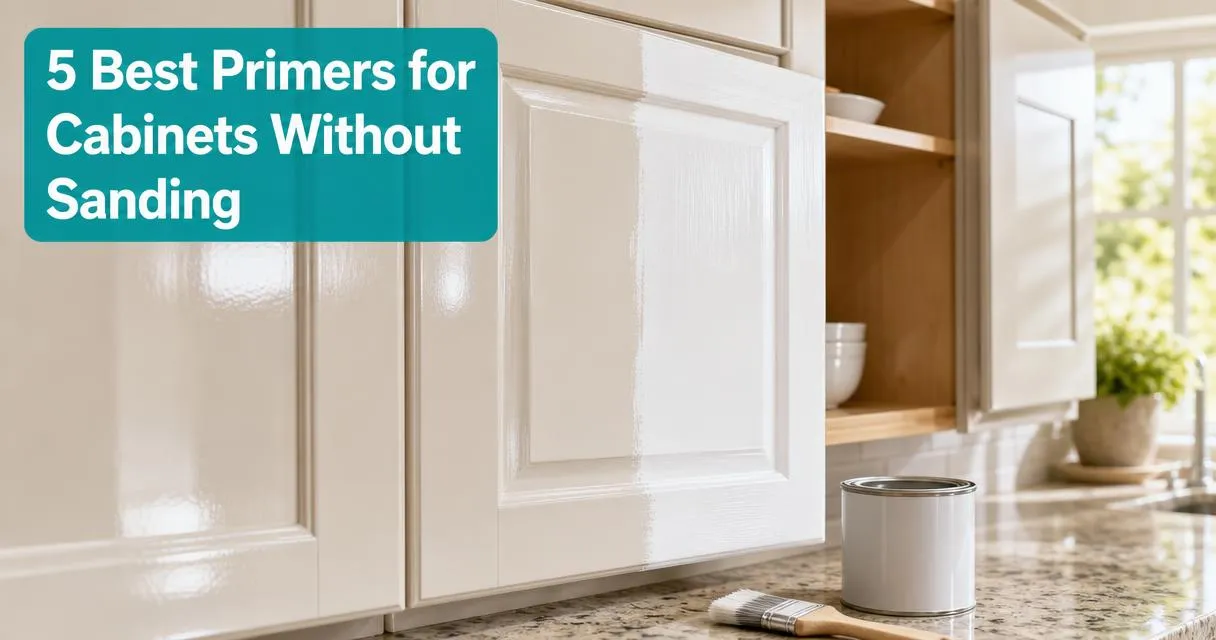
Most cabinet paint jobs fail because you skipped the primer, not because you skipped sanding. Bonding and shellac primers grip glossy surfaces without sanding. They adhere to old varnish, paint, and even laminate without roughing up the surface first.
This comparison covers five primers that eliminate sanding and still deliver a finish that lasts.
Key Takeaways
- Shellac-based primers like BIN offer strongest adhesion on gloss and dry in under an hour
- Bonding primers clean up easily but adhesion varies on smooth surfaces
- Laminate cabinets require a dedicated bonding primer, standard primers fail to adhere long-term
- Shellac primer works under water-based topcoat paint with no compatibility issues
- Skipping sand still requires thorough cleaning, and degreasing is mandatory before priming
- BIN blocks grease and water stains better than any water-based bonding primer
- Fast dry times suit shellac for small batches, water-based suits full kitchens
Comparing the Top Best Primer For Cabinets Without Sanding
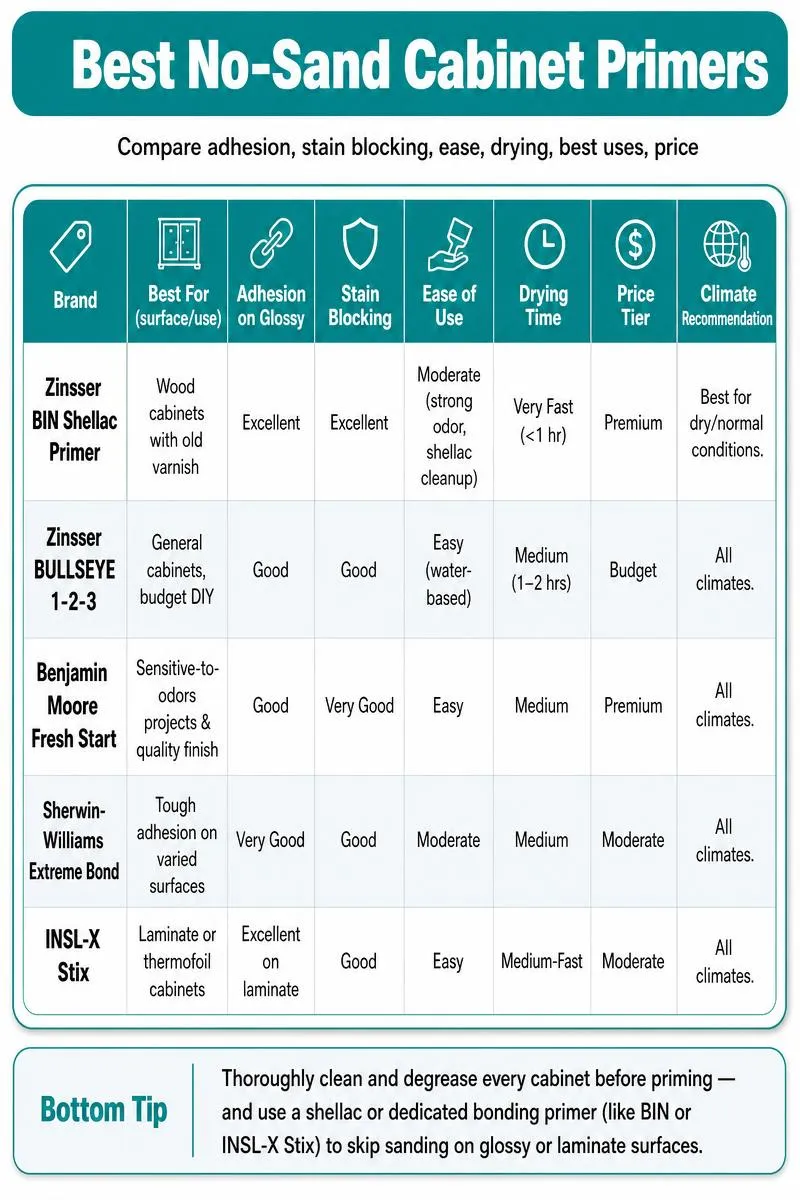
| Brand | Best For | Adhesion on Glossy | Stain Blocking | Ease of Use | Drying Time |
|---|---|---|---|---|---|
| Zinsser BIN Shellac Primer | Wood cabinets with old varnish | Excellent | Excellent | Moderate (strong odor) | Very Fast (<1 hr) |
| Zinsser BULLSEYE 1-2-3 | General cabinets, budget DIY | Good | Good | Easy (water-based) | Medium (1 62 hrs) |
| Benjamin Moore Fresh Start | Sensitive-to-odors projects & quality finish | Good | Very Good | Easy | Medium |
| Sherwin-Williams Extreme Bond | Tough adhesion on varied surfaces | Very Good | Good | Moderate | Medium |
| INSL-X Stix | Laminate or thermofoil cabinets | Excellent on laminate | Good | Easy | Medium 62 Fast |
Quick Comparison
Zinsser BIN Shellac Primer
- Adhesion is strongest on glossy and varnished surfaces.
- It blocks grease, water, and tannins for superior stain protection.
- Dries in 45 minutes for fast recoating.
- Cleanup requires denatured alcohol.
- Works best on wood cabinets with old varnish or high-gloss paint.
Zinsser BULLSEYE 1-2-3
- Adhesion is good on semi-gloss but struggles on true high-gloss.
- Handles light stains only with moderate blocking.
- Dries in 1 hour for quick recoating.
- Cleans up with soap and water.
- Works best on previously painted wood with minimal sheen.
Benjamin Moore Fresh Start
- Adhesion is good on wood, less reliable on laminate.
- Prevents mold growth in humid environments with mildew-resistant additives.
- Dries in 1 to 2 hours for recoating.
- Cleans up with soap and water.
- Works best on raw or previously painted wood cabinets.
Sherwin Williams Extreme Bond
- Grips laminate, thermofoil, and tile where other primers fail.
- Provides moderate stain blocking.
- Dries in 1 to 2 hours for recoating.
- Cleans up with soap and water.
- Works best on laminate, melamine, and hard-to-paint surfaces.
INSL-X Stix
- Bonds to glass and metal surfaces with chemical adhesion.
- Provides light to moderate stain blocking.
- Dries in 2 hours for recoating.
- Cleans up with soap and water.
- Works best on ultra-smooth laminate and glossy finishes.
Related Reading
A clear comparison of sealers and primers that explains how each product affects adhesion and finish on interior…
Top 5 No-Sand Primers Compared
Each of these primers eliminates sanding, but they work through different mechanisms on different cabinet materials.
1. Zinsser BIN Shellac Primer
BIN creates a mechanical grip on slick surfaces through its shellac formula. The shellac hardens into a finish that adheres to glossy cabinets and accepts topcoat paint. It dries in about 45 minutes and blocks stains that bleed through other primers.
The odor is strong and requires good ventilation. You’ll need denatured alcohol to clean brushes and rollers.
This primer works on varnished wood, previously painted cabinets with high-gloss finishes, and even some laminates. The fast dry time makes it ideal for painting cabinet doors in batches. You need to work quickly, though, because brush marks become permanent once the primer starts setting.
BIN accepts both oil-based and water-based topcoats with no compatibility issues. You can pair it with modern cabinet paints like Benjamin Moore Advance.
The main drawback is the cleanup process. Brushes and rollers harden permanently if you don’t clean them with alcohol immediately. The fumes make it impractical to prime an entire kitchen in one session without respirator protection.
2. Zinsser BULLSEYE 1-2-3
BULLSEYE 1-2-3 is a water-based bonding primer that grips semi-gloss and satin finishes without sanding. It cleans up with soap and water and dries in about an hour. The cost is significantly less than BIN shellac, and for most previously painted cabinets, this primer prevents peeling without sanding.
The stain blocking is adequate for cabinets that don’t have heavy grease buildup or water damage. If you’ve already degreased thoroughly with TSP or a strong cleaner, BULLSEYE handles the remaining surface prep. It may need a second coat on very smooth or high-gloss surfaces where one coat doesn’t fully obscure the underlying sheen.
This primer works best on wood cabinets that were painted with satin or semi-gloss latex in the past. It struggles on laminate unless you apply two coats, and even then adhesion isn’t as reliable as dedicated bonding primers like Extreme Bond.
3. Benjamin Moore Fresh Start
Fresh Start is a multi-surface primer with mildew resistance, designed primarily for wood but functional on some previously painted surfaces. It’s water-based and low-odor, drying in one to two hours. The formula includes additives that prevent mold growth in humid environments, making it useful for kitchens and bathrooms.
Adhesion on glossy surfaces is good but not exceptional. Fresh Start performs best on cabinets that already have a satin or eggshell finish, or on raw wood that you want to seal before painting. On high-gloss varnish or laminate, it doesn’t grip as reliably as BIN or Extreme Bond.
Mildew-resistant additives suit coastal climates where moisture can compromise paint over time. The application is smooth and forgiving, with enough open time to brush large cabinet faces without visible lap marks. It’s a solid middle-ground option if you want water-based convenience and your cabinets aren’t ultra-slick.
4. Sherwin Williams Extreme Bond
Extreme Bond is a premium bonding primer engineered for laminate, melamine, tile, and glass. It’s water-based and low-VOC, creating a grip that holds paint on rejecting surfaces. This is the primer to use if your cabinets are factory-laminate or thermofoil, not wood.
The adhesion chemistry relies on polymers that interlock with smooth surfaces rather than soaking into them. Extreme Bond dries harder than standard primers, creating a base that resists chipping when cabinet doors bump against frames. It handles light stain blocking but won’t cover heavy grease or water marks without additional coats.
Application requires attention to surface prep. Degreasing is mandatory because Extreme Bond can’t bond through oils or residues. The dry time is standard for water-based primers at one to two hours, and cleanup is straightforward with soap and water.
5. INSL-X Stix
Stix is an acrylic bonding primer that dries to a hard, clear finish. It adheres to ultra-smooth surfaces like glass, ceramic tile, and high-gloss laminates. It’s designed for surfaces where mechanical tooth doesn’t exist, relying instead on chemical adhesion to bond.
The formula dries slower than BIN but faster than most water-based primers. It’s usually ready to topcoat in two hours.
This primer excels on laminate cabinets with a glossy factory finish. It also works on metal cabinet frames and previously painted surfaces with enamel or oil-based topcoats. Stain blocking is light, so skip it for grease stains.
Stix dries harder than most primers, which helps prevent the primer layer from chipping when you open and close cabinet doors repeatedly. The price sits between budget options like BULLSEYE and premium choices like Extreme Bond. It’s a reliable option for laminate and thermofoil cabinets if Extreme Bond isn’t available locally.
Head-to-Head: Which Primer Wins Where?
Your cabinet material and existing finish determine which factors matter most. These comparisons break down adhesion, stain blocking, ease of use, dry time, and laminate compatibility.
1. Adhesion on Glossy Surfaces
BIN shellac wins on high-gloss varnish and oil-based enamel finishes. The shellac formula grips surfaces that cause water-based primers to peel over time. If your cabinets have a mirror-like shine from multiple coats of polyurethane or old oil paint, BIN provides the most insurance against failure.
Bonding primers like BULLSEYE 1-2-3 and Fresh Start work adequately on semi-gloss finishes but struggle on true high-gloss. You’ll get enough adhesion for cabinets that see light use. Heavy-traffic kitchens may show edge peeling over time.
2. Stain Blocking
BIN blocks grease and water stains better than any water-based option in this comparison. Shellac encapsulates rather than covers stains, which prevents bleed-through even with light-colored topcoats. If your cabinets have grease buildup around handles or water damage near the sink, BIN prevents those marks from ghosting through your finish paint.
BULLSEYE 1-2-3 handles light stains adequately but requires thorough cleaning first. Fresh Start performs similarly. Extreme Bond and Stix provide minimal stain blocking and rely on complete surface cleaning before application.
3. Ease of Use
Water-based bonding primers win on convenience and cleanup. BULLSEYE, Fresh Start, Extreme Bond, and Stix all clean up with soap and water and produce minimal odor. They give you enough working time to brush large surfaces, and you can prime an entire kitchen without respirator equipment.
BIN requires ventilation, alcohol cleanup, and careful timing. The fast dry time means touch-ups become impossible once the primer starts setting. Brushes left sitting for ten minutes become unusable.
The tradeoff is speed. You can prime and paint cabinets in the same day with BIN’s 45-minute recoat time.
4. Drying Time
BIN dries fastest at roughly 45 minutes to one hour before you can apply topcoat. This speed advantage matters if you’re painting cabinet doors in small batches or need to finish the project over a weekend.
Bonding primers dry in one to two hours, with Stix taking the longest at two hours minimum. In humid conditions, water-based primers need extra drying time before paint application.
5. Best for Laminate
Extreme Bond and Stix are engineered specifically for laminate and thermofoil. They create reliable adhesion on surfaces that have no porosity for traditional primers to grip. BIN works on some laminates but is overkill, and the alcohol cleanup adds unnecessary difficulty when water-based options perform equally well.
BULLSEYE and Fresh Start aren’t recommended for laminate. They may adhere initially but tend to peel at edges on non-porous surfaces over time.
Which Primer Should You Choose?
Your cabinet material and project constraints determine the right primer more than brand reputation.
1. Wood Cabinets with Old Varnish
Use BIN shellac if the varnish is glossy or if the wood has stains you need to block. The adhesion and stain blocking justify the cleanup. If the varnish is worn down to a satin sheen and there are no stains, Fresh Start offers easier application with adequate performance.
2. Laminate or Thermofoil
Choose Extreme Bond or Stix. Both are formulated for non-porous surfaces and provide chemical adhesion for lasting results. BIN works but adds unnecessary complexity when water-based options perform as well.
3. Budget-Conscious DIY
BULLSEYE 1-2-3 delivers acceptable results on most previously painted cabinets at the lowest cost. It won’t match BIN’s adhesion on glossy surfaces, but for semi-gloss finishes in average condition, it prevents peeling at lower cost than premium primers.
4. Fast Project Timeline
BIN’s 45-minute dry time lets you prime and apply the first coat of paint in a single afternoon. If you’re painting cabinet doors in batches and want to finish over a long weekend, the speed advantage outweighs cleanup difficulty.
5. Sensitive to Odors
Stick to water-based bonding primers exclusively. BULLSEYE, Fresh Start, Extreme Bond, and Stix all produce minimal odor and don’t require respirator protection. BIN’s shellac fumes make it unworkable without heavy ventilation.
Related Reading
Best paint to cover smoke damage
Practical guidance on stain-blocking primers and paints for preventing smoke and tannin bleed-through—helpful when…
FAQs
Can I prime my cabinets without sanding?
Yes, bonding and shellac primers grip glossy and varnished surfaces without mechanical tooth from sanding. You still need to clean and degrease thoroughly because no primer bonds through grease. Use TSP or a strong degreaser, then rinse and dry before priming.
What is the best primer for wood kitchen cabinets?
BIN shellac provides maximum adhesion and stain blocking on wood cabinets with old varnish or oil-based finishes. If you want easier application and cleanup, Fresh Start works well on wood with satin or semi-gloss existing finishes. Both accept water-based topcoats without issues.
Can I use BIN shellac primer under water-based paint?
Yes, BIN dries in under an hour and accepts water-based cabinet paints like Benjamin Moore Advance or Sherwin-Williams Emerald Urethane. The shellac creates a neutral base for any topcoat.
What are the cons of BIN shellac primer?
Strong odor requires heavy ventilation or respirator use, and cleanup requires denatured alcohol instead of water. The fast dry time makes large areas harder to brush without visible lap marks. Brushes and rollers harden permanently without quick cleanup.
What roller should I use with cabinet primer?
Use a 1/4-inch microfiber foam roller for smooth finishes on flat cabinet doors and drawer fronts. A 3/8-inch nap works better if your cabinets have raised panel details or texture. Foam rollers leave the smoothest finish but may need replacement more often than microfiber.
Does no-sand primer work on laminate cabinets?
Yes, but only with dedicated bonding primers like Extreme Bond or Stix, not general-purpose primers. Laminate has no porosity for standard primers to grip, so you need formulas with polymers designed for non-porous surfaces. Even with bonding primer, degreasing is mandatory.
How long should primer dry before painting cabinets?
BIN shellac needs about one hour minimum. Water-based primers like BULLSEYE, Fresh Start, Extreme Bond, and Stix need two to four hours depending on temperature and humidity. Always check the product label for recoat times in your conditions.
What paint works best over no-sand primer?
Use cabinet-specific enamels that dry hard and resist chipping. Sherwin-Williams Emerald Urethane and Benjamin Moore Advance are both water-based formulas designed for cabinets and trim. They level well and resist chipping.
Final Verdict
BIN shellac is the most reliable no-sand primer for wood cabinets with glossy varnish or old oil-based paint. The adhesion and stain-blocking performance justify the alcohol cleanup and strong odor for projects where paint failure isn’t an option.
If you’re working with laminate or thermofoil, skip BIN and choose Extreme Bond or Stix instead. These bonding primers are engineered for non-porous surfaces and give you water cleanup without sacrificing adhesion.
Always degrease cabinets before priming, even with no-sand formulas. Primer creates a mechanical or chemical bond to the existing surface, but it can’t bond through grease. Follow these steps before priming:
- Use TSP or a heavy-duty kitchen cleaner to remove all grease and oils
- Rinse thoroughly and let surfaces dry completely before priming
If you are in the Fish Hawk metro area or elsewhere in Florida, our team handles cabinet prep, priming, and finishing and will take care of choosing the right products. We use commercial-grade primers formulated for long-term durability in humid climates, and for details on what we include, see our interior painting services. Request a free estimate today at 813-860-8661.