
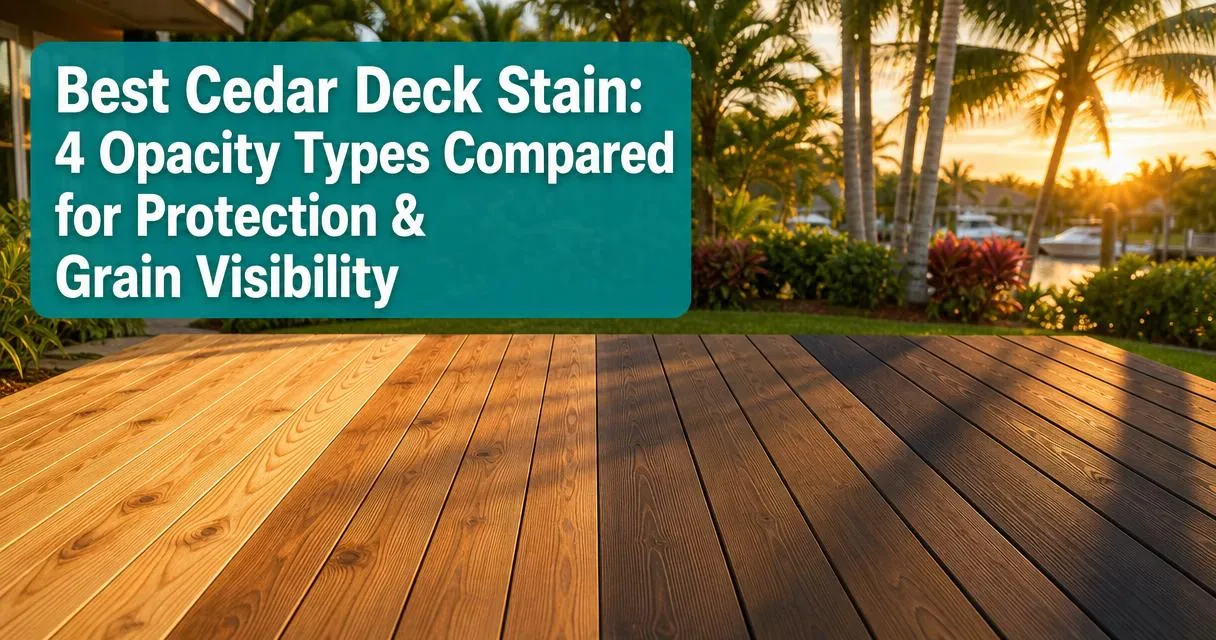
You don’t need a single best cedar deck stain. You need the right opacity level for your sun exposure, cedar age, and recoat tolerance. Cedar is a softwood that absorbs stain differently than pressure-treated lumber.
The opacity you choose directly affects how long the wood lasts and whether you’ll still see its natural grain in two years. We’ll compare the four main stain opacity types and walk through the decision criteria that matter for cedar.
Key Takeaways
- Semi-transparent stains are the most popular choice for new cedar because they show grain while blocking UV and extend recoat intervals to 2-3 years
- Solid stains deliver the longest lifespan at 4-5 years, but they hide cedar’s grain completely and often require full stripping before recoating
- Oil-based stains penetrate cedar’s soft grain better than water-based formulas, making recoating easier since you refresh an absorbed layer instead of removing a surface film
- New cedar needs to weather 1-3 months or be pre-conditioned with a wood brightener before staining, otherwise mill glaze blocks absorption
- Climate and sun exposure drive your opacity decision more than personal preference. Full-sun decks need higher pigment loads to resist UV degradation
- Clear stains and toners showcase cedar’s natural color best but require recoating every 1-2 years and fail fast in high UV
- Semi-solid stains offer strong UV protection with 3-4 year recoat intervals, making them ideal for older cedar by hiding already-weathered grain
Related Reading
Detailed picks and performance notes for transparent stains, including longevity and finish on cedar decks.
Comparing the Top Best Cedar Deck Stain
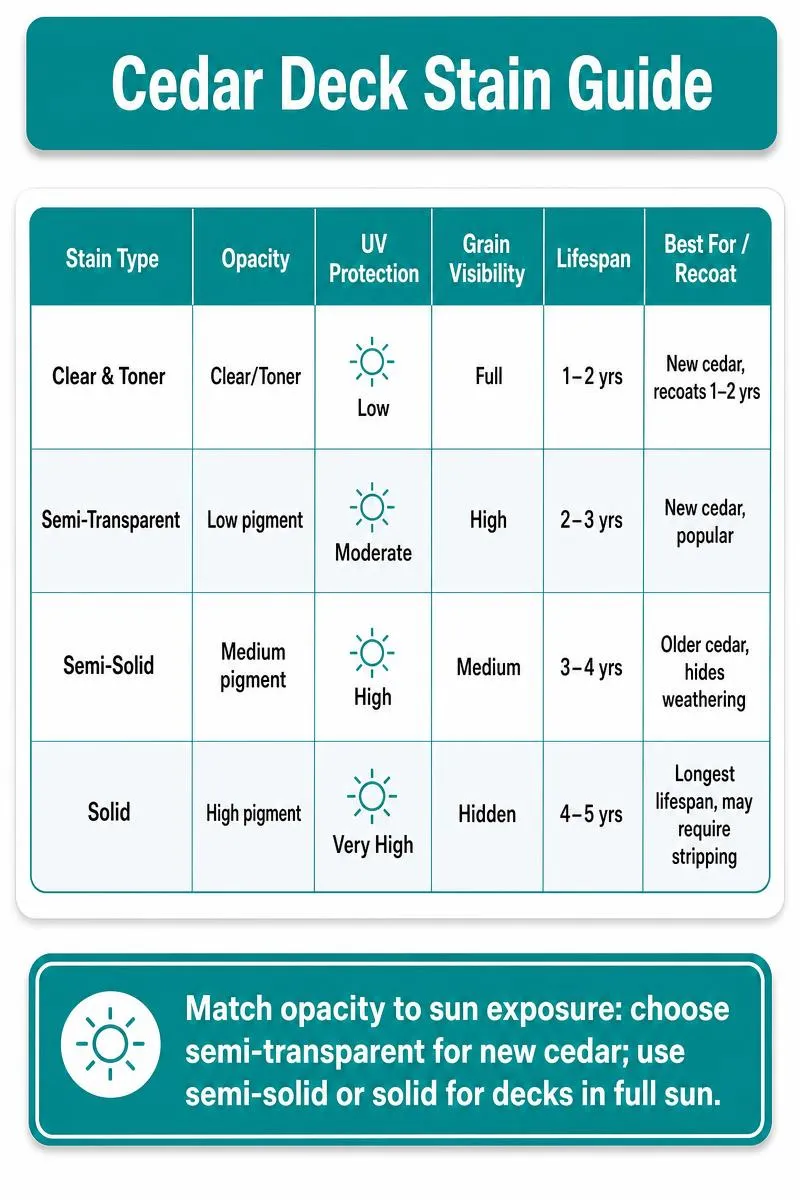
| Stain Type | Opacity | UV Protection | Grain Visibility | Lifespan | Best For / Recoat |
|---|---|---|---|---|---|
| Clear & Toner | Clear/Toner | Low | Full | 1–2 yrs | New cedar, recoats 1–2 yrs |
| Semi-Transparent | Low pigment | Moderate | High | 2–3 yrs | New cedar, popular. |
| Semi-Solid | Medium pigment | High | Medium | 3–4 yrs | Older cedar, hides weathering. |
| Solid | High pigment | Very High | Hidden | 4–5 yrs | Longest lifespan, may require stripping. |
Quick Comparison Overview
Here’s how the four opacity types stack up for cedar deck applications.
1. Clear & Toner Stains
- Grain visibility: Full grain and color show through
- UV protection: Minimal, relies on resins only
- Recoat interval: 1-2 years
- Best for: New cedar in shaded or covered locations
2. Semi-Transparent Stains
- Grain visibility: Partial grain visible with enhanced color tone
- UV protection: Moderate, pigment-based UV blockers included
- Recoat interval: 2-3 years
- Best for: New to lightly weathered cedar in mixed sun
3. Semi-Solid Stains
- Grain visibility: Grain barely visible, wood texture still shows
- UV protection: Strong, high pigment load
- Recoat interval: 3-4 years
- Best for: Weathered cedar or high-UV exposure areas
4. Solid Stains
- Grain visibility: No grain visible, opaque coverage
- UV protection: Maximum, similar to exterior paint
- Recoat interval: 4-5 years
- Best for: Damaged or severely weathered cedar needing concealment
Clear & Toner Stains
Clear and toner stains deliver the most natural cedar appearance. They contain minimal pigment and let the wood’s color and grain pattern show completely. These formulas rely on resins and UV absorbers rather than pigment, so clarity costs you durability.
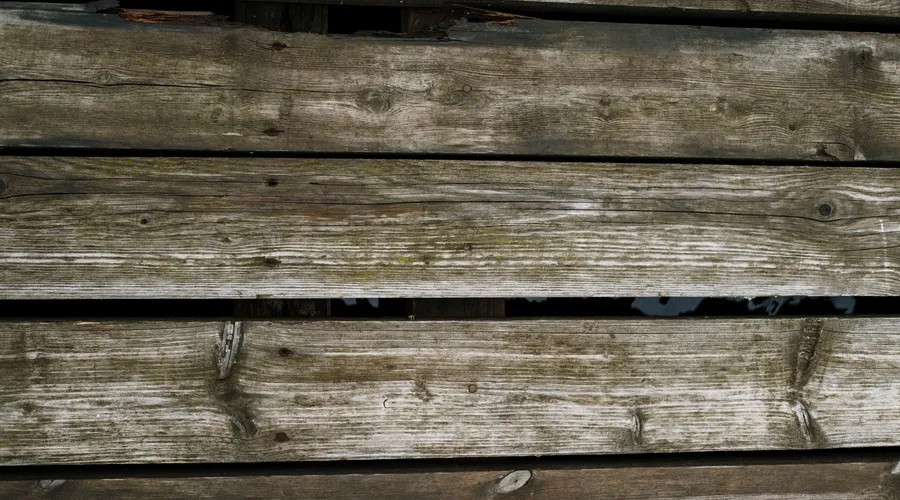
The UV protection is the lowest of any stain category. You’ll need to recoat every 1-2 years to prevent the wood from graying and splitting. Clear stains perform best on covered or shaded decks where direct sunlight is limited.
On a full-sun deck in Florida or Arizona, clear stains fail fast as UV radiation breaks down the resin binders. The finish starts showing gray weathering and resin breakdown within 12 months.
If you want to preserve cedar’s natural honey or reddish tones without adding opacity, toners are clear bases with just enough pigment to enhance the wood’s existing color. They still show full grain but give you slight color control. Typical tones include warm red-brown or honey-amber shades that match cedar’s natural range.
Semi-Transparent Stains
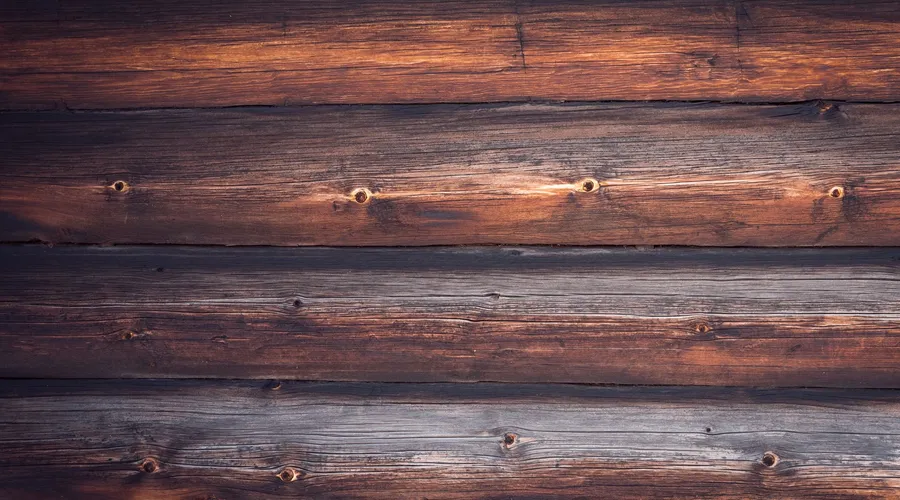
Semi-transparent stains are the most popular choice for cedar decks because they balance grain visibility with meaningful UV protection. You’ll still see the wood grain pattern and texture, but the stain adds a tinted layer that blocks more UV than clear formulas.
Oil-based formulas penetrate cedar’s soft grain better than water-based versions, soaking into the wood rather than forming a surface film. This penetration makes recoating easier since you’re refreshing an absorbed layer instead of scraping off a failing topcoat.
Recoat intervals typically run 2-3 years depending on sun exposure and foot traffic. This opacity level works well for new cedar that you want to protect without concealing. The pigment load is high enough to slow UV degradation but low enough that cedar’s character remains visible.
If your deck has mixed sun conditions where some areas get full afternoon exposure and others stay shaded, semi-transparent adapts to mixed sun better than clear or solid options.
Related Reading
Best semi transparent deck stain
A buyer’s guide to semi-transparent stains covering color retention and protection on wood—useful when comparing…
Semi-Solid Stains
Semi-solid stains carry a higher pigment load than semi-transparent formulas. Grain becomes barely visible while wood texture still shows through. You lose most of the visual grain pattern, but you gain stronger UV protection.
Recoat intervals extend to 3-4 years because the increased pigment blocks more UV radiation before breaking down. Semi-solid suits older weathered cedar where the grain has already degraded from sun exposure or years of moisture cycling.
If your deck has grayed or developed patchy coloring, semi-solid stains hide those inconsistencies while still looking like stained wood rather than paint.
The application process is similar to semi-transparent stains, but you need to pay more attention to even coverage. The higher pigment content makes lap marks show more easily. Oil-based semi-solid stains still penetrate better than water-based on cedar, though the difference is less pronounced than with semi-transparent formulas.
Solid Stains
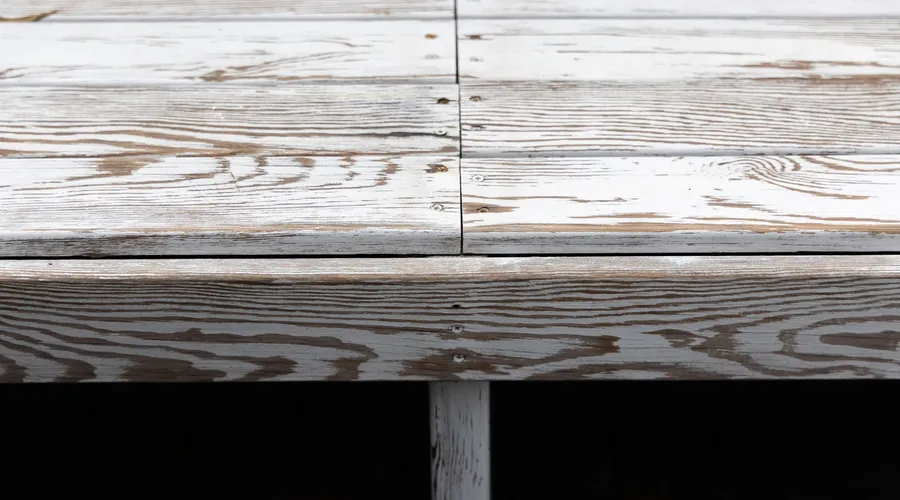
Solid stains provide full opaque coverage that hides cedar grain completely and forms a surface film similar to exterior paint. This is the longest-lasting option at 4-5 years between recoats. Maximum UV and moisture protection comes from the thick pigment layer that blocks nearly all radiation.
The tradeoff is visual. You lose all grain visibility and most of cedar’s natural character. Solid stains make sense when protection matters more than appearance, typically on:
- Severely weathered decks
- Older cedar with structural checking or splits
- Decks in extreme climates where UV exposure is intense year-round
Solid stains are the hardest stain to reapply because they form a surface film that eventually cracks and peels rather than fading evenly. When a solid stain fails, you often need to strip the deck back to bare wood before recoating. This adds significant labor compared to refreshing a penetrating stain.
If you choose solid stain, expect a five-year maintenance cycle that includes full stripping before recoating, not just cleaning and recoating.
Head-to-Head: UV Protection & Sun Exposure
Solid stains win outright for full-sun decks in high-UV climates. The opaque pigment layer blocks the most radiation. If your deck faces south or west with no shade cover, solid or semi-solid outlast lower-opacity options by years. This is especially true if you live somewhere with intense summer sun.
Clear and toner stains fail quickly in high-UV environments, typically showing gray weathering and resin breakdown within 12-18 months. Semi-transparent and semi-solid are middle-ground picks for mixed sun exposure where aesthetics still matter but you need more protection than clear stains offer.
On a covered porch or shaded deck, UV protection becomes less critical. Clear or semi-transparent stains perform adequately in these conditions.
Related Reading
Explains the practical differences between sealing and staining so readers can decide whether a sealer or stain is best…
Head-to-Head: Cedar Aesthetics & Grain Visibility
Clear and semi-transparent stains preserve cedar’s natural grain pattern and color. These are the only real options if showcasing the wood matters to you. Semi-transparent formulas add a tinted layer but still let grain show through, while clear stains and toners deliver nearly unaltered appearance.
Semi-solid and solid stains prioritize protection over appearance. Semi-solid hides most grain while leaving texture visible. Solid stains eliminate grain entirely. If you’re staining cedar specifically because you want to see the wood grain, solid and semi-solid defeat the purpose.
Head-to-Head: Maintenance & Recoat Frequency
Solid stains deliver the longest intervals at 4-5 years but require the hardest recoat process. Failing solid stain often needs complete removal before restaining. Clear stains need the most frequent recoating at 1-2 years, but the process is straightforward:
- Clean the deck thoroughly
- Let it dry completely
- Apply a fresh coat without stripping
Semi-transparent at 2-3 years and semi-solid at 3-4 years land in the middle for both interval length and recoat difficulty. Oil-based versions skip full removal, making them easier to maintain long-term than solid stains.
Head-to-Head: Application Difficulty
Oil-based semi-transparent stains are the easiest for DIY application on cedar. They penetrate without surface film, so you don’t need perfect technique to avoid visible brush marks. The stain soaks in and evens out as it dries.
Solid stains require back-brushing and careful attention to even coverage. The opaque formula sits on the surface and shows every application error. Cedar’s soft grain can absorb solid stain unevenly, creating streaks or blotchy areas if you don’t maintain a wet edge.
Semi-solid stains fall between semi-transparent and solid for difficulty. They offer more forgiving than solid application but less than true penetrating stains.
Which Should You Choose?
Your decision comes down to matching stain opacity to your deck’s exposure, cedar condition, and maintenance tolerance.
New cedar in full sun:
- Choose semi-transparent or semi-solid oil-based stain
- Semi-transparent works if you want maximum grain visibility and don’t mind recoating every 2-3 years
- Semi-solid makes sense if UV exposure is extreme or you want to extend protection longer
New cedar in shaded or covered areas:
- Use clear or toner stain to highlight natural grain and color
- UV protection matters less in low-exposure conditions, so prioritize aesthetics over protection
- Expect to recoat every 1-2 years, but the application process is simple
Older, weathered cedar:
- Go with semi-solid or solid stain to hide existing damage and gray weathering
- Semi-solid retains some wood character while concealing flaws effectively
- Solid stain is the right call when you need maximum protection in harsh climates
Low maintenance priority:
- Choose solid stain and accept that you’ll lose all grain visibility
- The 4-5 year interval is the longest you’ll get, though recoating requires more prep
Maximum natural appearance:
- Stick with clear or semi-transparent stain
- Plan to recoat every 1-3 years depending on opacity and sun exposure
FAQs
These are the most common questions homeowners ask about staining cedar decks.
1. Is it a good idea to stain a cedar deck?
Yes, staining extends cedar’s lifespan by slowing UV and moisture damage that cause splitting and rot. Unstained cedar eventually grays and checks from sun exposure. Some homeowners like the weathered look, but the wood degrades faster without stain protection.
2. What deck stain do professionals use?
Professionals typically use oil-based semi-transparent stains like Cabot Australian Timber Oil, TWP 100 Series, or Ready Seal because they penetrate cedar and simplify recoating. Solid stains from Benjamin Moore or Sherwin-Williams get used on older decks where concealment matters more than grain.
3. What type of oil stain is best for a cedar deck?
Oil-based semi-transparent penetrating stains work best for most cedar decks because they soak into soft grain without forming a surface film. This makes recoating easier and reduces peeling. Look for formulas with UV-blocking pigments and mildewcides if your deck stays damp or shaded.
4. What is the #1 deck stain?
There’s no single #1 deck stain because the best choice depends on opacity needs and wood type. TWP 100 Series and Cabot Australian Timber Oil consistently rank highest among contractors for cedar deck applications due to penetration depth and recoat ease.
5. Should I let new cedar weather before staining?
Yes, new cedar should weather 1-3 months or be treated with a wood brightener to remove mill glaze. Mill glaze is a smooth surface residue from sawing that blocks stain absorption. If you stain too soon, the finish won’t penetrate properly and will peel within months.
6. How long does cedar deck stain last before needing reapplication?
Lifespan varies by opacity type:
- Clear stains last 1-2 years
- Semi-transparent stains last 2-3 years
- Semi-solid stains last 3-4 years
- Solid stains last 4-5 years
Actual lifespan depends on sun exposure, foot traffic, and climate. Full-sun decks wear faster than shaded ones.
Final Verdict
Semi-transparent oil-based stain is the best all-around pick for most cedar decks. It balances grain with UV protection and delivers a manageable 2-3 year recoat interval.
If longevity trumps aesthetics and you’re willing to lose all grain visibility, solid stain extends that interval to 4-5 years but adds complexity to future recoating. Use clear stains only on shaded or covered decks where UV exposure is minimal and you want to showcase cedar’s natural appearance.
Always prep cedar properly before staining. Let new wood weather or pre-treat with a brightener, clean existing decks thoroughly, and allow full drying. Prep matters more than brand when it comes to how long your finish lasts.
Choose your opacity based on sun exposure and cedar condition first, then pick a quality product within that category.
If your cedar deck is in the Fish Hawk metro area and you would rather not tackle staining yourself, our Florida-based crew can handle prep, staining, and sealing for cedar decks of any size. We can assess sun exposure and cedar condition and recommend the right opacity level for your space, and you can see our deck refinishing and staining options. Call 813-860-8661 for a free estimate, no pressure, just honest advice for your deck.