
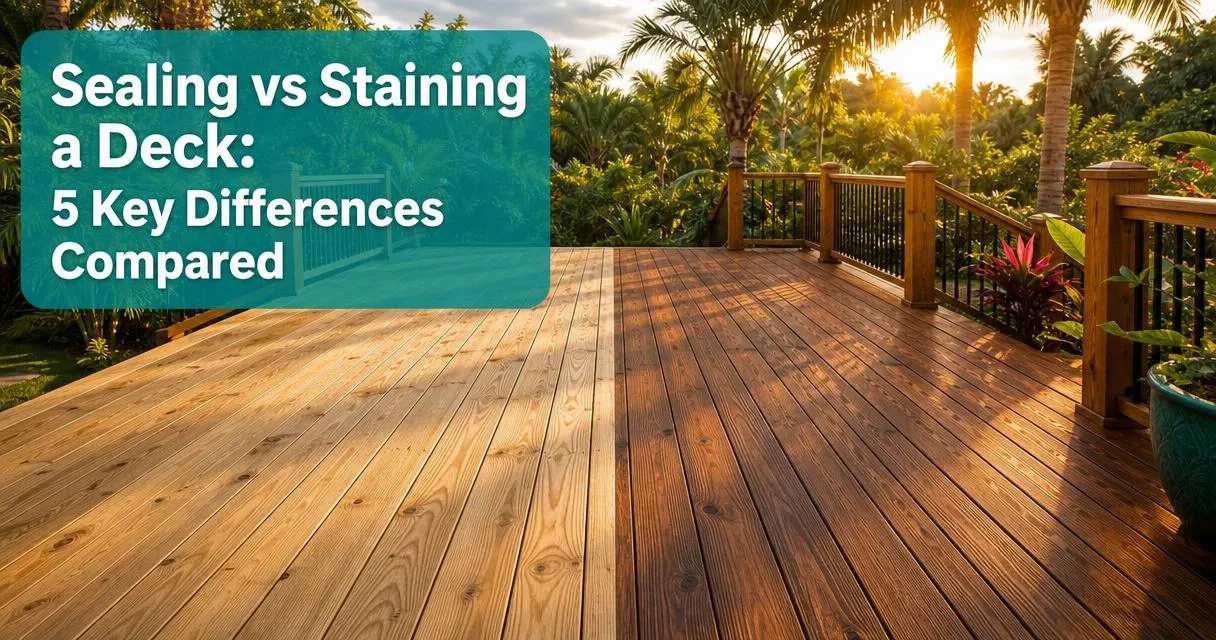
You’re standing in the deck aisle staring at cans labeled “sealer” and others labeled “stain,” wondering which one actually protects your wood. Both create a water-resistant barrier, but sealers stay clear, stains add pigment. That difference cascades into UV protection, longevity, and how often you’ll be back at the store.
There’s no universal right answer: your best choice depends on whether you’re working with new cedar that deserves to show its grain or weathered pine that needs help hiding years of sun damage.
Key Takeaways
- Clear sealers preserve natural wood grain but offer minimal UV protection and need reapplication every 1-2 years
- Pigmented stains block UV damage like sunscreen for wood, with more opacity delivering longer-lasting protection
- Stains typically last 2-5 years between coats, while sealers break down faster in full sun
- Many modern deck stains combine stain and sealer, adding water repellency to UV-blocking pigment
- Wait 60-90 days before treating new pressure-treated lumber so preservatives finish off-gassing first
- You can apply sealer over existing stain, but stain over sealer requires stripping
- Solid stains last longest but hide wood grain completely, while transparent formulas enhance grain with minimal color shift
Comparing the Top Sealing Vs Staining A Deck
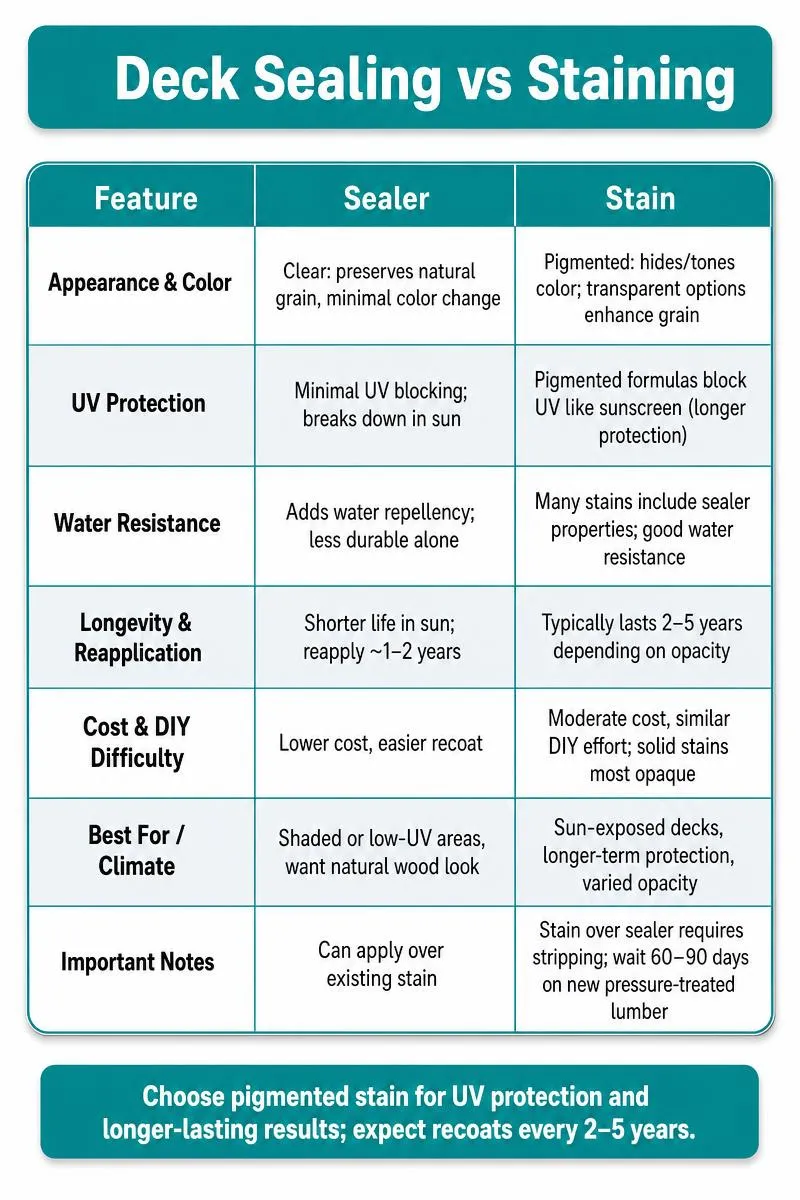
| Feature | Sealer | Stain |
|---|---|---|
| Appearance & Color | Clear: preserves natural grain, minimal color change | Pigmented: hides/tones color; transparent options enhance grain |
| UV Protection | Minimal UV blocking; breaks down in sun | Pigmented formulas block UV like sunscreen (longer protection) |
| Water Resistance | Adds water repellency; less durable alone | Many stains include sealer properties; good water resistance |
| Longevity & Reapplication | Shorter life in sun; reapply ~1–2 years | Typically lasts 2–5 years depending on opacity |
| Cost & DIY Difficulty | Lower cost, easier recoat | Moderate cost, similar DIY effort; solid stains most opaque |
| Best For / Climate | Shaded or low-UV areas; natural wood look | Sun-exposed decks; longer-term protection; varied opacity |
| Important Notes | Can apply over existing stain | Stain over sealer requires stripping; wait 60–90 days on new PT lumber |
Quick Comparison
- Appearance: Sealer preserves natural wood color while stain adds color from subtle tints to opaque coverage
- UV Protection: Sealer provides minimal blocking; stain pigment blocks UV like sunscreen with protection increasing by opacity
- Water Resistance: Both repel moisture effectively when properly applied and maintained
- Longevity: Sealer lasts 1-2 years; stain lasts years longer depending on opacity and sun exposure
- Cost: Sealer runs lower per gallon and covers more square feet; stain costs more upfront but spreads cost over fewer applications
- Best Deck Type: Sealer suits new cedar, redwood, and premium lumber; stain works on all wood types
Related Reading
Recommendations for sealers and UV-resistant formulas best suited to sun-exposed decks.
What Is Deck Sealer?
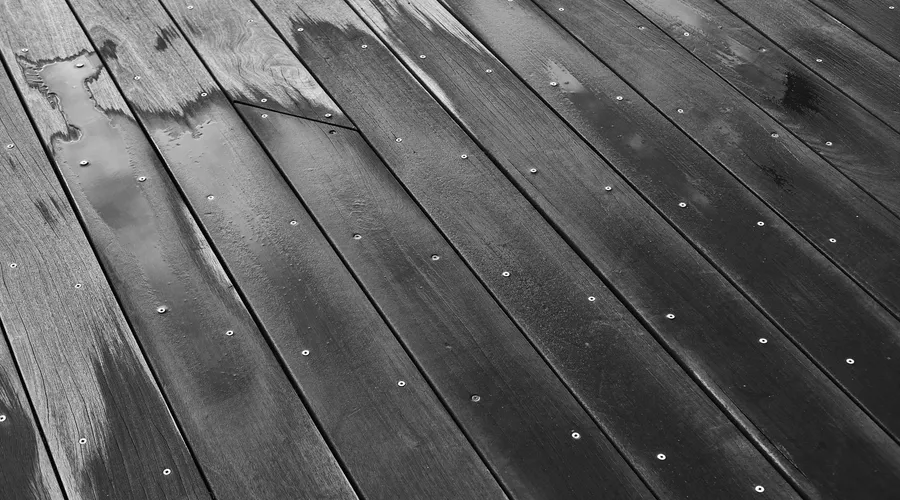
Deck sealer is a clear or transparent water repellent that penetrates wood without adding color. The formula creates a moisture barrier that prevents rain from soaking into the wood, which stops warping, cracking, and rot from taking hold.
Sealers work best on new cedar, redwood, or high-grade pressure-treated lumber where the natural grain and color are worth preserving. If you just installed a deck with premium wood that cost twice what standard pine runs, sealer showcases your wood investment instead of covering it up.
The main strengths are straightforward. You get natural wood appearance. Application forgives minor technique errors, and the per-gallon cost sits below what most stains charge.
Clear sealers also make excellent DIY first projects since brush strokes stay invisible. You won’t create visible lap marks even if you take a phone call mid-board.
The tradeoff hits when UV rays start breaking down wood fibers. Clear formulas offer almost no sun protection, so exposed decks fade and gray faster even with regular sealing. You’ll also be back on the deck with a fresh coat every 1-2 years, and that timeline shrinks if your deck faces south or sits in full sun all afternoon.
What Is Deck Stain?
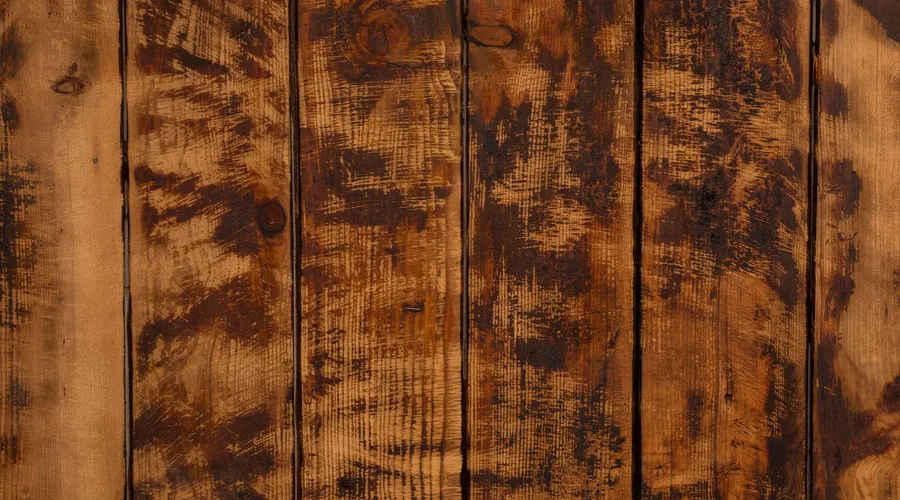
Deck stain is a pigmented protective coating that combines color with UV resistance. The pigment particles sit in or on the wood surface, blocking sunlight from degrading the fibers underneath while simultaneously repelling moisture.
Stains come in four opacity levels, each delivering more UV protection than the last:
- Transparent stain shows full grain with a subtle color tint
- Semi-transparent stain adds noticeable color while keeping grain visible
- Semi-solid stain obscures some grain with heavier pigment
- Solid stain creates an opaque painted look
Each step up in opacity delivers more UV protection and longer lifespan between coats.
These products work on all wood types and particularly shine on older or weathered decks where pigment hides discoloration and damage. A semi-solid stain can make a 10-year-old deck look uniform again even when individual boards have weathered to different shades of gray.
The UV-blocking pigment is the major advantage. Wood under stain stays protected from sun damage the same way your skin does under sunscreen.
That protection translates to 2-5 years between applications instead of annual recoating. Solid stains last longest in moderate climates with partial shade.
The downsides are real. Stains hide natural wood grain you might want visible. Once you commit to a color, switching lighter requires stripping equipment and serious elbow grease.
Application demands more attention since pigment reveals every mistake. You’ll need to maintain a wet edge, work in consistent strokes, and wipe up errors quickly before they dry.
Head-to-Head: Appearance & Color
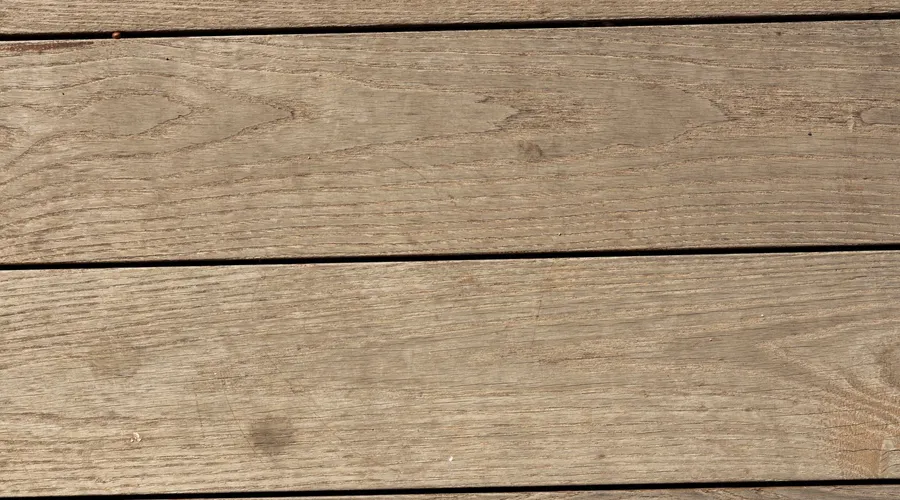
Sealer delivers zero color change, letting the wood’s natural tone and grain pattern stay front and center. You’ll see every growth ring, knot, and color variation the boards came with, which looks stunning on premium species but can highlight flaws on lower-grade lumber.
Stain offers a full spectrum from barely-there tints that enhance grain to bold colors that completely transform the deck. Transparent and semi-transparent stains add warmth or richness while keeping texture visible. Semi-solid or solid formulas let you go dark walnut, redwood, slate gray, or any other shade that matches your home’s exterior.
Choice depends on your goal:
- Choose sealer if you paid premium prices for beautiful wood and want the grain fully visible
- Choose stain if you want color options, need to unify mismatched boards, or transform the deck’s appearance
Related Reading
Options and pros and cons of semi-transparent stains that preserve wood grain while providing weather protection.
Head-to-Head: UV Protection
Clear sealers offer minimal UV blocking because there’s no pigment to intercept sunlight. UV rays pass through the transparent coating and break down lignin in the wood fibers, causing the gray weathering you see on untreated decks. Some sealers include UV inhibitors, but these additives only slow the process rather than stopping it.
Stain pigment functions exactly like sunscreen for wood. The particles physically block and absorb UV radiation before it reaches the wood surface. More pigment means better protection.
Transparent stains with light pigment loads help more than clear sealer but still allow some UV penetration. Semi-solid and solid stains create a near-total barrier that keeps wood from degrading for years.
Stain wins decisively for decks in full sun or southern exposures where UV intensity stays high. The protection difference becomes visible within the first year as sealed decks start showing gray patches while stained decks maintain their color.
Head-to-Head: Water Resistance
Both products repel water when properly applied. Sealer penetrates into wood pores and creates a moisture barrier inside the wood, causing water to bead up and roll off instead of soaking in. Stain combines the same penetrating water repellents with a surface layer of pigmented coating, creating dual protection.
Many modern deck stains combine stain and sealer in one product. They include pigment for UV blocking and dedicated sealing additives for moisture protection. Product labels often market these as “stain and sealer in one” since they serve both functions.
Both perform equally well at preventing water absorption that leads to warping, cupping, and rot. The real difference is how long that water resistance lasts before reapplication.
Head-to-Head: Longevity & Reapplication
Sealers typically last 1-2 years before water stops beading and starts soaking into the wood again. That timeline shortens on decks with full sun exposure where UV breaks down the coating faster. You’ll know it’s time when water stops beading, wood darkens during the splash test.
Stains last 2-5 years depending on opacity level and exposure conditions. Transparent stains sit at the shorter end since less pigment means less protection from UV breakdown.
Semi-transparent formulas usually deliver 3-4 years. Solid stains last longest in moderate climates with partial shade. The pigment protects both the wood and the coating itself from sun damage.
Stain wins on longevity. Fewer reapplication cycles mean less time spent prepping and coating. You’ll see lower long-term material costs despite higher upfront prices.
If you dislike spending weekends on deck work, the extra durability makes stain the clear choice.
Related Reading
Popular color choices and practical tips for selecting a stain tone that complements your home and conceals wear.
Head-to-Head: Cost & DIY Difficulty
Sealer costs less per gallon, typically running $20-40 for quality products versus $30-60 for comparable stains. Sealer also covers more square feet per gallon, with most products covering 250-400 square feet compared to 200-300 for stains. A 300-square-foot deck might need 1-2 gallons of sealer but 2-3 gallons of stain for proper coverage.
Application difficulty tips toward sealer for first-time DIYers. The clear formula hides brush strokes and tolerates uneven application. Stain demands more careful technique since pigment reveals every drip, puddle, and uneven section.
You’ll need to maintain a wet edge and work in consistent strokes. Wipe up mistakes quickly before they dry.
Sealer wins on cost. The lower material cost and forgiving application make it the safer choice when you’re unsure of your technique or trying to minimize what you spend on deck protection.
Which Should You Choose?
Your best option depends on your deck’s wood type, condition, and sun exposure. Consider these common scenarios to find your match:
- New cedar or redwood decks: Clear sealer preserves premium wood appearance while providing the water protection wood needs. The 1-2 year reapplication timeline is worth accepting to keep the natural look.
- Older weathered decks: Choose semi-transparent or solid stain to unify mismatched, weathered boards and add years of UV protection that bare or sealed wood won’t get.
- Full-sun exposures: Stain is required because UV damage outpaces sealer’s protection. Semi-transparent or semi-solid stains give you UV-blocking power while still showing some texture and grain.
- Existing stained decks: You’re locked into current color unless you strip everything to bare wood. Matching or darkening the current color works as a simple cleaning-and-coating project.
- Tight budgets and first-time DIYers: Clear sealer offers lower cost, easier application and a forgiving nature that makes it the practical choice for learning deck maintenance.
FAQs
1. How much does it cost to stain a 20×20 deck?
A 400-square-foot deck typically needs 2-3 gallons of stain at $30-60 per gallon, putting material costs at $60-180. If you hire a contractor, expect $300-800 total including labor, prep, and materials. Labor adds hundreds more than DIY, with the range depending on deck condition, stain opacity, and local rates.
2. When should you not stain a deck?
Skip staining new pressure-treated lumber for 60-90 days after installation so preservatives can finish evaporating. Avoid staining when temperatures drop below 50°F or rise above 90°F since the coating won’t cure properly. Don’t stain wet wood or within 24 hours of rain.
3. What happens if I don’t seal my deck?
Untreated wood absorbs water, which causes boards to warp, cup, and crack as moisture content fluctuates. UV rays break down lignin in exposed fibers, turning wood gray and making the surface rough and splintery. You’ll see accelerated rot in areas where water pools or stays trapped.
4. Is it better to seal or stain a pressure-treated deck?
Stain works better for most pressure-treated decks since the lumber is affordable rather than premium, making the natural color less important to preserve. UV protection prevents severe graying that pressure-treated pine shows after just one summer. The longer lifespan means fewer maintenance cycles.
5. Can you stain over a deck that’s already stained?
You can restain with the same color or darker after cleaning and light sanding to remove loose material. Going lighter requires stripping the existing stain down to bare wood first. Solid stain over semi-transparent works, but transparent over solid won’t give you the coverage you expect.
6. Can you seal a deck without staining it first?
Clear sealer works perfectly on bare wood without any stain underneath. This approach preserves natural wood color and grain, though you sacrifice the UV protection that pigmented stain provides. Many homeowners use sealer alone on premium species like cedar where the natural appearance is the main goal.
Final Verdict
Stain wins for most homeowners who want maximum protection with minimal maintenance. UV-blocking pigment outlasts clear sealer, especially on decks that face full sun or use affordable lumber.
You’ll spend more upfront and need slightly better application technique. But you’ll recoat half as often, and the wood stays protected longer.
Sealer makes sense when you’re working with premium cedar, redwood, or other high-grade lumber. Preserving natural grain and color justifies the annual or biennial maintenance. It’s also the right choice for first-time DIYers who want a forgiving project or homeowners on tight budgets who need basic water protection without the stain price tag.
Your next step: check your deck’s wood species and current condition. Decide whether showcasing natural grain or adding long-term UV protection matters more. If you’re unsure what your deck needs, run a water splash test to see if your current coating still repels moisture or if the wood is absorbing water and ready for treatment.
We serve the Fish Hawk, Florida metro area and nearby communities. Florida’s intense sun and high humidity put serious stress on deck coatings, meaning you should plan on resealing every 1-2 years or restaining every 2-3 years even when using quality products. If you want a local deck condition assessment to choose the right level of protection before the wood shows damage, visit our deck refinishing services or call 813-860-8661.