

Most homeowners grab the first can labeled “exterior paint” without checking whether it’s compatible with their door material or built to handle direct sun exposure. The real decision isn’t just about picking a color. It’s choosing between oil-based and acrylic latex formulas, selecting the right sheen for durability, and matching the paint chemistry to wood, metal, or fiberglass.
We’ll compare the two main paint types across five factors that actually determine how long your finish lasts.
Key Takeaways
- Exterior acrylic latex paint resists fading and cracking on most doors, especially wood and fiberglass
- Semi-gloss sheen balances durability with easy cleaning for front doors
- Oil-based paint cures to a harder shell but requires 24+ hour dry times, strong ventilation, and mineral spirits cleanup
- Primer prevents peeling on bare surfaces; skip it only over sound existing paint
- Door material determines which paint bonds properly: wood and fiberglass work best with latex, metal needs oil-based or urethane-acrylic formulas
- Acrylic latex holds color in direct sunlight while oil-based paint yellows over time
- Latex dries fast for same-day recoats, making weekend projects feasible
Best Paint To Use On Exterior Door at a Glance
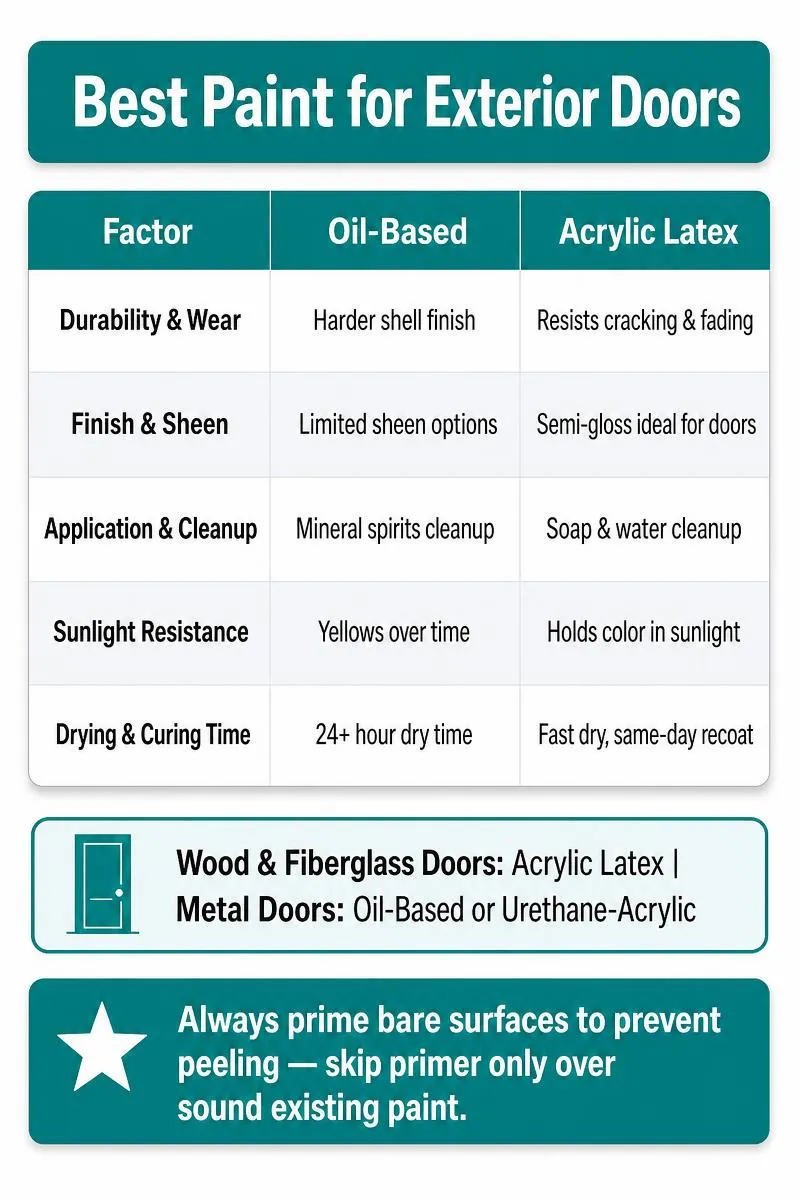
| Factor | Oil-Based | Acrylic Latex |
|---|---|---|
| Durability & Wear | Harder shell finish | Resists cracking & fading |
| Finish & Sheen | Limited sheen options | Semi-gloss ideal for doors |
| Application & Cleanup | Mineral spirits cleanup | Soap & water cleanup |
| Sunlight Resistance | Yellows over time | Holds color in sunlight |
| Drying & Curing Time | 24+ hour dry time | Fast dry, same-day recoat |
What Is Oil-Based Door Paint?
Oil-based door paint creates a hard, smooth finish that bonds aggressively to metal and previously oil-painted surfaces. The formula levels out brush marks naturally and cures to a durable shell that resists scuffs and scratches better than most latex products.
Best applications include:
- Metal doors, where oil-based bonds aggressively to metal
- High-traffic entryways, where the door resists constant daily wear
- Repainting projects where the existing finish is oil-based, since switching without prep causes failures
The tradeoffs are significant:
- Demands solvent cleanup and ventilation with at least 24 hours between coats
- Yellows noticeably over time, especially on doors with limited sun or lighter colors
- Chalking accelerates in direct sun compared to modern latex formulas
Related Reading
Best primer for cabinets without sanding
A practical guide to primers that bond without sanding — useful when prepping an exterior door and you want primer…
What Is Exterior Acrylic Latex Paint?
Exterior acrylic latex paint flexes with temperature changes and resists UV fading. Cleanup requires just soap and water. The formula is designed for DIY application, with longer open times that let you correct mistakes before the paint sets.
Best uses include:
- Wood and fiberglass doors, where latex flexes with temperature swings
- Sunny exposures, where UV resistance prevents color fading
- Quick weekend projects, where the door returns to service fast
Latex works especially well in hot climates where thermal expansion cracks oil-based finishes.
The main weakness is technique sensitivity:
- Brush marks show more easily with latex unless you use proper loading and laying-off methods
- The cured finish is slightly softer than oil-based paint, showing scuffs more readily before full cure
- Cheaper latex formulas struggle with adhesion on slick surfaces like metal without aggressive sanding or bonding primers
Head-to-Head: 5 Decision Factors
These five factors cover the practical differences that affect your project timeline, long-term appearance, and application difficulty. Each one compares oil-based and latex directly so you can choose based on your specific door and conditions.
1. Durability & Wear
Oil-based paint wins on surface hardness. The cured finish resists dents and scratches, making it ideal for doors that take physical abuse from pets, kids, or constant traffic. The rigid shell survives scrubbing without wearing through.
Acrylic latex flexes to prevent cracking. Wood and fiberglass expand and contract with temperature and humidity changes. Latex moves with the substrate instead of forming microcracks that let moisture penetrate.
Over a 5 to 10 year span, latex finishes on wood doors typically outlast oil-based coatings in climates with temperature swings.
2. Finish & Sheen Options
Both oil-based and acrylic latex paints are available in semi-gloss, the most popular choice for exterior doors. Semi-gloss provides washability and moisture resistance. It also highlights door details and paneling.
Satin sheen works for doors with minimal sun exposure or when you want a subtler look. Gloss sheen delivers durability and easy cleaning, but the high shine shows every surface imperfection. Both paint types offer all three sheens, so this factor rarely determines your choice.
3. Application & Cleanup
Latex paint is significantly easier for DIY:
- Brushes and rollers clean with warm soapy water
- Mistakes wipe away with a damp rag before the paint sets
- Low VOCs simplify DIY work in most cases
- You can apply latex in moderate humidity, where it bonds without adhesion problems
Oil-based paint demands more preparation and care:
- Mineral spirits required for cleanup, with proper disposal of solvent-soaked rags to prevent spontaneous combustion
- Strong ventilation is needed during application and drying
- Requires skill to avoid runs since oil-based formulas flow differently than latex
4. Sunlight & Weather Resistance
Acrylic latex handles UV exposure better than oil-based paint. Modern latex formulas use advanced acrylic resins that resist chalking and color fading even on south-facing doors. The finish stays flexible through freeze-thaw cycles without cracking.
Oil-based paint yellows over time, especially in shaded areas or on white and light-colored doors. Direct sunlight accelerates chalking and binder breakdown, leaving a powdery residue. In coastal or high-humidity environments, latex resists mildew and moisture better than oil-based paint.
5. Drying & Curing Time
Latex paint recoats in 4 to 6 hours under normal conditions, letting you apply two coats in a single day. Full cure takes about two weeks, but the door can be closed without sticking once dry.
Oil-based paint needs a minimum of 24 hours between coats, and some formulas recommend 48 hours in humid conditions. Full cure can take 30 days or longer. This extended timeline complicates quick-turnaround projects.
Which Should You Choose?
Your door material and sun exposure determine the right paint system:
- For a wood door with full sun exposure, use acrylic latex paint in semi-gloss sheen. The UV resistance and flexibility prevent premature coating failure. Prime bare wood with an acrylic or oil-based wood primer first.
- For a metal door, oil-based paint or specialized urethane-acrylic formulas bond best to metal surfaces. Metal expands and contracts, and oil-based primers grip prepared metal aggressively. If using latex, you must use a bonding primer designed for metal.
- For a fiberglass door, acrylic latex with a bonding primer is the standard recommendation. Fiberglass surfaces are too smooth for mechanical adhesion, so primer creates the chemical bond. Oil-based paint can work but offers no advantages over latex on this substrate.
- When repainting over sound existing paint, you can use latex over latex without primer if the surface is clean and lightly sanded. Switching from oil to latex requires an oil-based bonding primer or aggressive sanding to create tooth. Latex over oil will peel without prep.
- For quick projects with limited dry time, latex dries fast for quick turnaround. Oil-based formulas leave the door out of service for at least 24 hours per coat.
Related Reading
Benjamin moore onyx vs tricorn black
A side-by-side color and undertone comparison of two popular black paints — helpful for readers deciding on a black…
FAQs
Should exterior doors be satin or semi-gloss?
Semi-gloss is the better choice for most exterior doors because it resists moisture and cleans easily. Satin works if your door is sheltered from weather and you prefer a low-luster appearance. You sacrifice some durability with satin.
Do I need to prime an exterior door before painting?
Yes, if you’re working with bare wood, metal, or fiberglass. Primer creates the adhesion layer that keeps paint from peeling. You can skip primer only if you’re repainting over existing paint in good condition, and even then a coat of primer improves longevity.
What type of paint is best for a front door that gets a lot of sunlight?
Exterior acrylic latex paint handles direct sun better than oil-based formulas. Acrylic latex holds color in direct sun. Look for 100% acrylic resins rather than vinyl-acrylic blends, and choose lighter colors since darker shades fade faster.
What are the three colors not to paint your front door?
This is mostly personal preference, but very dark colors on metal doors in full sun cause excess heat damage. Bright neon colors fade rapidly under UV exposure. Otherwise, color choice matters less than using quality paint with proper prep.
Can I use interior paint on an exterior door?
No. Interior paint fails within months outdoors. It lacks the UV stabilizers, moisture resistance, and flexibility needed for exterior conditions.
How long should I wait before closing the door after painting?
With latex paint, wait at least 8 to 12 hours before closing the door gently. Oil-based paint needs 24 to 48 hours. If the surface feels tacky, wait longer to avoid sticking.
Can I paint a fiberglass front door?
Yes, fiberglass doors paint well with the right prep and products. Clean thoroughly, sand lightly to create surface tooth, and apply a bonding primer. Primer prevents peeling on fiberglass. Finish with two coats of exterior acrylic latex.
Should I use a brush or roller to paint my front door?
Both work, but quality brush gives best control for panel details and edges. You can use a small foam roller for flat sections to speed up coverage, then tip off with a brush to eliminate texture. Avoid cheap brushes that shed bristles into your finish.
What is the most durable paint for a front door?
Oil-based paint provides the hardest finish. Modern 100% acrylic latex formulas offer better long-term durability because they resist UV and cracking over time. For maximum toughness, look for exterior latex paints labeled for doors and trim.
Can I paint my front door without removing it?
Yes, but removing gives better access to all edges and surfaces. If you paint it in place, prop it open and be careful with runs on vertical surfaces. Remove hardware or tape it off to keep paint off hinges and locks.
What’s the best paint for a metal exterior door?
Oil-based paint or specialized urethane-acrylic formulas bond best to metal. Always start with a rust-inhibiting metal primer, even if the door looks clean. Oil-based gives a harder scuff-resistant finish on metal.
Final Verdict
Acrylic latex paint in semi-gloss sheen is the best all-around choice for most homeowners painting exterior doors. It handles sun exposure without yellowing and dries fast enough for weekend projects. It works on wood and fiberglass without compatibility issues.
The soap-and-water cleanup and low fumes make DIY work manageable. Choose oil-based paint only when working with metal doors or when you’re matching an existing oil-based finish. The harder finish and better leveling justifies the extra dry time in those specific situations.
Before you buy anything, identify your door material and measure how many hours of direct sun it receives daily. Those two factors determine which paint system lasts.
If you’re in Fish Hawk or the Fish Hawk metro area and want a front door that looks professionally finished without the guesswork, our team handles surface prep, priming, and painting with products suited to Florida sun and humidity. See what a door job includes on our exterior painting services. Call 813-860-8661 for a free estimate and we’ll match the right paint to your door.