
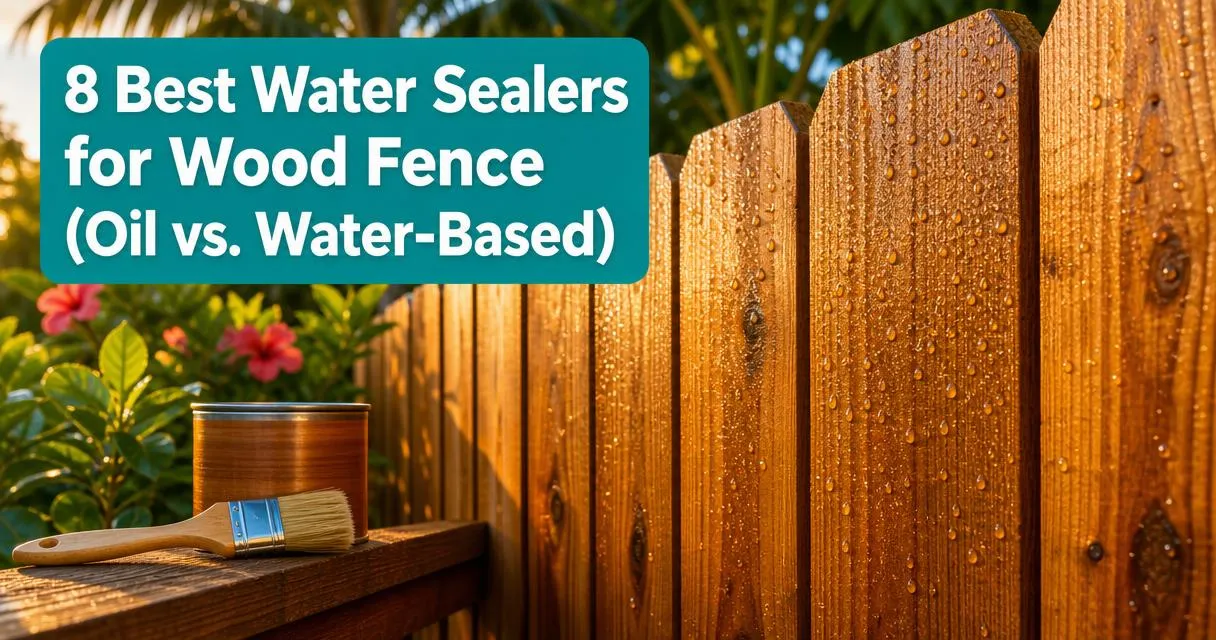
Unsealed wood fences rot, warp, and gray within 1 to 2 years. Sealing is non-optional if you want your fence to survive more than a couple seasons. There’s no single best sealer for every fence.
The right choice depends on your wood species, local climate, and whether you want a natural or pigmented finish. We compare 8 products across oil-based and water-based formulas, clear vs. semi-transparent vs. solid finishes. Each pick is matched to specific fence types and conditions.
Key Takeaways
- Oil-based sealers penetrate wood for deep water repellency, while water-based formulas form a protective surface film that can peel if applied to damp wood
- Clear sealers show natural grain beautifully but fade fast and need frequent reapplication even in mild climates
- Semi-transparent and solid sealers add UV-blocking pigment that extends protection noticeably longer than clear versions
- Cedar and redwood need hardwood-specific formulas like Cabot Australian Timber Oil that enhance natural oils in hardwood
- Marine-grade sealers are overkill for typical backyard fences unless you face extreme coastal weather or constant moisture exposure
- Proper prep matters more than product choice: skipping the cleaning step or sealing damp wood causes most sealer failures
Related Reading
Explains the practical differences between sealing and staining so you can decide whether a water sealer or a stain is…
Quick Comparison: Best Water Sealer For Wood Fence
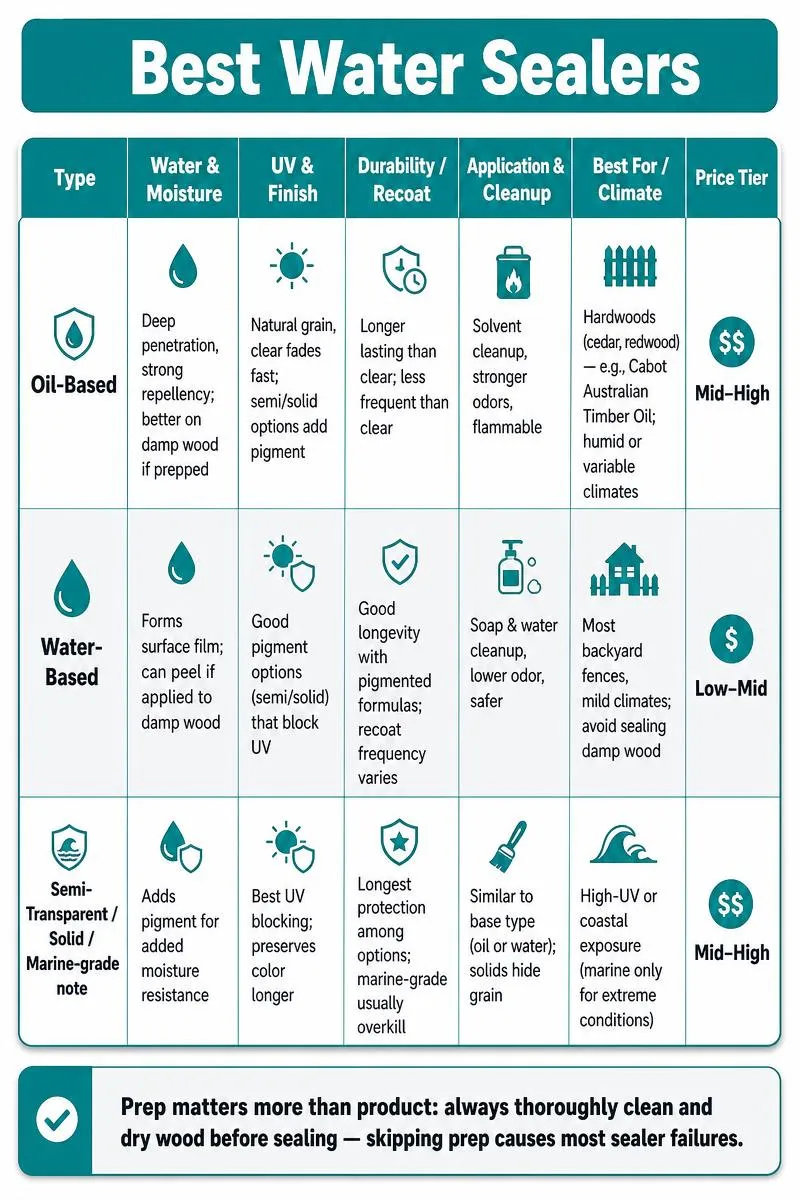
| Type | Water & Moisture | UV & Finish | Durability / Recoat | Application & Cleanup | Best For / Climate |
|---|---|---|---|---|---|
| Oil-based | Deep penetration; strong repellency; tolerates damp if prepped | Shows natural grain; clear fades; pigmented options | Longer-lasting than clear; moderate recoat frequency | Solvent cleanup; stronger odors; flammable | Hardwoods (cedar, redwood); humid or variable climates |
| Water-based | Forms surface film; can peel if applied to damp wood | Good pigment options; effective UV blocking | Good longevity with pigmented formulas; recoat varies | Soap & water cleanup; lower odor; safer | Most backyard fences; mild climates; avoid sealing damp wood |
| Semi-transparent / Solid / Marine | Adds pigment; improved moisture resistance | Best UV blocking; preserves color longer | Longest protection; marine-grade often overkill | Depends on base (oil or water); solids hide grain | High-UV or coastal exposure; marine for extreme conditions |
What Are Oil-Based Fence Sealers?
Oil-based sealers soak into wood fibers instead of sitting on the surface. They create deep, long-lasting water repellency that resists peeling and flaking as the wood expands and contracts. They’re ideal for pressure-treated pine and cedar because they work with the wood’s natural moisture movement rather than fighting it.
Cleanup requires mineral spirits, and the fumes are strong during application. But the penetrating formula is more forgiving if your fence wasn’t bone-dry before you started. Popular oil-based options include:
- Ready Seal is the most popular oil-based option for DIYers because you can apply it to damp wood without adhesion problems
- Cabot Australian Timber Oil enhances the natural color of cedar and redwood with oils that feed wood rather than coating
- Olympic WaterGuard offers a middle-ground formula with moderate penetration and a semi-transparent finish that blocks UV while keeping grain visible
What Are Water-Based Fence Sealers?
Water-based sealers create a protective film on the wood surface rather than soaking in. This gives you low-VOC with soap cleanup that won’t trigger headaches or require ventilation. They dry faster than oil-based products, often within 1 to 2 hours, letting you apply two coats in a single afternoon.
The surface film can trap moisture if applied to wood that hasn’t fully dried, causing peeling and bubbling. Popular water-based options include:
- Seal-Once Nano+Poly uses polymer technology to create a flexible film that moves with the wood to reduce peel risk compared to older acrylic formulas
- Eco Advance Exterior is the budget-friendly water-based option with basic water repellency but minimal UV protection
- SaverSystems #1 Deck comes in both semi-transparent and solid color versions, letting you hide weather damage on older fences
Head-to-Head: Water & Moisture Resistance
Oil-based sealers penetrate into the wood, creating sustained repellency through rain cycles without reapplication. Water-based films protect the surface effectively when applied correctly. But any moisture trapped beneath the film during application causes adhesion failure.
The winner depends on your fence’s exposure:
- For full-sun fences in dry climates, water-based films work fine and give you easier cleanup
- For shaded fences or high-humidity areas, oil-based penetration prevents moisture-trapping failures
- For any fence that takes more than 48 hours to dry after rain, oil-based formulas don’t rely on surface adhesion
Related Reading
Rounds up transparent stains that preserve wood grain while providing moisture protection — useful if you want a clear…
Head-to-Head: UV Protection & Finish Options
Pigment is what blocks UV, not the oil or water base. Each finish type offers different trade-offs:
- Clear sealers of either type fade within 1 to 2 years because UV breaks down the wood underneath, turning wood gray despite repellency
- Semi-transparent sealers add enough pigment to block most UV while keeping wood grain visible, extends lifespan significantly for oil-based and moderately for water-based
- Solid color sealers hide grain completely but deliver the longest protection at 3 to 5 years because the opaque pigment blocks nearly all UV
Solid color sealers are the best choice for older fences with visible weathering, sun damage, or inconsistent coloring where you want a uniform appearance. If you value natural wood grain, accept that you’ll recoat more frequently with clear or semi-transparent options.
Head-to-Head: Durability & Recoat Frequency
Oil-based sealers typically last 2 to 3 years before you see water beading stop and wood grain start to gray. Water-based formulas last 1 to 2 years because the surface film breaks down faster under UV. Pigmented versions extend lifespan in both categories by 6 to 12 months compared to clear versions of the same base formula.
Florida’s intense sun and high humidity shorten all these intervals noticeably. A sealer rated for 3 years in Colorado might only give you 18 to 24 months in Tampa. Budget your recoat schedule based on local conditions, not manufacturer claims tested in moderate climates.
Head-to-Head: Application, Cleanup & Safety
Water-based sealers offer low odor, soap cleanup, and same-day pet and kid access once the sealer dries. You can work without a respirator. Overspray on plants or concrete rinses off with a hose.
Oil-based formulas require mineral spirits for cleanup, strong ventilation during application, and 24 to 48 hours before pets should contact treated surfaces. Oil-based sealers are more forgiving on prep because they penetrate even slightly damp wood. Water-based products demand bone-dry surfaces or you’ll see peeling within months.
Cost varies significantly by product tier:
- Budget options like Thompson’s and Eco Advance run $20 to $30 per gallon
- Premium choices like Seal-Once Marine and Cabot cost $50 to $80 per gallon but deliver better UV protection
Related Reading
Highlights sealers designed for intense sun and UV protection, which is important if your fence is exposed to full sun…
Which Should You Choose?
Match your sealer to your fence type, climate, and finish preference:
- For new pressure-treated pine fences: Ready Seal semi-transparent oil-based sealer gives you the best balance of penetration, UV protection, and application that forgives imperfect prep on damp wood. It covers 250 to 350 square feet per gallon and lasts 2 to 3 years in most climates.
- For cedar and redwood: Cabot Australian Timber Oil enhances the wood’s natural color with oils that feed wood rather than coating
- For high-moisture or coastal climates: Seal-Once Marine combines polymer film with extreme water resistance for coastal use
- For a natural wood look: Thompson’s or Olympic WaterGuard clear formulas show grain but need frequent recoating
- For eco-conscious or pet-safe homes: Seal-Once Nano+Poly water-based delivers low-VOC application with soap cleanup
- For older fences with visible weather damage: SaverSystems #1 Deck solid color hides flaws on weathered wood
- For budget-constrained projects: Eco Advance Exterior Wood Water Repellent runs $20 to $25 per gallon, though you’ll sacrifice UV protection
How to Apply Fence Sealer
- Clean your fence with wood cleaner or a pressure washer set to 1,500 PSI max using a fan tip, not a zero-degree tip that gouges wood fibers. Remove dirt, mildew, and any old flaking sealer so the new product contacts bare wood.
- Allow 48 hours of dry weather before sealing because damp wood causes most failures, especially with water-based formulas.
- Apply sealer with a pump sprayer for speed, then back-brush with a natural bristle brush to work product into the grain. Rollers work for flat boards but miss the gaps between pickets.
- Apply a second coat within the manufacturer’s recoat window, typically 1 to 2 hours for water-based and 4 to 8 hours for oil-based. Missing this window means the first coat prevents proper second-coat bonding.
FAQs
1. Is there anything better than Thompson’s Water Seal?
Yes. Thompson’s is a budget clear sealer with minimal UV protection and a 12 to 18 month lifespan. Ready Seal semi-transparent and Seal-Once Nano+Poly both last longer and prevent graying, though they cost $10 to $20 more per gallon.
2. What is the best protective coating for a wood fence?
Semi-transparent oil-based sealer like Ready Seal offers the best balance of water repellency, UV protection, and grain visibility for most fences. If you need maximum protection on an older fence, solid color water-based sealer hides damage on weathered surfaces.
3. What is the best waterproof finish for outdoor wood?
Seal-Once Marine combines polymer film with extreme water resistance. It’s overkill for typical fences but handles constant moisture exposure in coastal areas, shaded fences that stay damp, or gates near sprinkler zones.
4. What is the best way to seal a wooden fence?
Clean the fence, wait 48 hours for it to dry completely, then apply sealer with a pump sprayer and back-brush to work it into the grain. Apply a second coat within the recoat window listed on the product label.
5. Can I stain a fence without sealing it?
No. Stain without sealer washes out within 6 to 12 months because it has no water repellency. Most modern fence stains are actually stain-sealer combos that color and protect in one product.
6. How often should you seal a wood fence?
Every 1 to 3 years depending on sealer type and climate:
- Clear sealers need recoating every 12 to 18 months
- Semi-transparent oil-based lasts 2 to 3 years
- Solid color can go 3 to 5 years in mild climates, less in high-UV or high-humidity areas
7. How long does wood sealer last on a fence?
- Oil-based sealers last 2 to 3 years
- Water-based last 1 to 2 years
- Pigmented versions in both categories last longer than clear versions
- Florida’s sun and humidity cut all these estimates noticeably
8. What is the best time of year to seal a wood fence?
Late spring or early fall when temperatures stay between 50 and 85°F and you have 48 hours of dry weather ahead. Avoid sealing in summer heat above 90°F because the sealer dries too fast to penetrate.
9. Is oil-based wood sealer safe to use around pets and family?
Yes, once it fully cures in 24 to 48 hours. During application, oil-based fumes require ventilation and you should keep kids and pets away until the smell dissipates, usually 4 to 8 hours.
10. What is the best way to remove old sealer from a fence?
Use a deck stripper chemical followed by pressure washing at 1,500 PSI with a fan tip. For small areas or spot repairs, a stiff wire brush and wood cleaner removes flaking sealer effectively.
Final Verdict
No single sealer wins for every fence because wood species, climate, and finish preference all change the equation. The safest all-around choice is semi-transparent oil-based sealer like Ready Seal. It penetrates pressure-treated pine and cedar and forgives minor prep mistakes better than water-based films.
The moderate pigment level blocks UV without hiding grain. For cedar or redwood, Cabot Australian Timber Oil enhances natural color instead of coating over it.
For coastal or high-moisture areas, Seal-Once Marine justifies its price with extreme resistance that standard sealers can’t match.
Your next step is identifying your fence’s wood species and checking whether your local climate counts as high-humidity, high-UV, or both. Match those factors to the product recommendations above. Then verify you can give the fence 48 hours of dry weather for proper prep and application.
Florida’s humidity and intense sun break down sealers faster than milder climates, so expect to recoat sooner than the manufacturer’s estimate.
If you’re in the Fish Hawk metro area and need help choosing or applying the right sealer, our exterior painting services can assess your fence and recommend products suited to Florida conditions. Give us a call at 813-860-8661 to schedule a quick on-site evaluation. We can handle the prep and application to help extend your fence’s life.