
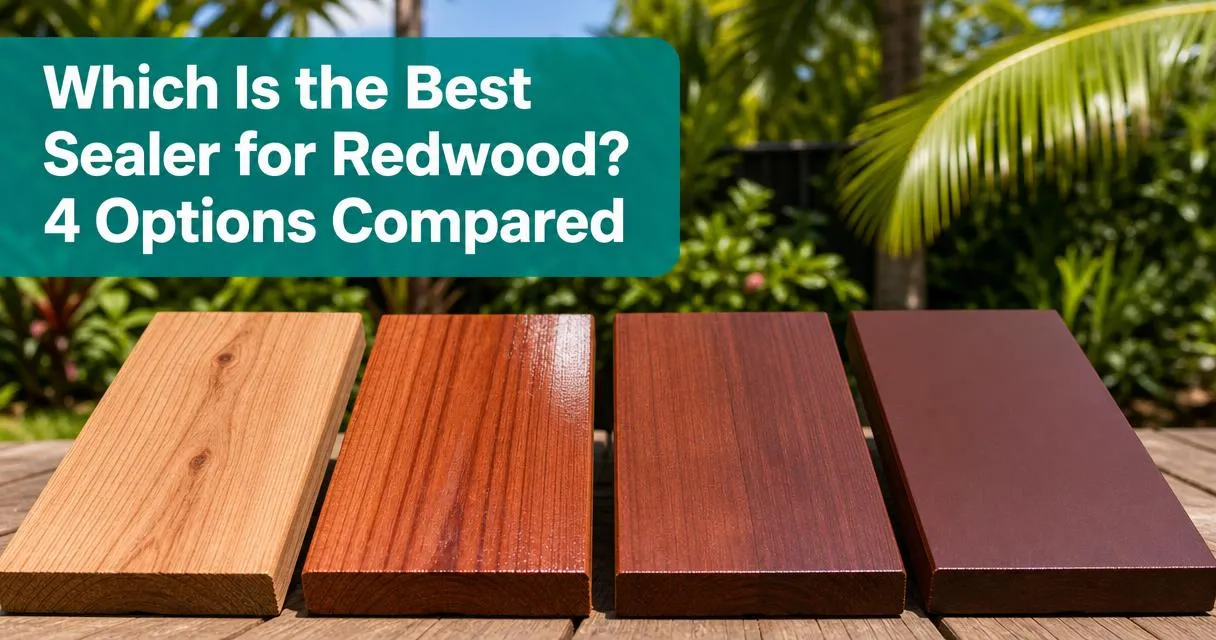
Redwood resists rot naturally, but UV exposure turns it gray and brittle within months without protection. The right sealer type matters more than brand. Your best choice depends on whether you want maximum UV defense, the easiest reapplication process, or preservation of that natural redwood grain.
Key Takeaways
- Penetrating oils soak deep into wood without forming a surface film, making them easiest to reapply but offering only 1-2 years of UV protection
- Semi-transparent stain-sealers block UV with pigment while keeping the grain visible, lasting 2-3 years before recoating
- Clear sealers preserve natural wood tone but need reapplication every 1-2 years, the shortest outdoor lifespan of any option
- Solid stains hide all wood grain and deliver 3-5 years of protection, masking weathering or damage completely
- Switching from solid stain back to any other sealer type requires full chemical stripping, not just surface cleaning
- New redwood needs 1-3 months to dry after installation before sealing, or trapped moisture causes early sealer failure
Comparing the Top Best Sealer For Redwood
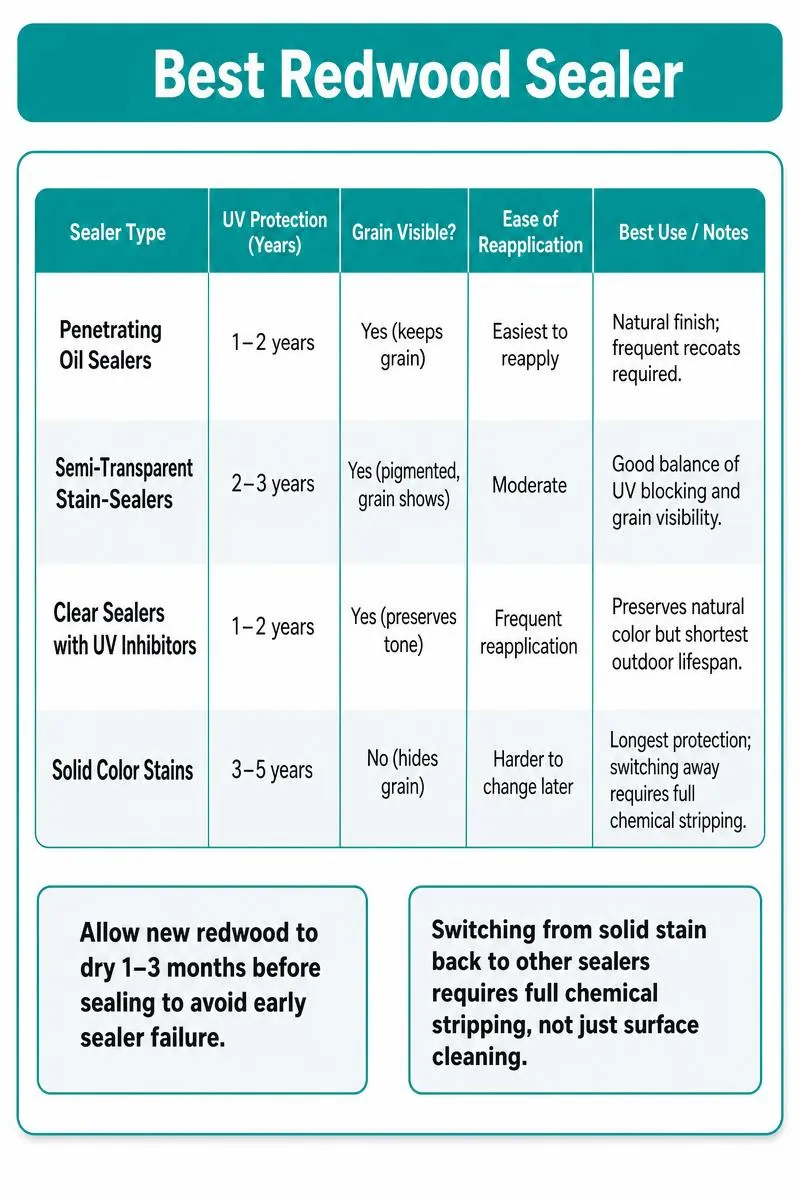
| Sealer Type | UV Protection (Years) | Grain Visible? | Ease of Reapplication | Best Use / Notes |
|---|---|---|---|---|
| Penetrating Oil Sealers | 1–2 years | Yes (keeps grain) | Easiest to reapply | Natural finish; frequent recoats |
| Semi-Transparent Stain-Sealers | 2–3 years | Yes (pigmented, grain shows) | Moderate | Balance of UV blocking and grain visibility |
| Clear Sealers with UV Inhibitors | 1–2 years | Yes (preserves tone) | Frequent reapplication | Preserves color; shortest outdoor lifespan |
| Solid Color Stains | 3–5 years | No (hides grain) | Harder to change later | Longest protection; switching requires chemical stripping |
Quick Comparison
- Penetrating Oil: Moderate UV protection, reapply every 1-2 years, easiest recoat process, preserves natural look completely
- Semi-Transparent Stain-Sealer: Good UV protection, reapply every 2-3 years, light prep needed, grain visible with added color
- Clear UV Sealer: Moderate UV protection, reapply every 1-2 years, easy recoat, preserves exact natural tone
- Solid Stain: Excellent UV protection, reapply every 3-5 years, requires stripping to change types, hides grain entirely
Related Reading
A focused guide on sealers specifically for redwood decking with product picks, application steps, and maintenance…
Option A: Penetrating Oil Sealers
Penetrating oils like Ready Seal Redwood soak deep into the wood without leaving a surface film. You won’t see peeling or flaking because there’s no finish sitting on top of the grain. These oils enhance redwood’s natural color while providing water repellency and moderate UV resistance.
Best for new redwood decks, fences, and smooth surfaces that haven’t weathered or grayed yet. The oil penetrates fresh open-pored wood most effectively. Application is straightforward: clean the surface, let it dry, and apply one or two coats with a brush or pump sprayer.
The weakness is shorter UV life. Most penetrating oils need reapplication every 1-2 years, and color options are limited compared to stain-sealers. But recoating is simple: just clean the surface and recoat without sanding or stripping.
Option B: Semi-Transparent Stain-Sealers
Semi-transparent stain-sealers combine pigment with sealing resins, giving you UV-blocking color with visible grain. The pigment particles scatter and absorb UV rays before they degrade the wood fibers, extending protection to 2-3 years between coats.
Best for decks and siding where you want some color variation with the natural grain still showing through. These products come in redwood tones that enhance the wood’s existing hue. You can also choose grays and browns for a different look.
The added pigment blocks more UV than clear products. You’ll need light surface prep before reapplication: clean off dirt and mildew, then scuff any glossy areas with a light sanding. The thin surface film prevents buildup after multiple coats if you prep correctly.
Related Reading
Practical recommendations for sealers that hold up to constant sun exposure—helpful if your redwood is in a sunny spot.
Option C: Clear Sealers with UV Inhibitors
Clear sealers preserve redwood’s exact natural tone without adding any pigment or color shift. Modern formulas include UV inhibitors, chemical additives that absorb or reflect UV rays, but they can’t match the protection level of pigmented products.
Best for interior redwood, covered porches, or natural-look purists who prioritize appearance over maximum protection. If your redwood is under a deep overhang or gets limited direct sun, a clear sealer repels water without color shift.
The tradeoff is the shortest outdoor life: 1-2 years in full sun before the wood starts graying. Without pigment to block UV penetration, clear sealers rely on chemical inhibitors that break down faster than physical pigment barriers. Reapplication is similar to penetrating oils: clean and recoat, but you’ll do it more frequently on sun-exposed surfaces.
Option D: Solid Color Stains
Solid stains create an opaque film that completely hides the wood grain, similar to paint but transmits moisture vapor better. They deliver the longest protection window at 3-5 years and hide imperfections, weathering, or previous color variations in older redwood.
Best for old, weathered, or damaged redwood decks and siding where the natural appearance is already compromised. If your redwood has turned gray, has uneven fading, or shows minor surface damage, solid stain provides a uniform finish and maximum UV blocking.
The thick pigment layer stops UV rays completely. The major weakness is loss of grain visibility. You’re essentially painting the wood, and switching back to penetrating oil or semi-transparent products later requires complete surface stripping with chemical removers or heavy sanding. Solid stain also shows wear patterns more visibly than thinner products, and any recoating requires proper surface prep to prevent adhesion problems.
Head-to-Head: UV Protection & Longevity
- Solid stains block all UV penetration with an opaque pigment layer, lasting 3-5 years between recoats
- Semi-transparent stain-sealers rank second, using trans-oxide pigments that scatter UV while keeping grain visible, lasting 2-3 years
- Penetrating oils and clear sealers tie for weakest because chemical inhibitors degrade quickly within 1-2 years
- Neither penetrating oils nor clear sealers provide a physical UV barrier, so graying appears sooner on unprotected wood
Related Reading
A comparison of transparent stain options that preserve redwood’s natural grain while providing protection.
Head-to-Head: Ease of Reapplication
- Penetrating oils have the easiest recoat process: clean the surface, let it dry, and brush or spray on a fresh coat with no sanding or stripping
- Clear sealers require similar prep, just cleaning and drying, but may need light scuffing on glossy spots if the previous coat left any sheen
- Semi-transparent stain-sealers need cleaning plus light sanding on built-up areas where the finish has turned glossy
- Solid stains require the most work: thorough cleaning, scraping peeling areas bare, and primer on bare wood patches
- Switching from solid stain to any other type requires complete surface stripping with chemical removers or heavy sanding, a multi-day project
Which Should You Choose?
- For a new redwood deck, start with penetrating oil or semi-transparent stain-sealer. Penetrating oil keeps the most natural look while simplifying future recoating. Semi-transparent adds UV-blocking pigment for longer protection.
- For weathered or silvered redwood, solid stain is your best option. The wood has already lost its natural appearance. Solid stain hides gray discoloration while delivering maximum UV protection.
- For covered or interior redwood, use a clear sealer. UV exposure is minimal, so natural-look preservation matters more than maximum UV blocking. The shorter recoat interval won’t be an issue in protected areas.
- If low-maintenance is your priority, choose semi-transparent stain-sealer on good-condition redwood or solid stain on weathered surfaces. Both extend time between recoats to 2-3+ years. That compares to annual or biannual recoating with penetrating oils and clear sealers.
FAQs
1. Does redwood need to be sealed?
Yes. While redwood resists rot and insect damage naturally, UV exposure degrades the wood fibers and turns the surface gray within months. Sealing blocks UV penetration and maintains water repellency, preventing both cosmetic damage and structural weakening over time.
2. What is the best finish to put on redwood?
It depends on the surface age and sun exposure. New redwood in full sun performs best with semi-transparent stain-sealer for UV protection with visible grain. Weathered redwood benefits from solid stain that hides discoloration, while covered areas can use clear sealer to preserve the natural tone.
3. How do you seal redwood?
- Clean the surface with a deck cleaner to remove dirt and mildew
- Let the wood dry completely for 24-48 hours before applying
- Apply one to two even coats with a brush, pad, or pump sprayer, following the wood grain to prevent uneven absorption and streaking
- Wait 24 hours before allowing foot traffic on the sealed surface
4. What is the best treatment for redwood?
Match sealer to wood condition and sun exposure:
- Fresh redwood benefits from penetrating oil or semi-transparent stain
- Weathered wood needs solid stain
- Covered surfaces work well with clear sealer
The right choice depends on your priorities for appearance versus protection longevity.
5. How often should I reseal my redwood deck?
Reseal every 1-3 years depending on sealer type and sun exposure:
- Penetrating oils and clear sealers need recoating every 1-2 years
- Semi-transparent stain-sealers last 2-3 years
- Solid stains extend to 3-5 years
Full sun exposure shortens all these timelines compared to shaded areas.
6. Can you seal redwood right after installation?
Wait 1-3 months for the wood’s moisture content to drop below 15% before sealing. Fresh-cut redwood holds significant moisture, and sealing too early traps water inside the wood. This causes premature sealer failure, discoloration, or warping. Test moisture with an inexpensive meter before sealing.
Final Verdict
Most homeowners get the best results with semi-transparent stain-sealer on redwood in good condition. You’ll preserve grain visibility while adding UV-blocking pigment that extends protection between coats, a practical balance of appearance and maintenance.
For older or weathered redwood where the natural look is already compromised, solid stain delivers maximum UV protection and hides imperfections.
Penetrating oils work well if you want the easiest possible recoating process and don’t mind annual or biannual maintenance. Clear sealers make sense only for covered areas or interior installations where UV exposure is minimal.
Test your chosen sealer on a small, inconspicuous area first. Apply it according to the manufacturer’s instructions and let it cure for a week. Then verify color and finish before committing to the full surface.
Florida’s intense UV means redwood decks need more frequent resealing, and we help homeowners in the Fish Hawk metro area choose the right product and schedule for their exposure. For hands-on guidance and application, book a consultation about our deck refinishing services to review sealer options and maintenance plans. Call us at 813-860-8661 to set up a time.