
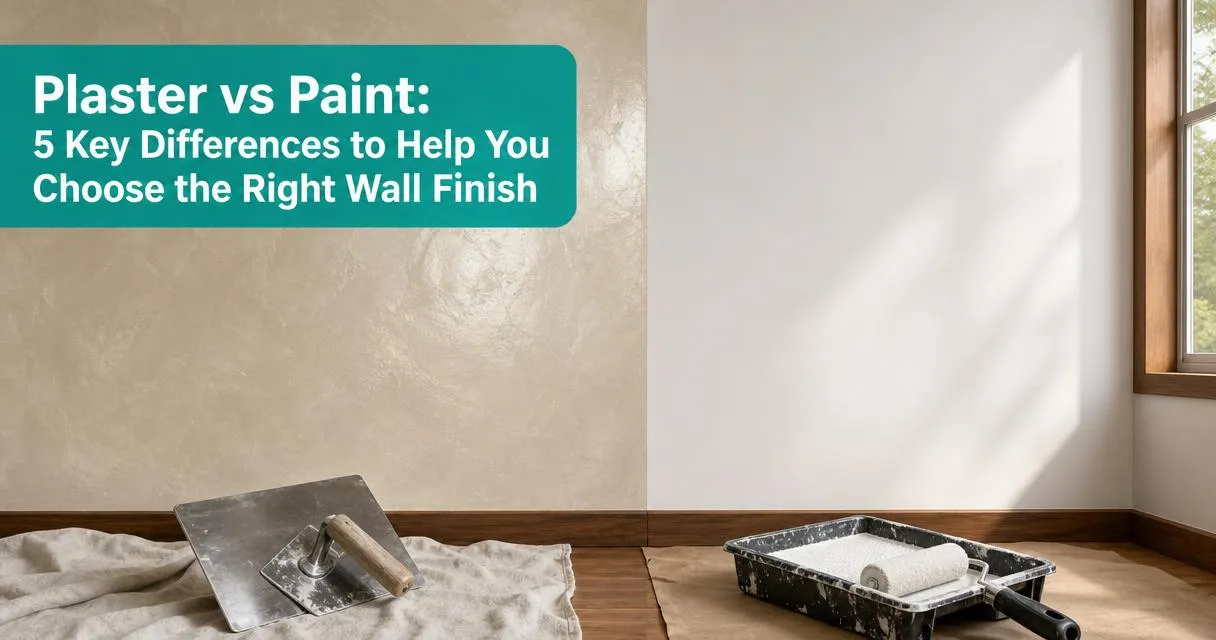
You’re standing in a room, staring at bare walls, and you’ve got two real options in front of you: a plaster finish that looks like something out of a design magazine, or paint that you could start and finish this weekend. Neither one is the automatic right answer. The best choice depends on your budget, your room’s purpose, and how much skill you’re bringing to the project.
Below, we break down 5 comparison criteria so you can make the call with confidence.
Key Takeaways
- Paint is the more affordable and forgiving option for most rooms, especially if you’re doing the work yourself
- Venetian and limestone plaster finishes create texture and depth that no flat or satin paint can replicate
- New plaster always needs a mist coat (watered-down emulsion) before any standard paint goes on, or the paint will peel
- The cost gap between paint and plaster grows fast as room size increases, because plaster requires skilled labor at every square foot
- Both finishes fail without proper surface prep: plaster over contaminated walls cracks, and paint over unprimed surfaces peels
Related Reading
A direct comparison of limewash and plaster that helps readers weigh an alternative finish alongside paint and plaster…
Plaster Vs Paint Compared
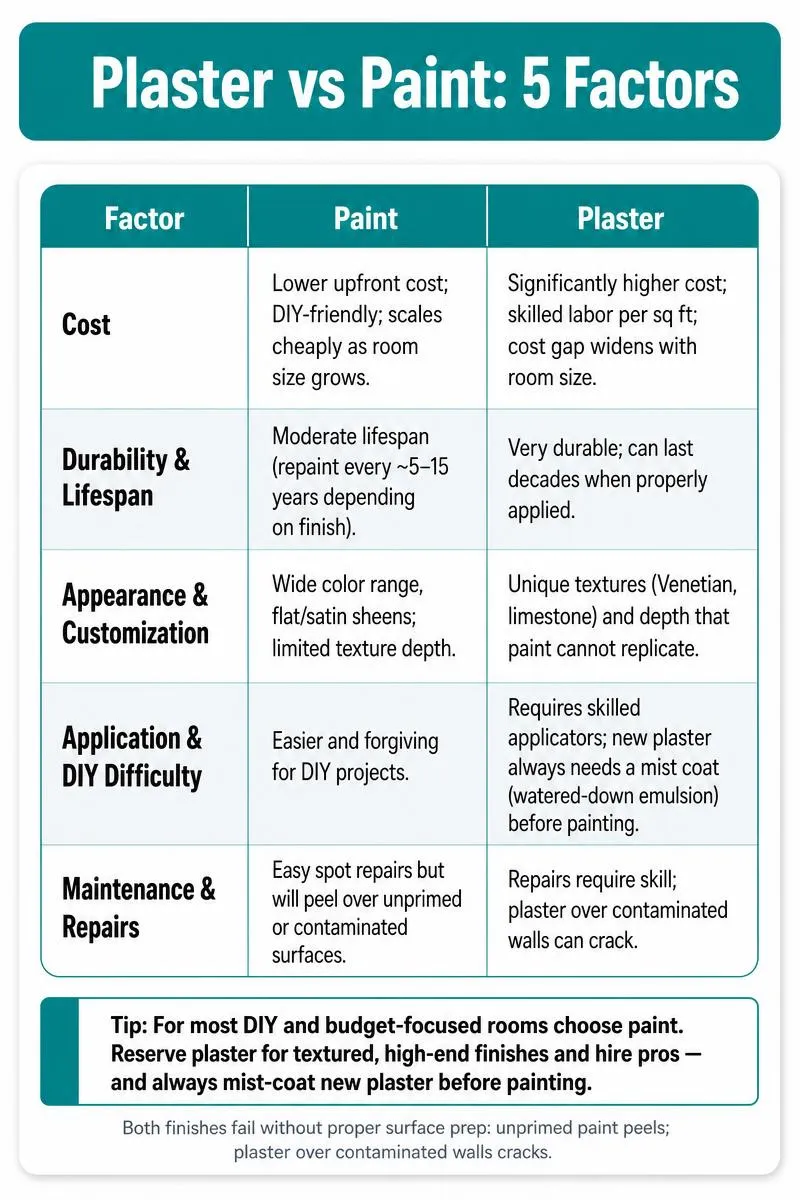
| Factor | Paint | Plaster |
|---|---|---|
| Cost | Lower upfront cost; DIY-friendly; scales cheaply as room size grows. | Significantly higher cost; skilled labor per sq ft; cost gap widens with room size. |
| Durability & Lifespan | Moderate lifespan (repaint every ~5–15 years depending on finish). | Very durable; can last decades when properly applied. |
| Appearance & Customization | Wide color range, flat/satin sheens; limited texture depth. | Unique textures (Venetian, limestone) and depth that paint cannot replicate. |
| Application & DIY Difficulty | Easier and forgiving for DIY projects. | Requires skilled applicators; new plaster always needs a mist coat (watered-down emulsion) before painting. |
| Maintenance & Repairs | Easy spot repairs but will peel over unprimed or contaminated surfaces. | Repairs require skill; plaster over contaminated walls can crack. |
Quick Comparison Table
Here’s a side-by-side snapshot of how paint and plaster stack up across the five criteria covered in this article:
- Cost: Paint is low cost for DIY materials. Plaster is high cost with skilled labor.
- Durability: Paint lasts 5 to 10 years before repainting. Plaster withstands decades of use.
- Appearance: Paint offers unlimited colors and sheens. Plaster delivers natural texture and depth.
- DIY Difficulty: Paint is beginner-friendly with basic prep. Plaster requires trowel skill and timing.
- Maintenance: Paint patches easily with spot priming. Plaster needs re-plastering and color matching.
What Is a Plaster Finish?
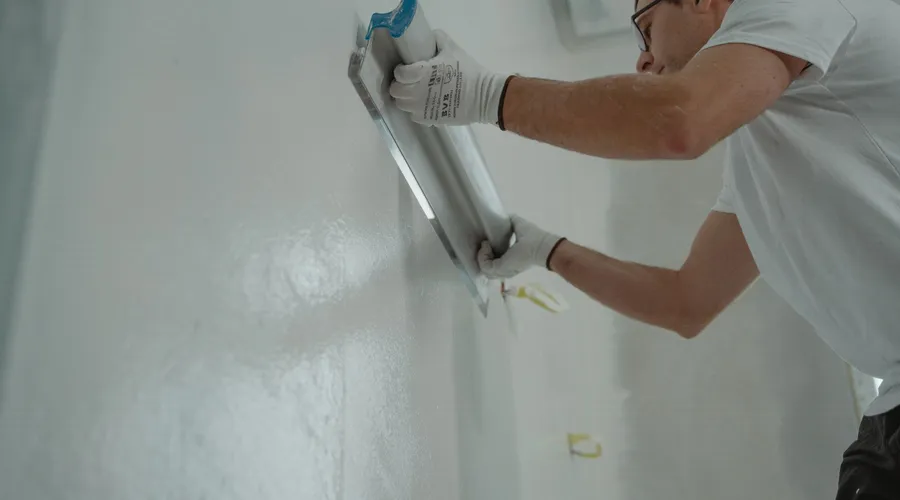
Plaster finishes are trowel-applied wall coatings, not paint. The most common decorative types are Venetian plaster (a polished, marble-like finish made from slaked lime and marble dust) and limestone plaster (a matte, organic texture with natural mineral pigments). A smooth skim coat is also technically a plaster finish, though it’s typically used as a base layer rather than a decorative surface.
Plaster works best on bare drywall, masonry, and feature walls where there are no complex trim lines or outlets to trowel around. Its strengths are real: genuine texture and depth that catches light differently across the day, a seamless look with no brush marks or roller stippling, and natural mold resistance from the lime content in many formulas.
The weaknesses matter too. Plaster costs significantly more than paint, dries slowly between coats, and can crack when a building settles. Most importantly, a poor trowel application is obvious and expensive to correct, which makes this a finish you don’t want to learn on a large room.

What Is Paint?
Paint is a liquid finish applied over a primed or previously plastered wall surface. It’s the default wall finish for most homes because the application is forgiving and any homeowner can do it without training. You’re working with a familiar tool, a forgiving process, and thousands of colors across multiple sheens, from flat and matte to eggshell, satin, and high gloss.
Paint works on any interior room that has a primed, plastered, or drywalled surface. If the wall is new plaster, you apply a mist coat first to seal the porous surface. If it’s previously painted, you clean, sand lightly, and roll on two coats.
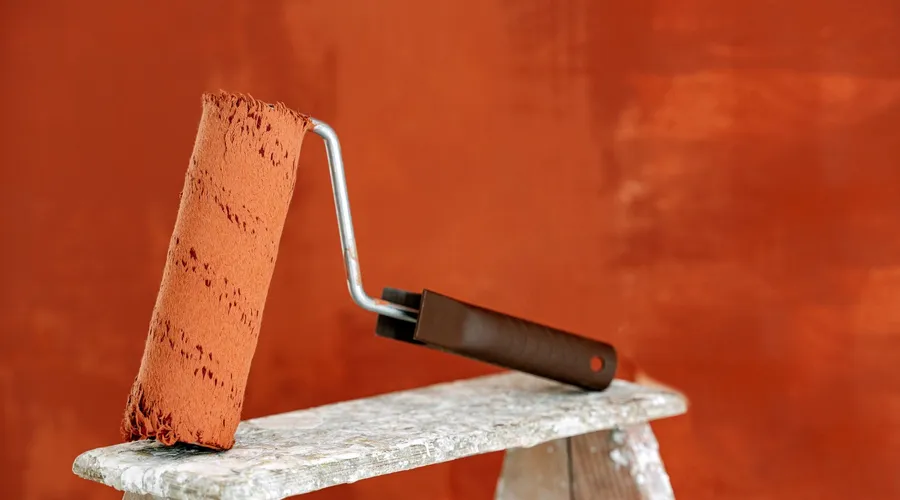
Paint is a flat film over your wall, not a texture, so it won’t hide imperfections the way a skim coat does. Over time, it shows scuffs, chips, and the gradual impact of daily life. Repainting every 5 to 10 years is normal, but you can refresh the whole room on a Saturday with a roller and a new color.
Related Reading
Recommendations for paints and coatings specifically for wall substrates like concrete, useful when readers consider…
Head-to-Head: Cost
For a straight paint job, your main expense is materials: primer, paint, and basic tools. If you’re doing the work yourself, labor costs nothing. Even hiring a painter keeps total costs relatively low compared to plaster, because the application is faster and requires less specialized skill.
Plaster finishes carry two cost layers. First, the materials themselves are more expensive, particularly decorative products like Venetian plaster. Second, you need a skilled applicator, and skilled trowel work is priced accordingly.
Paint wins on cost in almost every scenario. The only exception is if you’re comparing standard paint against a premium decorative paint line with added texture, where the gap narrows.
Head-to-Head: Durability & Lifespan
A well-applied paint job on properly primed walls typically lasts 5 to 10 years before you’ll notice fading, scuffing, or enough wear to warrant repainting. High-traffic areas like hallways and kids’ rooms fall toward the shorter end of that range.
A properly applied plaster finish can last decades. Lime-based plasters breathe and resist moisture better than most paint films, which is why you’ll find them in century-old European homes still looking intact. The vulnerability is settling cracks.
Plaster wins on longevity, but paint wins on how easy it is to fix when something goes wrong. A paint touch-up is a one-person job you can finish before the plaster repair is even dry. A plaster repair takes a skilled hand and still risks visible color variation.
Head-to-Head: Appearance & Customization
Paint gives you access to essentially unlimited colors and four major sheen levels. Each sheen changes how the color looks and how the surface performs:
- Matte hides imperfections but marks easily
- Eggshell and satin balance washability with a soft glow
- Gloss is durable and reflective but exposes every wall flaw
Plaster finishes work in a narrower color range, typically natural tones, earth pigments, and whites, though some systems allow custom tinting. What plaster delivers instead of color variety is physical depth: the texture catches and shifts with natural light in a way that no flat paint surface can replicate. A Venetian plaster wall looks different at 9 a.m. than it does at 6 p.m.
No single winner on appearance. For maximum color flexibility, paint wins. For a tactile, design-forward finish with depth, plaster has no real competition.
Related Reading
Guidance on when to use sealers or primers on drywall and how that choice affects paint adhesion and final finish.
Head-to-Head: Application & DIY Difficulty
Painting a wall is genuinely DIY-friendly. On new plaster, follow these steps:
- Apply a mist coat, a watered-down emulsion that seals the porous surface before painting
- Let it fully absorb and dry
- Apply a standard primer, then roll on two full coats of your chosen paint
On previously painted walls in good condition, you can skip the mist coat and primer stage. The process is forgiving for first-timers, and a careful beginner can produce a clean result.
Plaster application is a different skill set. Venetian and limestone finishes require applying multiple thin layers with a steel trowel, working the material while it’s still wet, and burnishing at the right moment to develop the surface texture. The timing window is narrow and material-specific:
- Too dry and the trowel tears the finish
- Too wet and the layers don’t build properly
- Mistakes are visible and require a full restart
Paint wins for DIY. Plaster is the professional’s finish, and the results reflect that on both ends.
Head-to-Head: Maintenance & Repairs
Paint maintenance is about as low-stress as wall finishing gets. For a scuff or small damaged area, the fix is simple: sand lightly, apply a spot primer, and repaint. Color matching from the same batch is nearly perfect, and even a full wall repaint is fast and inexpensive.
Plaster repairs require more from you. A crack needs to be opened up, filled with a compatible compound, re-textured, and then colored to blend. Color matching is difficult because decorative plaster builds tone through layering, so a patch will often look like a patch.
Paint wins on maintenance. If your priority is a finish you can fix without calling anyone, paint is the answer.
Which Should You Choose?
Here is how to match the finish to the room:
- High-traffic rooms like kids’ bedrooms or hallways: choose paint, it wipes clean and patches easily
- Rental properties: choose paint, because lease-end restoration is straightforward
- A living room feature wall or fireplace alcove: a plaster finish is worth the investment
- Tight budget or a full home project: paint is the practical choice across every room
- A historic home or a space where texture and material quality matter: plaster fits the aesthetic and longevity
- A DIY weekend project: paint with a proper mist coat and two finish coats is achievable and will look good
FAQs
1. What is a limestone plaster finish?
Limestone plaster is a decorative wall coating made from natural lime and mineral pigments, applied by trowel in thin layers. It produces a matte, organic texture with subtle color variation that looks different from dyed or tinted paint. It’s common in Mediterranean-style interiors and spaces where a natural, textured look is the goal.
2. What are the disadvantages of plaster?
Plaster costs more than paint, takes longer to dry between coats, and requires skilled application to look right. It can also crack as buildings settle over time, and those cracks are harder to repair invisibly than painted surfaces.
3. Can you paint over new plaster?
Yes, but not directly with standard emulsion. New plaster is highly porous and pulls moisture from paint too fast, causing it to peel. You need to:
- Apply a mist coat, a watered-down emulsion that seals the porous surface
- Let it fully dry
- Apply your normal paint
4. What kind of paint will stick to plaster?
Water-based emulsion paints work well on plaster once a mist coat has sealed the surface. For bare or newly patched plaster, a dedicated plaster primer like Zinsser Gardz locks the surface before your finish coats go on.
5. What happens if you don’t mist coat plaster?
The paint dries too fast at the surface while the wall keeps pulling moisture from behind it. This causes the paint film to lose adhesion and peel, sometimes in large sections. Skipping the mist coat is one of the most common reasons a paint job on new plaster fails within months.
6. How long should I wait before painting over fresh plaster?
Fresh plaster needs to cure fully before painting, which takes at least a few weeks depending on room temperature and ventilation. Check the plaster manufacturer’s guidance for the specific product. Painting too early traps moisture behind the paint film and can cause blistering, peeling, or efflorescence (white salt deposits) later.
7. Is plaster more expensive than paint for walls?
Yes, significantly. Plaster materials cost more per square foot than paint, and application requires skilled labor. For a single feature wall, the premium may be reasonable, but for a whole house, it’s a major budget consideration.
8. Can you apply plaster over painted walls?
It depends on the condition and adhesion of the existing paint. If the paint is well-bonded, clean, and properly prepared, some plaster systems can adhere with a bonding agent applied first. Flaking, glossy, or contaminated paint must be stripped or sanded before any plaster will hold.
9. Does plaster crack more than painted walls?
Plaster is more vulnerable to cracking from building settlement because it’s a rigid coating. Paint, being a flexible film, moves with the substrate without cracking. Hairline cracks in plaster are common over time and not always a structural concern, but they require repair before refinishing.
Final Verdict
For most homeowners, paint is the right answer. It costs less, takes less time, and tolerates DIY application. If your goal is a wall that looks clean, fresh, and finished, paint delivers without requiring a professional.
Plaster finishes are worth the investment when the room calls for it. A feature wall in a living room, a fireplace surround, or a home where texture and material quality are part of the design language: those are spaces where plaster earns its price. In those situations, the depth and longevity of a properly applied plaster finish outperforms anything paint can deliver.
Before you commit to either, look at the actual condition of your walls and set a clear budget. New plaster or bare drywall changes your prep requirements for both options. A room with existing wall damage needs addressing before any finish goes on, regardless of which one you choose.
We are based in Fish Hawk, Florida, and we help homeowners make this exact decision every week. Whether you want a smooth limestone plaster feature wall or a clean, durable paint finish, we handle prep through the final coat, and you can review our interior painting services to see how a painted interior might look. Call 813-860-8661 for a free consultation on your wall finishing project in the Fish Hawk, Florida metro area.