
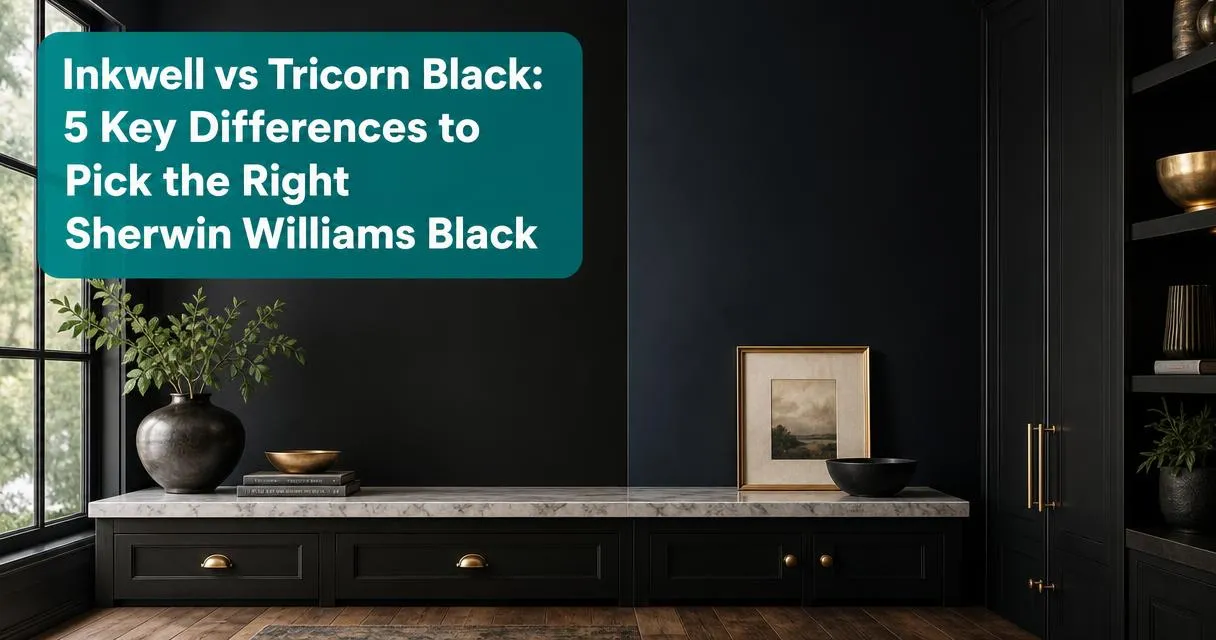
Sherwin Williams Tricorn Black is a true neutral black with an LRV of 3, while Inkwell is a softer blue-black with an LRV of 6. That three-point difference changes how each reads in your lighting, what undertones come through, and which spaces they suit best.
Key Takeaways
- Tricorn Black reads as true neutral with no perceptible undertone, making it the safer choice for warm or mixed-tone spaces
- Inkwell leans blue-black with an LRV around 6, reading slightly softer and adding depth in cool-toned or north-facing rooms
- Tricorn Black delivers maximum darkness at LRV 3, making it the go-to for high-contrast exteriors
- Both work on cabinets and doors, but Inkwell pairs better with marble, gray veining, or blue-gray palettes while Tricorn Black handles warm wood and brass fixtures
- Matte or flat hides wall texture on black accent walls, preventing roller marks and surface flaws from showing through
- Satin or semi-gloss adds durability for trim and doors, where frequent touching and cleaning require a tougher finish
- Tricorn Black behaves predictably across different lighting conditions without shifting tone
- Always test both in your room using foam boards painted with two coats, then view them at different times of day before committing

Inkwell Vs Tricorn Black Compared
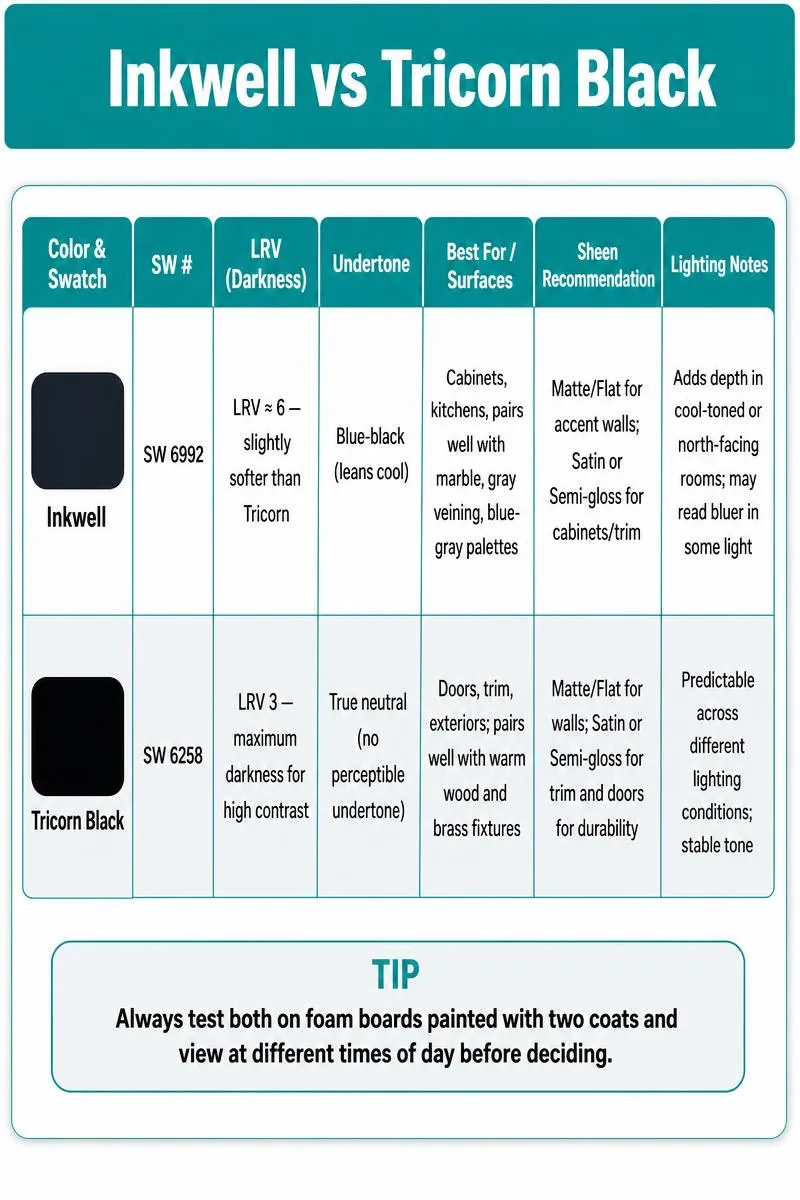
| Color | SW # | LRV (Darkness) | Undertone | Best For / Surfaces | Sheen & Lighting Notes |
|---|---|---|---|---|---|
| Inkwell (near‑black, slight blue tint) | SW 6992 | LRV ≈ 6 — slightly softer than Tricorn | Blue‑black (leans cool) | Cabinets, kitchens; pairs with marble, gray veining, blue‑gray palettes | Matte/Flat accents; Satin/Semi‑gloss for cabinets/trim; reads bluer in cool light |
| Tricorn Black (true neutral black) | SW 6258 | LRV 3 — maximum darkness for high contrast | True neutral (no perceptible undertone) | Doors, trim, exteriors; pairs with warm wood and brass | Matte/Flat walls; Satin/Semi‑gloss for trim/doors; stable across lighting |
Quick Comparison
- LRV: Tricorn Black 3, Inkwell 6
- Undertone: Tricorn Black is neutral; Inkwell has a subtle blue cast
- Best sheen: Flat or matte for accent walls; satin or semi-gloss for doors, trim, and cabinets
- Best room type: Tricorn Black for warm or mixed-tone spaces; Inkwell for cool-toned or north-facing rooms
- Finish availability: Both available in all Sherwin Williams interior and exterior finishes
Related Reading
Detailed side-by-side comparison of onyx and tricorn black undertones, finishes, and best uses.

What Is Tricorn Black (SW 6258)?
Tricorn Black is a true neutral black with an LRV around 3, meaning it reflects very little light and reads as deep, consistent black in nearly every lighting condition. It has no strong undertone, so it won’t shift blue, green, or brown when the light changes.
This makes it the most versatile black for high-contrast applications like front doors, exterior trim, window sashes, and modern accent walls. It also works well on kitchen cabinets when you want a bold, neutral anchor that doesn’t compete with warm metals, wood tones, or colorful backsplashes.
The strength of Tricorn Black is reliability. It reads as black in both natural and artificial light, in north-facing and south-facing rooms, and on both large surfaces and narrow trim.
What Is Inkwell (SW 6992)?
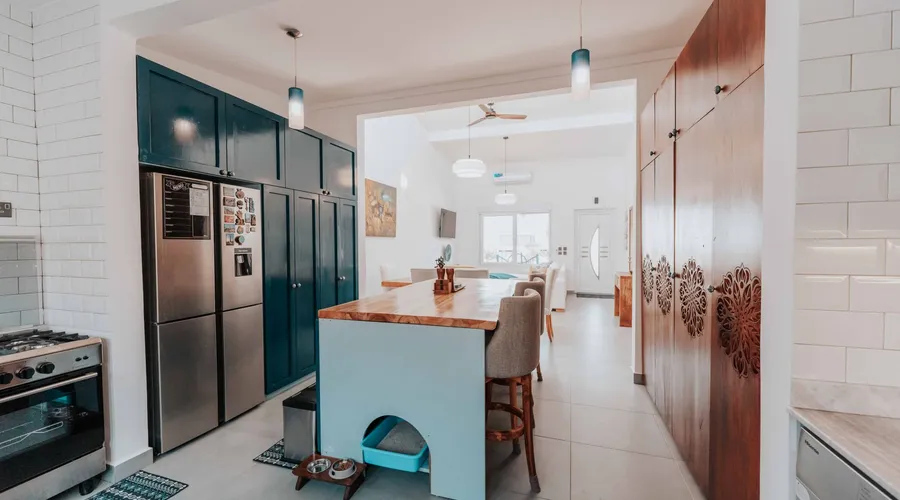
Inkwell is a slightly softer black with a subtle blue undertone and an LRV around 6. That higher reflectance makes it less intense than Tricorn Black, and the blue cast adds depth without looking flat in cooler lighting.
It works best on interior accent walls, kitchen islands, and cabinetry in spaces with cool-toned finishes like marble countertops, gray veining, stainless steel, or chrome hardware. The blue undertone complements these materials instead of clashing with them.
Inkwell’s strength is nuance. In rooms with limited natural light or north-facing windows, it adds richness without the heaviness of a pure black, and it layers well with grays, blues, and whites in contemporary palettes.
Head-to-Head: 5 Key Dimensions
1. LRV and Darkness
Tricorn Black has an LRV of approximately 3, while Inkwell sits around 6. That three-point difference means Inkwell reflects roughly twice as much light, making it perceptibly softer when viewed side by side.
In a small room or low-light space, Tricorn Black can feel heavy and cave-like. Inkwell gives you the drama of black without absorbing every bit of available light. If you’re painting a large accent wall or an entire room of cabinets, Inkwell’s slightly higher LRV prevents the space from closing in.
For exterior doors or trim where you want maximum contrast against light siding or brick, Tricorn Black’s lower LRV delivers sharper definition.
2. Undertones
Tricorn Black is neutral, with no noticeable undertone in most conditions. Inkwell has a blue undertone that becomes visible in natural light, especially when placed next to cool whites, grays, or stainless steel.
If your home has warm oak floors, brass fixtures, or beige-toned walls, Inkwell’s blue cast can look out of place. Tricorn Black stays neutral and blends with warm or cool palettes equally well. If your space already leans cool, with blue-grays, marble, or chrome, Inkwell’s undertone enhances the cool palette instead of fighting it.
Test both in your actual lighting using foam boards before deciding.
3. Best for Cabinets and Kitchens
For kitchen cabinets, your countertop and backsplash materials dictate the better choice:
- Inkwell echoes cool veining in marble, quartzite, or cool-toned quartz with gray or white veining, preventing harsh contrast
- Tricorn Black handles warm wood and brass in kitchens with butcher block, natural wood, or beige granite, where Inkwell’s blue can create a temperature clash
- Both look sharp on kitchen islands when the perimeter cabinets are white or light gray, but Inkwell adds dimension in north-facing rooms while Tricorn Black holds up in warm afternoon sun
4. Best for Doors and Trim
For exterior front doors, Tricorn Black is the stronger choice. Its lower LRV creates bold curb appeal and crisp contrast against white, cream, or gray siding. It reads as black from the street, even in full sun, and doesn’t shift tone as the light changes.
Inkwell works well on interior doors, especially in homes with a modern or transitional aesthetic and a cool color palette. It adds drama to bedroom or office doors without the intensity of Tricorn Black, and the blue undertone complements gray walls and cool trim.
For trim and molding, Tricorn Black is typically too dark unless you’re going for a high-contrast modern look. Inkwell is also heavy for trim in most homes. If you want black trim, test both in semi-gloss sheen to see how the reflectivity changes the appearance.
5. Sheen Selection
Black shows every surface flaw more than lighter colors, making sheen choice critical.
- Flat or matte hides wall texture and creates an even, velvety appearance on accent walls. Eggshell works if the wall is perfectly smooth, but any drywall flaws will show.
- Satin hides minor flaws on doors and cabinets while staying durable and easy to clean. Semi-gloss is tougher still and enhances the richness of black on front doors and cabinetry, but it requires flawless surface prep.
- Avoid high-gloss on large surfaces unless you’re painting furniture or a feature piece. It shows every fingerprint and dust particle on walls, doors, or cabinets.
Related Reading
Practical recommendations and finish choices for painting exterior doors, useful if you plan to use black on an…
Which Should You Choose?
- If your home has warm wood floors, beige or taupe walls, or brass and gold fixtures, choose Tricorn Black. It stays neutral with warm tones and won’t clash.
- If your palette is cool, with gray walls, marble counters, stainless appliances, or blue-gray cabinetry, Inkwell enhances the cool aesthetic with its blue-black depth and softer LRV.
- For an exterior front door where you want sharp contrast and curb appeal, Tricorn Black is the default. It reads as true black in all lighting and delivers the most dramatic impact against light siding.
- For kitchen cabinets paired with marble, quartzite, or cool quartz countertops, Inkwell creates a cohesive, intentional look rather than a stark one. Its higher LRV also keeps the kitchen from feeling too dark if you have limited natural light.
- If you’re painting a whole accent wall in a room with small windows or north-facing light, test both first. Tricorn Black can overwhelm the space, while Inkwell may give you richness without closing the room in. Paint two coats on foam boards and live with them for a few days before committing.
FAQs
Is Sherwin Williams Inkwell black or blue?
Inkwell is a black paint with a subtle blue undertone. It reads as black on the wall but has a cool blue-black cast in natural light, especially when paired with grays, whites, or cool metals.
Is Tricorn Black too black for interiors?
In small, low-light rooms, Tricorn Black can feel heavy. Sample it first on a large foam board and check it in your actual space before painting an entire wall or set of cabinets.
Why is Tricorn Black so popular?
Tricorn Black is a true neutral black with no undertone surprises. It behaves consistently across lighting conditions, works with warm or cool palettes, and delivers the high-contrast look most people expect from black paint.
Which black is better for most homes, Tricorn Black or Inkwell?
Tricorn Black is the best choice for true neutral black in most projects, while Inkwell works better when you want blue-black depth in cool-toned spaces. Test both in your lighting to see which suits your palette and room conditions.
What sheen should you use for black paint?
Use flat or matte for accent walls to hide texture and create an even finish. For doors, trim, and cabinets, use satin or semi-gloss for durability and easy cleaning. Black amplifies sheen, so avoid high-gloss on large surfaces unless you want a lacquered furniture look.
Can you use Inkwell and Tricorn Black in the same room?
You can, but it’s usually unnecessary. Both are strong blacks, and using two different blacks in one room can look inconsistent unless you have a very specific design reason. Pick the one that fits your palette and stick with it for all black elements.
Final Verdict
Tricorn Black is the default true black for most projects. It’s neutral, versatile, and behaves predictably in any lighting condition, making it the safer choice if you’re unsure or working with a mixed warm-and-cool palette.
Inkwell is the better pick when you want blue-black depth and you’re working in a cool-toned space with marble, gray, or stainless finishes. Its higher LRV also makes it less overwhelming in small or low-light rooms.
Buy sample pints of both, paint two coats on 2×2 foam boards, and test them in the room where you plan to use the color. View them in morning, afternoon, and evening light, and see which maintains the contrast and tone you want against your floors, counters, and existing finishes.
Based in Fish Hawk, Florida, we help homeowners choose and apply the right black paint for their rooms. Book a color consultation and we will bring Inkwell and Tricorn Black samples to your home, allowing you to see each color in your actual lighting before committing to a full paint job. Learn more about our interior painting services or call 813-860-8661 to schedule a visit in the Fish Hawk metro area.