
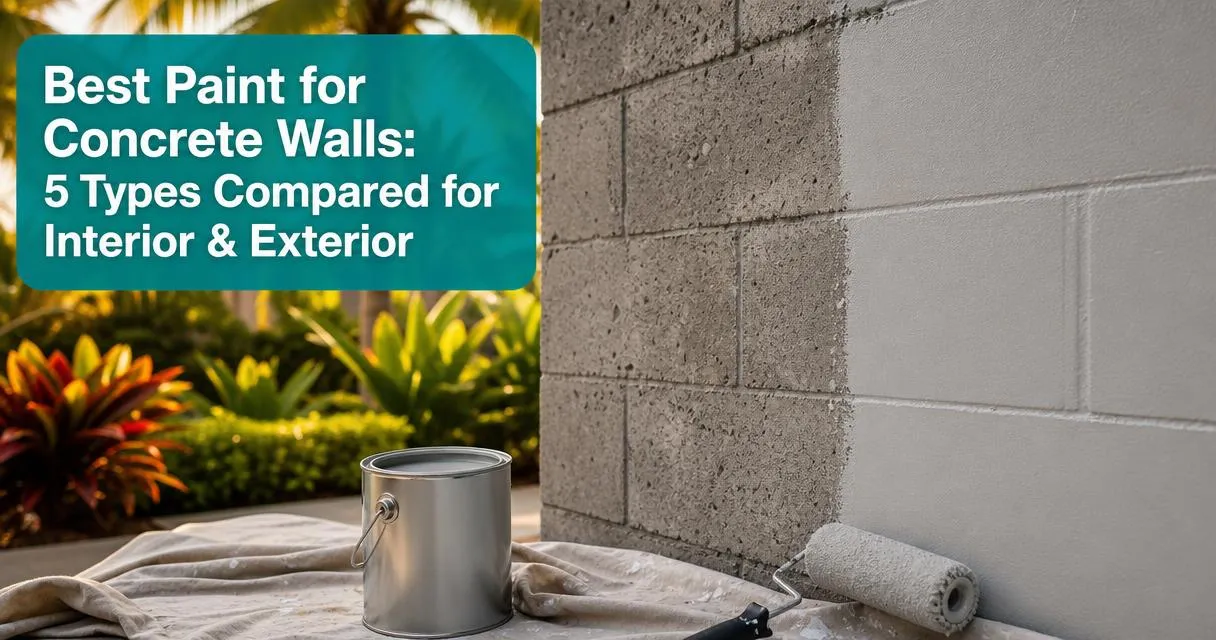
The paint that lasts on your concrete wall depends almost entirely on where that wall sits and how much moisture it sees. A product that performs beautifully on a dry interior accent wall will peel off a damp basement foundation in months. Heavy-duty waterproof coatings can trap moisture inside walls that need to breathe.
We’ll compare five paint types and show you exactly which one matches your surface and conditions.
Key Takeaways
- Elastomeric paint forms a waterproof membrane that bridges hairline cracks, ideal for wet or exterior concrete
- Acrylic latex suits bone-dry interior walls over masonry primer but peels quickly on damp surfaces
- Epoxy coating delivers maximum durability for high-traffic basement walls or chemical exposure areas
- Poured concrete, cinder block, and stone veneer require different surface prep even with the same paint type
- Active efflorescence or visible leaks causes any paint to fail, so fix the moisture source first
- Masonry primer ensures proper adhesion on bare concrete in nearly all applications
- Breathable coatings allow trapped vapor to escape, critical for basement walls with exterior moisture drive
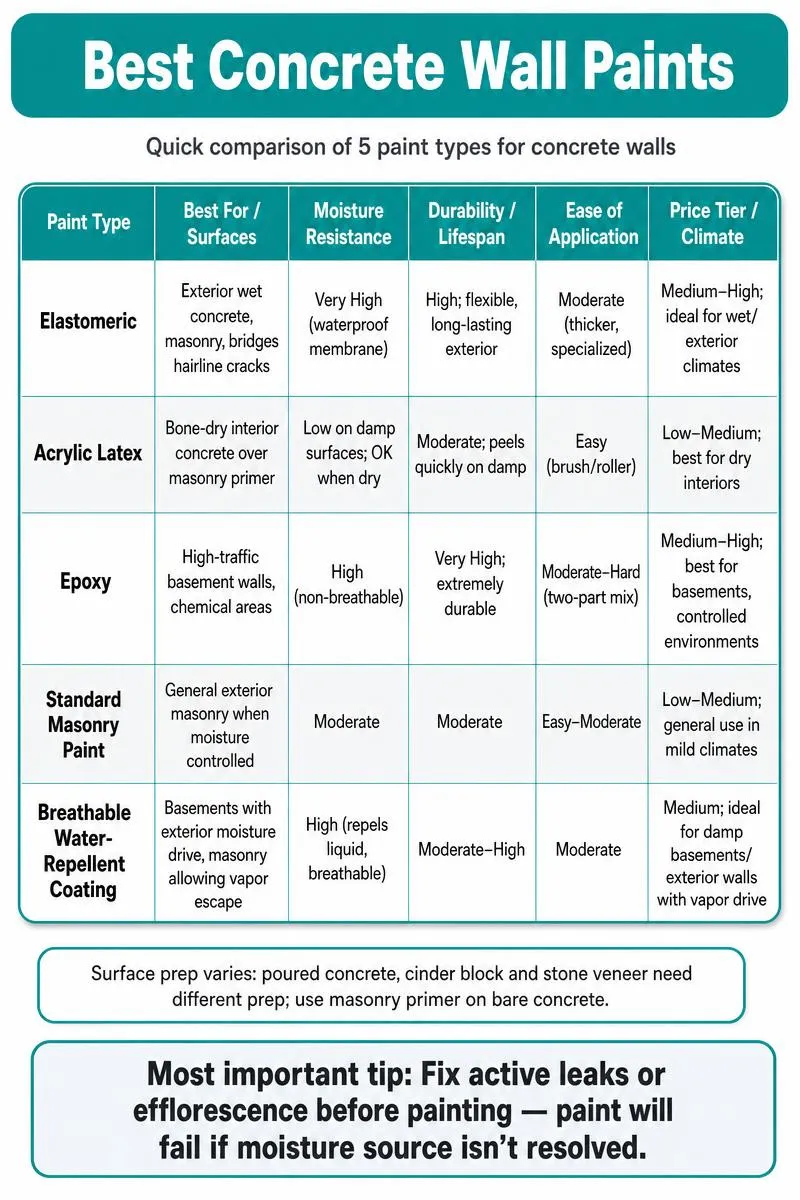
Best Paint For Concrete Walls Side-by-Side
| Paint Type | Best For / Surfaces | Moisture Resistance | Durability / Lifespan | Ease of Application | Price Tier / Climate |
|---|---|---|---|---|---|
| Elastomeric | Exterior wet concrete, masonry; bridges hairline cracks | Very High (waterproof membrane) | High; flexible, long-lasting | Moderate — thicker, specialized | Medium–High; ideal for wet/exterior climates |
| Acrylic Latex | Bone-dry interior concrete over masonry primer | Low on damp surfaces; OK when dry | Moderate; peels quickly on damp | Easy (brush/roller) | Low–Medium; best for dry interiors |
| Epoxy | High-traffic basement walls, chemical areas | High (non-breathable) | Very High; extremely durable | Moderate–Hard (two-part mix) | Medium–High; best for basements, controlled environments |
| Standard Masonry Paint | General exterior masonry when moisture controlled | Moderate | Moderate | Easy–Moderate | Low–Medium; general use in mild climates |
| Breathable Water-Repellent | Basements with exterior moisture drive; vapor-permitting masonry | High (repels liquid, breathable) | Moderate–High | Moderate | Medium; ideal for damp basements/exterior walls with vapor drive |
Quick Comparison
1. Elastomeric Paint
- Elastomeric works best for exterior foundation walls and damp basements
- The coating provides excellent waterproofing and bridges hairline cracks
- It delivers high durability against weather and UV exposure
- Cost falls in the mid to high tier
2. Acrylic Latex Paint
- Acrylic latex suits dry interior concrete walls only
- The paint peels quickly on damp concrete with no waterproofing capability
- It delivers moderate durability in climate-controlled spaces
- Cost falls in the low to mid tier
3. Epoxy Paint
- Epoxy suits high-traffic basement walls and humid areas
- The coating handles humidity well with limited breathability
- It delivers excellent impact and chemical resistance
- Cost falls in the high tier
4. Standard Masonry Paint
- Masonry paint suits dry basement or interior block walls
- It breathes but doesn’t waterproof, allowing vapor transmission
- The coating delivers moderate durability with less flexibility than elastomeric
- Cost falls in the low to mid tier
5. Breathable Water-Repellent Coating
- This coating suits exterior poured concrete and brick
- It repels water while staying breathable with no film to peel
- The treatment delivers high durability for weather exposure
- Cost falls in the mid to high tier
Related Reading
Guidance on choosing between sealers and primers to block stains and ensure paint adhesion on porous concrete walls.

What Is Elastomeric Paint?
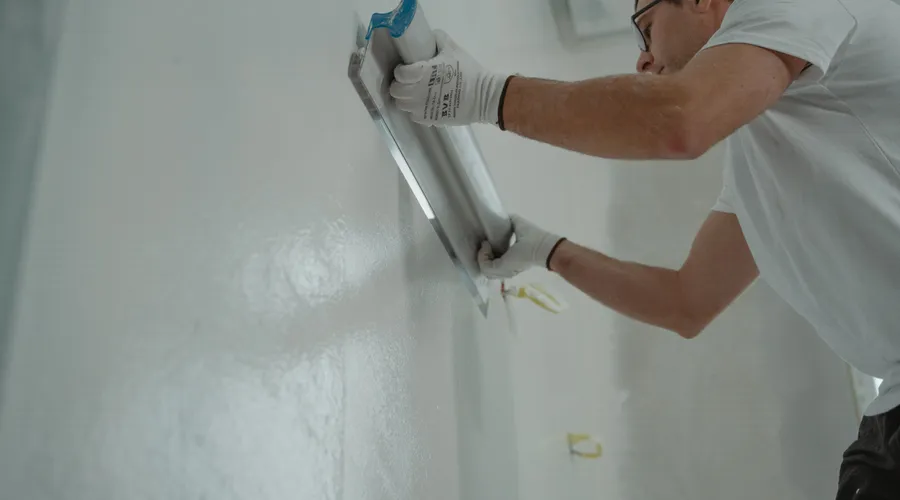
Elastomeric paint creates a thick rubber-like membrane on concrete that stretches and contracts with temperature changes while blocking water penetration. The coating goes on at 10 to 20 times the thickness of standard paint, allowing it to bridge hairline cracks without splitting. This flexibility makes it ideal for exterior foundation walls that expand and contract through freeze-thaw cycles.
The same waterproofing that protects exterior walls also works on damp basement walls where moisture seeps through but hasn’t created active leaks. You’ll see elastomeric recommended most often for below-grade concrete that stays cool and collects condensation. The thick film bonds to properly primed concrete and creates a vapor barrier that stops water from wicking through porous surfaces.
The major weakness shows up when you apply elastomeric to walls that need to breathe. If your concrete wall has moisture pushing from the other side, trapped vapor causes peeling.
You’ll also find elastomeric harder to apply than standard paint due to its thickness. It typically requires a thick-nap roller or sprayer and can’t be brushed smoothly.
What Is Acrylic Latex Paint?
Acrylic latex is the standard interior wall paint you’d use on drywall, reformulated to bond with masonry primer on concrete. It flows easily, dries quickly, comes in thousands of colors, and cleans up with water. Most DIY concrete wall projects use acrylic latex because it handles like familiar interior paint.
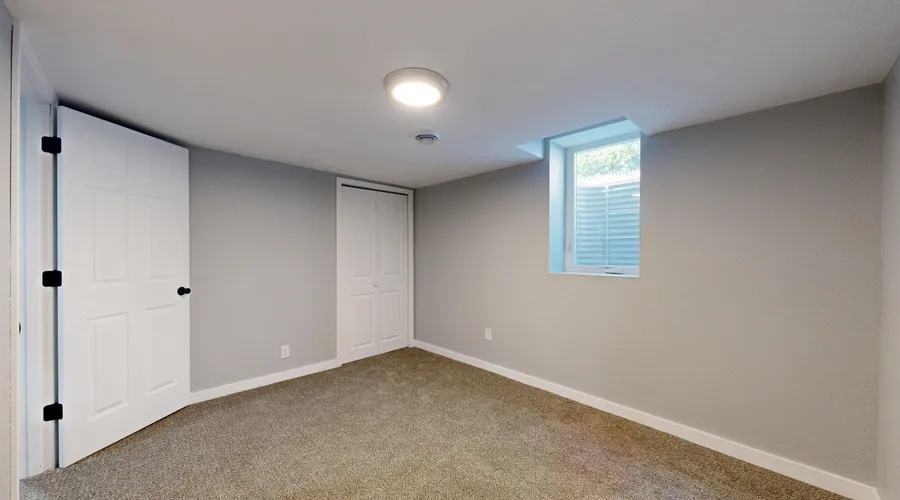
This paint type only works on completely dry interior concrete walls in climate-controlled spaces. You need to apply a dedicated masonry primer first since acrylic latex won’t bond directly to bare concrete’s alkaline surface. Once properly primed, the paint creates a smooth finish that looks identical to painted drywall.
Acrylic latex peels quickly on damp concrete. Any moisture coming through the wall lifts the paint film and causes bubbling or flaking. It also shows scuffs and marks more easily in high-traffic areas than specialized concrete coatings.
For a finished basement living space or interior accent wall with no moisture issues, acrylic latex over masonry primer gives you the widest color selection at the lowest cost.
What Is Epoxy Paint?
Epoxy coating comes as a two-part system where you mix resin and hardener just before application. This triggers a chemical reaction that creates an extremely hard, chemical-resistant surface. The cured finish resists moisture, impacts, and chemicals better than any other concrete wall coating.
You’ll find epoxy used in commercial garages, laboratories, and industrial spaces where concrete surfaces take serious abuse. For residential concrete walls, epoxy works best in basement areas with high humidity or occasional water exposure but no active leaking. The coating forms a tough shell that handles heavy wear better than elastomeric or latex.
Epoxy also bonds well to prepped concrete without requiring as much surface porosity as some other paint types. The application process demands more skill and planning than rolling on latex paint. You must mix the two components in exact ratios, then apply the entire batch within a limited working time.
The coating releases strong fumes during application and curing, requiring serious ventilation. Epoxy also has limited breathability, so it can trap moisture on walls with significant vapor drive from outside. This effect is less severe than with elastomeric but still matters.
Related Reading
Comparisons of durable coating types (epoxy, acrylic, etc.) for concrete surfaces that help readers pick suitable wall…
What Is Standard Masonry Paint?
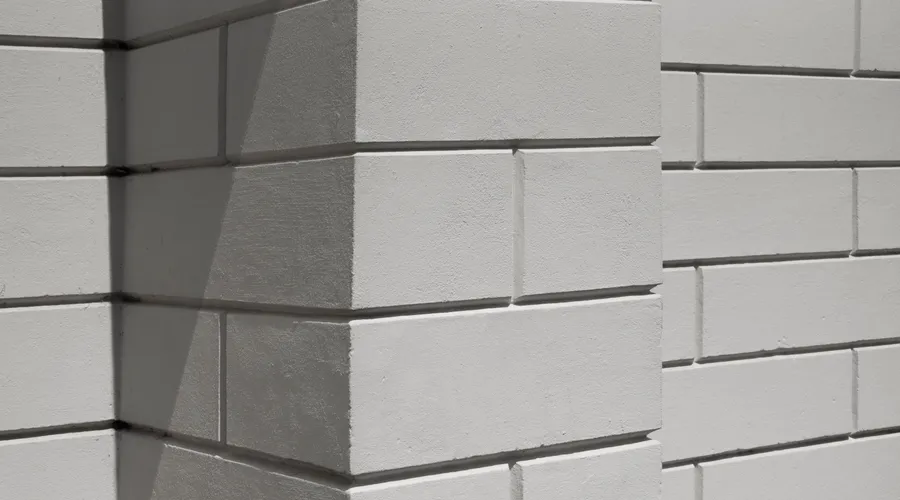
Standard masonry paint uses a mineral-based formula designed specifically to bond with the alkaline surface of concrete, cinder block, and brick. The paint allows water vapor to pass through while still providing a colored finish. This makes it breathable enough for walls that experience some moisture movement.
Breathability prevents bubbling and peeling when non-breathable coatings would trap vapor behind the paint film. You’ll get the best results with masonry paint on dry basement walls or interior cinder block with minor vapor transmission.
The paint adheres directly to bare concrete without primer in many cases, though a masonry primer still improves bonding and coverage. The finish typically looks flatter and chalkier than acrylic latex, with a more limited color range.
Masonry paint won’t fully waterproof a wall or bridge cracks like elastomeric coating does. It provides basic moisture resistance but will darken or show water marks if the wall gets wet. The coating also has less flexibility than elastomeric, so it can crack if applied over surfaces with movement.
For straightforward interior concrete wall painting where you need breathability and don’t face serious moisture issues, masonry paint offers a solid middle option.
What Are Breathable Water-Repellent Coatings?
Breathable water-repellent coatings use penetrating silane or siloxane compounds that soak into concrete rather than forming a film on the surface. The treatment chemically bonds with concrete to repel liquid water while allowing water vapor to escape. You spray or roll on the clear liquid, and it disappears into the surface within hours.
This solves the moisture-trapping problem that film-forming paints create. These coatings work best on exterior poured concrete and brick where you want weather protection without changing the appearance.
The concrete keeps its natural color and texture since there’s no visible coating. Water beads up and runs off instead of soaking in, which prevents freeze-thaw damage and efflorescence. The vapor permeability stays high enough that moisture from inside can still escape, preventing the pressure buildup that causes spalling.
The main limitation is purely aesthetic: you get no color change or decorative finish. The concrete looks exactly as it did before treatment, just slightly darker when wet. The coating also requires reapplication every 5 to 10 years as water repellency breaks down from UV exposure.
You can’t use these products if you want to change your wall color or create a uniform painted appearance.
Head-to-Head: Moisture Resistance
Elastomeric paint wins for blocking exterior water from rain, snow, and surface runoff. The thick waterproof membrane stops liquid water completely and handles direct exposure that would saturate other coatings. But on walls with moisture pushing from the inside out, that same impermeability becomes a weakness.
Epoxy handles interior humidity better than elastomeric in situations where the wall needs some breathability. The coating resists water damage from humidity and condensation while allowing slightly more vapor transmission.
Neither coating works if you have active water seepage. That requires fixing the moisture source before any paint will bond.
Breathable water-repellent coatings split the difference by repelling liquid water from outside while letting vapor escape from inside. This makes them the best choice for exterior walls that experience both weather exposure and interior moisture drive. Film-forming paints including elastomeric and epoxy should only go on walls where you’ve confirmed moisture moves in one direction or doesn’t move at all.
Related Reading
An overview of breathable, decorative masonry finishes and textured coatings that can be used on concrete walls for a…
Head-to-Head: Durability & Lifespan
Epoxy delivers the longest lifespan in protected interior applications, often lasting 10 to 15 years in basements with proper surface prep. The chemical-cured coating resists impacts, abrasion, and chemicals that would damage other finishes. You can scrub epoxy-coated walls aggressively without wearing through the coating.
Elastomeric lasts longest on exterior walls exposed to weather and UV radiation. The flexible coating expands and contracts through temperature swings without cracking. Quality elastomeric paints include UV inhibitors that prevent chalking and fading for 7 to 10 years.
Standard acrylic latex and masonry paint typically need recoating every 5 to 7 years on exterior surfaces. For pure impact resistance and wear in high-traffic areas, epoxy wins. For weather exposure and crack-bridging on foundations, elastomeric wins on exteriors.
Acrylic latex provides the shortest lifespan of any option. It works best for low-traffic interior spaces where you might want to change colors in a few years anyway.
Head-to-Head: Ease of Application
Acrylic latex offers the easiest DIY application with standard rollers, brushes, and tools you already own. The paint flows smoothly, self-levels reasonably well, and cleans up with water. You can stop and start without visible lap marks, and mistakes wipe away easily before the paint dries.
Standard masonry paint applies almost as easily as acrylic latex but with slightly thicker consistency. Elastomeric requires a thick-nap roller or airless sprayer due to its heavy body, and you need to work carefully to avoid drips and sags. Epoxy presents the steepest learning curve with its mixing requirements, limited working time, and strong fumes.
- For roller application, acrylic latex and masonry paint work best
- For sprayer application, elastomeric and epoxy produce the smoothest results with less physical effort
- Brush application works for cutting in edges but becomes exhausting for full coverage with thick elastomeric or fast-setting epoxy
Which Should You Choose?
Your choice depends on the wall location, moisture level, and how you use the space.
Exterior foundation walls:
- Choose elastomeric paint if you want a colored finish that waterproofs and fills minor cracks
- Choose breathable water-repellent coating if you prefer the natural concrete look with maximum vapor permeability
- Both options handle weather exposure and protect against water intrusion
Dry interior concrete walls (finished living spaces):
- Acrylic latex over masonry primer gives widest color selection and easiest application
- The finish matches your drywall seamlessly
- Confirm the wall stays completely dry year-round before committing
Damp basement walls (no active leaks):
- Elastomeric waterproofing paint stops moisture from wicking through and bridges hairline cracks
- Apply after thorough surface prep and primer
- Test for active leaks by taping plastic sheeting to the wall for 24 hours first
- Water droplets on the wall side of the plastic mean you have seepage that paint won’t fix
Cinder block walls in basements:
- Standard masonry paint provides breathability for block walls with minor vapor transmission
- Choose elastomeric for better moisture protection on damper walls
- The rough texture of block hides elastomeric’s thicker texture better than smooth poured concrete
High-humidity basements (no visible water intrusion):
- Choose epoxy if you need maximum durability for workshop use
- Choose elastomeric if preventing moisture issues matters more than surface durability
FAQs
Can you paint directly on concrete walls?
You can paint bare concrete with masonry paint in some cases, but most concrete wall painting requires masonry primer first. The primer neutralizes the alkaline surface and creates a bonding layer that prevents peeling. Skip primer only if your paint specifically states it works on bare concrete.
What kind of paint lasts on concrete?
Elastomeric and epoxy paints last longest on concrete walls, with properly applied coatings holding up 10 to 15 years in the right conditions. Standard acrylic latex over primer lasts 5 to 7 years on dry interior walls. Any paint fails quickly on damp concrete without fixing the moisture source first.
Do concrete walls need primer before painting?
Nearly all concrete walls need masonry primer before painting to ensure proper adhesion and prevent the alkaline concrete from breaking down the paint bond. Use a dedicated concrete and masonry primer, not standard drywall primer. Some masonry paints bond to bare concrete, but primer still improves coverage and longevity.
Can I use regular interior paint on concrete basement walls?
Regular interior paint works on completely dry basement walls when applied over masonry primer, but it provides no moisture resistance. Any dampness will cause peeling within months. Test your basement wall for moisture before using standard latex, and choose elastomeric or epoxy if you find any evidence of dampness.
Will waterproof paint stop leaks coming through my wall?
Waterproof paint won’t stop active water leaks or significant seepage through concrete walls. The water pressure behind the wall lifts coatings off concrete.
Fix drainage issues, seal cracks from the exterior, or install proper waterproofing before painting. Paint only works as a barrier against minor moisture.
How often should I repaint concrete walls?
Repaint exterior concrete walls every 7 to 10 years with elastomeric coating, or every 5 to 7 years with standard masonry paint. Interior concrete walls in dry conditions can last 10 years or more between coats. Watch for chalking, peeling, or color fading as signals you need to repaint regardless of timeline.
Should I fix basement humidity before painting?
You must reduce basement humidity and fix any active water intrusion before painting concrete walls. High humidity causes condensation on cool concrete that lifts paint from the surface. Active leaks prevent any coating from bonding.
Run a dehumidifier, improve ventilation, and fix drainage issues before buying paint.
Can I use the same paint on concrete floors as walls?
Concrete floor paint includes additives for abrasion resistance and traction that wall paint doesn’t need. Use dedicated floor paint on floors and wall-specific products on walls. Epoxy works for both applications but in different formulations, so verify product matches surface.
Final Verdict
Elastomeric paint provides the safest choice for most situations where moisture is a concern or might become one. The waterproofing and crack-bridging justify the higher cost and thicker application for any below-grade wall or exterior foundation. You’ll avoid the most common failure: peeling from unexpected moisture.
You’ll also get a finish that lasts through temperature swings and minor settling. For confirmed dry interior walls in climate-controlled spaces, acrylic latex over masonry primer costs less and applies easier while giving you unlimited color options. For exterior walls where you want natural appearance with protection, breathable water-repellent coating solves the moisture-trapping problem that film-forming paints create.
Test for moisture first by taping a 2-foot square of plastic sheeting to the concrete and checking after 24 hours. Water droplets on the wall side of the plastic mean you need elastomeric or exterior drainage work before painting. A dry test means you can choose based on durability and appearance instead of moisture protection.
Located in Fish Hawk, Florida, we help homeowners choose the right paint and handle moisture assessment, surface prep, and application to ensure your finish lasts. For exterior concrete walls, see our exterior painting services. Call or message for a free quote at 813-860-8661. We serve the Fish Hawk metro area.