
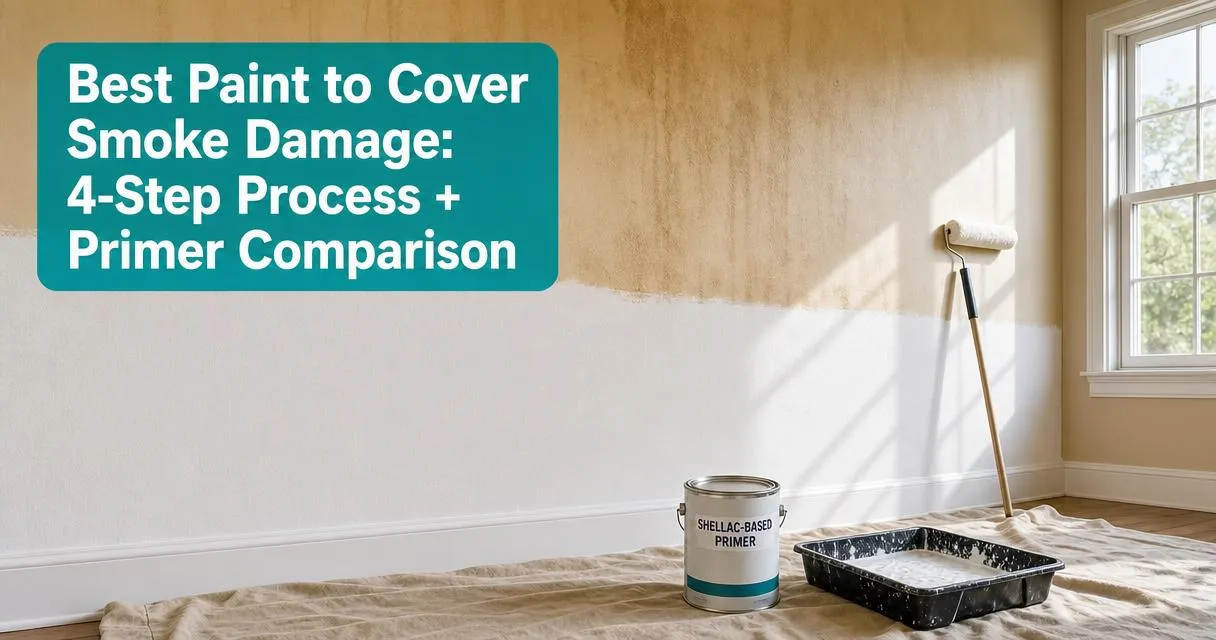
Painting directly over smoke stains without primer seems like a shortcut, but within weeks those yellow-brown patches bleed back through your fresh paint. The stains and smell return because standard wall paint can’t seal the tar and nicotine that’s soaked into your drywall.
Yes, you can DIY smoke damage painting for a single room if you follow the sealing step correctly. Skip it, and you’re repainting in a month.
Key Takeaways
- Shellac-based primer like Zinsser B-I-N seals stains and odor in one coat for severe smoke and nicotine
- Water-based primers fail on heavy smoke damage, allowing stains and odors to resurface within weeks
- Cleaning walls before priming is non-negotiable because nicotine film blocks primer adhesion
- Two finish coats of quality latex paint are required after priming to deliver even coverage over the sealed surface
- Ceilings and walls nearest the smoke source need the most attention and may require spot re-priming
Related Reading
A clear comparison of drywall sealers and primers, showing when to use each to block smoke stains and odors before…
Comparing the Top Best Paint To Cover Smoke Damage
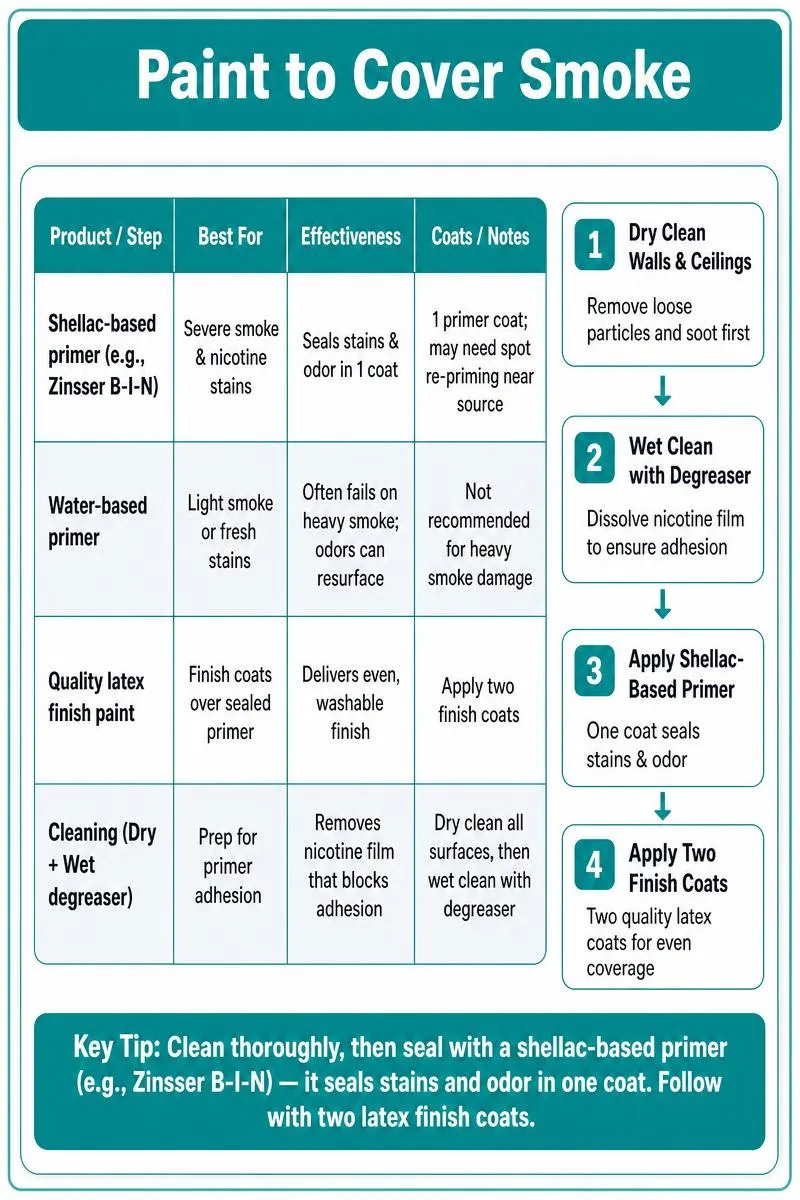
| Product / Step | Best For | Effectiveness | Coats / Notes |
|---|---|---|---|
| Shellac-based primer (e.g., Zinsser B‑I‑N) | Severe smoke & nicotine stains | Seals stains & odor in 1 coat | 1 primer coat; may need spot re-priming near source |
| Water-based primer | Light smoke or fresh stains | Often fails on heavy smoke; odors can resurface | Not recommended for heavy smoke damage |
| Quality latex finish paint | Finish coats over sealed primer | Delivers even, washable finish | Apply two finish coats |
| Cleaning (Dry + Wet degreaser) | Prep for primer adhesion | Removes nicotine film that blocks adhesion | Dry clean all surfaces, then wet clean with degreaser |
What You’ll Need
- A dry cleaning sponge (chem sponge) lifts soot without smearing before any water touches the surface
- TSP or a strong degreaser removes the nicotine film that water alone won’t touch, preventing adhesion failure
- Zinsser B-I-N shellac primer seals stains and odor in one coat and is the most effective blocker for heavy smoke
- Latex finish paint in eggshell or satin sheen provides the durable topcoat over your sealed surface
- A roller, brush, drop cloths, and a respirator with organic vapor cartridges handle application safely and protect you from fumes
Step-by-Step Guide
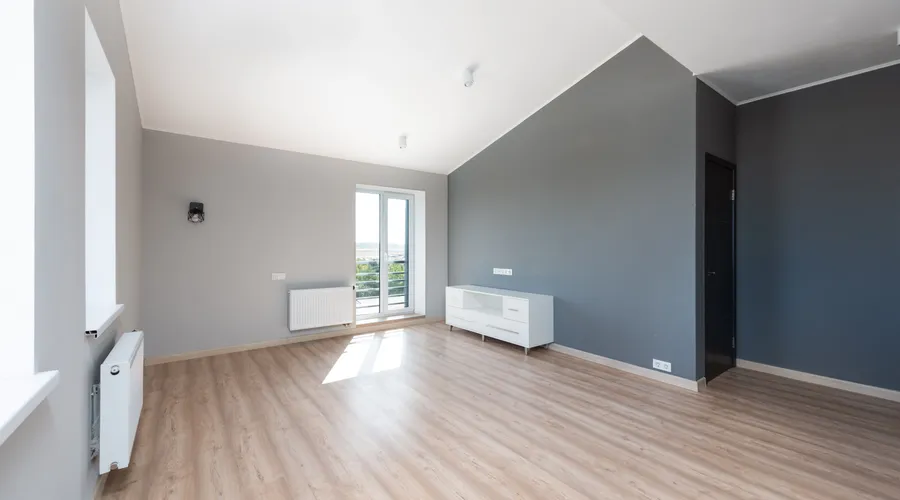
Each step depends on the one before it. Skipping cleaning ruins primer adhesion, and skipping primer ruins the finish coat.
1. Dry Clean Walls and Ceilings
Use the chem sponge to lift loose soot without adding water. Wipe in straight strokes, rotating the sponge to a clean side as it darkens with soot. This prevents you from turning dry ash into a wet smear when you start washing.
Pay extra attention to ceilings and the upper third of walls where smoke concentrates. You’ll see the sponge turn black quickly in these areas.
2. Wet Clean With Degreaser
Wash the entire surface with TSP mixed according to package directions, or use a commercial degreaser rated for nicotine. Scrub in circular motions to break down the sticky film that coats smoke-damaged walls. Rinse with clean water and let the surface dry completely before priming.
If your rag turns brown or yellow during this step, you’re removing the nicotine layer that would have blocked primer adhesion. Keep washing until the rinse water runs clear.
3. Apply Shellac-Based Primer
Roll one coat of Zinsser B-I-N over all cleaned surfaces. Shellac seals odor and blocks stains in a single pass, unlike water-based or even most oil-based primers. Work in a ventilated space and wear your respirator because shellac fumes are strong.
The primer dries to the touch in 30 to 45 minutes. If you see any stains bleeding through after it dries, spot-prime those areas with a second coat before moving to finish paint.
4. Apply Two Finish Coats
Paint two coats of latex finish paint with at least two hours of dry time between coats. The first coat may look streaky over the sealed primer, which is why the second coat is not optional. Two coats provide even coverage and hide the primer’s white or pigmented base.
Use eggshell or satin sheen because it allows easier cleaning on smoke-absorbed surfaces. Flat paint shows fewer imperfections but can’t be scrubbed if residual odor requires additional cleaning.
How Long Does It Take?
- Cleaning takes one to two hours per average-sized room, longer if nicotine buildup is heavy. The dry sponge step is quick, but degreasing and rinsing add time
- Priming takes one to two hours per room including cutting in and rolling. Shellac dries quickly, so you can prime and paint same day
- Finish coats take two to four hours total with dry time between coats. Plan on a full day for a single room, or split across two days if you prefer not to rush
Related Reading
Explains how limewash and plaster finishes perform on older walls—useful when deciding final treatments for…
Common Mistakes
- Skipping the cleaning step causes primer to adhere poorly to the nicotine film, leading to peeling or bubbling within months
- Using water-based primer on heavy smoke damage lets stains bleed through because these formulas can’t seal tar and nicotine
- Applying only one finish coat leaves the job looking streaky and uneven over the sealed primer surface
- Skipping a respirator during priming exposes you to shellac fumes and airborne soot. Inhaling the combination is risky and the smell alone will drive you out
- Painting over lingering odor without shellac primer means the smell returns as humidity rises. Water-based and oil primers don’t seal odor effectively
DIY vs. Hiring a Pro
- DIY works well for single-room jobs with light to moderate smoke damage, especially from cigarettes. You’ll save on labor costs and work at your own pace
- Hire a professional for whole-house fire damage, multi-story work, or ceilings over stairs and vaulted areas. Pros bring industrial degreasers and scaffolding that speed up large jobs
- Professionals also assess whether drywall needs replacement rather than just painting. If smoke penetrated deeply, sealing alone may not solve the odor problem
FAQs
Can you paint over smoke damage?
Yes, but only after you’ve cleaned the surface and sealed it with a shellac-based primer. Skipping either step allows stains to bleed back through your finish paint.
What type of paint is best for covering smoke stains?
Shellac-based primer like Zinsser B-I-N followed by two coats of latex finish paint. The primer does the sealing work, and the paint provides color and durability.
Will KILZ cover cigarette smoke?
Oil-based KILZ Original handles light nicotine staining, but water-based KILZ 2 is not recommended for heavy smoke because stains will bleed through. For severe cases, shellac primer outperforms both.
Is there a paint that covers smoke smell?
No paint alone covers the smell. Shellac-based primer seals the odor into the wall, then finish paint provides the final surface. If you smell smoke after priming, you need another coat before painting.
Can you paint over fire smoke damaged walls?
Yes, but fire soot requires thorough dry sponging and wet cleaning before any primer goes on. Fire residue is heavier than cigarette smoke and demands more prep work to remove the greasy layer.
What’s the difference between shellac and oil-based primer for smoke?
Shellac seals faster and blocks odor more effectively, especially on heavy nicotine and tar. Oil-based primer is easier to apply and clean up but less effective when smoke damage is severe.
Final Thoughts
The primer you choose matters more than the finish paint when covering smoke damage. Shellac-based primer is the proven choice because it seals stains and odor in one coat. Water-based options fail, and oil-based formulas take longer and seal less effectively.
Test a small area first by priming it and letting it dry. Check whether stains bleed through before committing to the full room. If you see bleed-through, apply a second primer coat to those spots.
Don’t rush the cleaning step. Washing off the nicotine film and soot determines paint longevity. Your job lasts a decade or fails in a month depending on this step.
If you need help restoring walls and ceilings after smoke exposure, see our interior painting services for details on cleaning, priming, and repainting. We serve the Fish Hawk metro area and can manage the project from assessment through finish. Call 813-860-8661 for a free evaluation and an honest recommendation about whether this is a DIY job or requires professional equipment.