
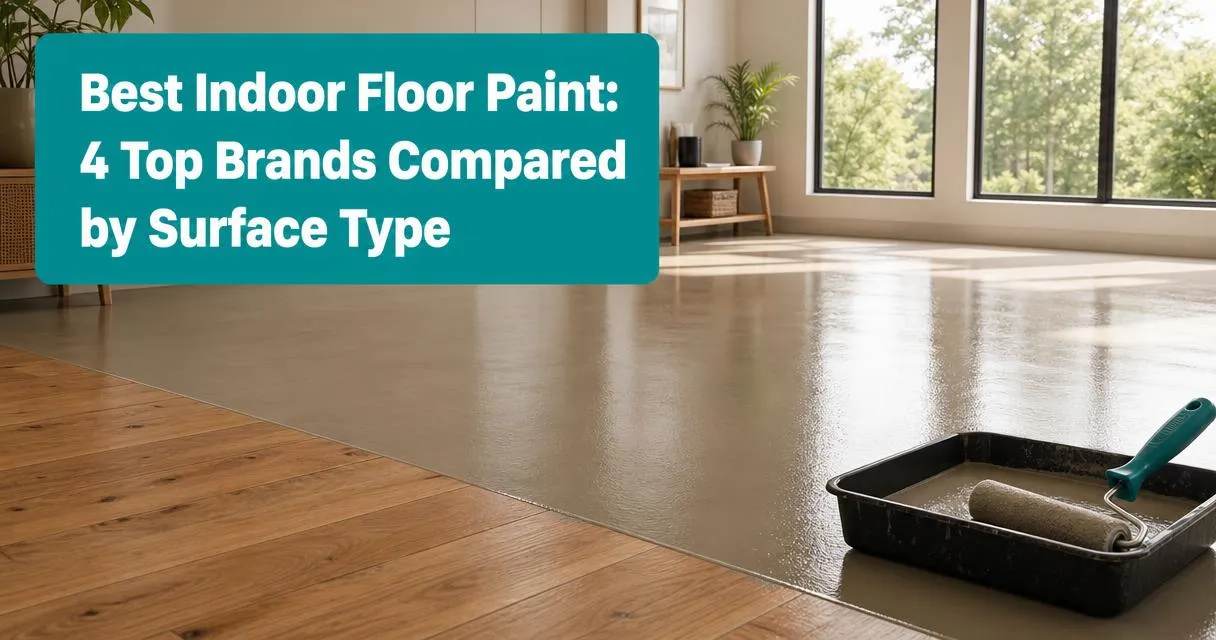
Most floor paint fails because homeowners buy for the wrong surface. A latex enamel rated for concrete won’t bond to tile without specialty primer. A wood-floor formula can peel off basement concrete in under a year. The right choice depends on what you’re painting and how much foot traffic it gets.
Key Takeaways
- Best overall for high traffic: Benjamin Moore Insl-x Tough Shield resists scuffs and stains better than budget options in hallways and kitchens
- Best budget pick: Kilz Porch & Patio Latex delivers solid coverage on concrete and wood for low-traffic areas at roughly half the price of premium brands
- Surface matters more than brand: wood requires light sanding and primer, concrete needs etching on slick surfaces, and tile demands bonding primer regardless of topcoat
- All four options are water-based acrylic or latex: expect low VOC levels, easy soap-and-water cleanup, and 2-4 hour dry times between coats
- Proper prep determines durability more than paint choice: cleaning, sanding, and priming correctly adds years to any floor paint, while skipping prep causes early failure even with premium products
- Floor paint lasts 2-5 years depending on traffic: high-traffic areas wear faster, and prep quality matters more than the product label claims
Related Reading
A focused roundup of indoor floor paint options and finish recommendations for different surfaces and traffic levels.
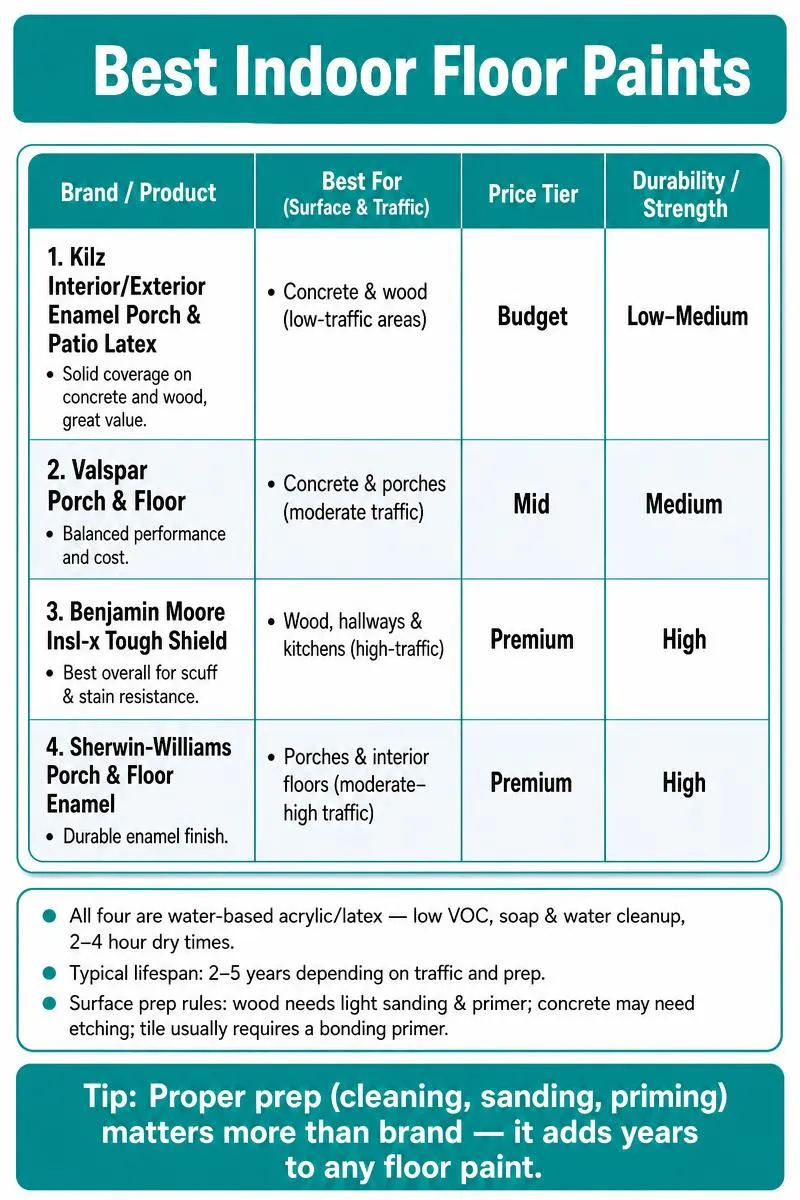
Quick Comparison: Best Indoor Floor Paint
| Brand / Product | Best For (Surface & Traffic) | Price Tier | Durability / Strength |
|---|---|---|---|
| Kilz Interior/Exterior Enamel Porch & Patio Latex | Concrete & wood — low traffic | Budget | Low–Medium; solid coverage |
| Valspar Porch & Floor | Concrete & porches — moderate traffic | Mid | Medium; balanced performance |
| Benjamin Moore Insl-x Tough Shield | Wood; hallways & kitchens — high traffic | Premium | High; scuff & stain resistant |
| Sherwin‑Williams Porch & Floor Enamel | Porches & interior floors — moderate–high traffic | Premium | High; durable enamel finish |
Quick Comparison
These four brands cover the range from budget DIY to pro-grade durability. Here’s how they stack up on key specs:
- Kilz Porch & Patio Latex – Best Surface: Concrete, wood. Durability: Moderate. Dry Time: 2-4 hours. Finish Options: Satin, semi-gloss. VOC Level: Low.
- Valspar Porch & Floor – Best Surface: Smooth concrete, wood. Durability: Moderate. Dry Time: 2-4 hours. Finish Options: Satin. VOC Level: Low.
- Benjamin Moore Insl-x Tough Shield – Best Surface: High-traffic wood, concrete, patio. Durability: High. Dry Time: 4 hours. Finish Options: Satin, semi-gloss, gloss. VOC Level: Low.
- Sherwin-Williams Porch & Floor Enamel – Best Surface: Smooth and rough surfaces. Durability: High. Dry Time: 4-6 hours. Finish Options: Satin, semi-gloss, gloss. VOC Level: Low.
Top 4 Indoor Floor Paints Compared
These four brands cover the range from budget DIY to pro-grade durability. Each works on multiple surfaces, but performance varies based on prep and traffic level.
1. Kilz Interior/Exterior Enamel Porch & Patio Latex
Kilz markets this as a one-coat coverage solution for concrete and wood. It delivers on that claim for light-traffic areas like spare bedrooms or storage rooms. The latex formula cleans up easily and dries in 2-4 hours, so you can apply a second coat the same day.
The tradeoff is durability. In high-traffic kitchens or hallways, expect scuff marks and wear patterns within the first year. For basements, closets, or seasonal spaces, it’s a solid budget pick that holds up well enough to justify the savings.
2. Valspar Porch & Floor
Valspar’s formula works best on smooth concrete and wood floors where you want a low-sheen satin finish. It’s widely available at Lowe’s and offers middle-tier performance between budget and premium brands. The consistency spreads evenly with a roller, and the 2-4 hour dry time keeps projects moving.
This paint handles moderate foot traffic without issue, but it shows wear faster than Benjamin Moore or Sherwin-Williams in heavy-use areas. If you’re painting a mudroom or workshop floor where appearance matters less than function, Valspar delivers reliable coverage at a reasonable price.
3. Benjamin Moore Insl-x Tough Shield
This premium acrylic enamel stands up to the kind of abuse you see in busy hallways, kitchens, and entryways. The formula resists scuffs, stains, and moisture better than budget options, and it’s rated for wood, concrete, and patio surfaces. You can choose from satin, semi-gloss, or gloss finishes depending on how much shine you want.
The 4-hour dry time is slightly longer than cheaper paints, but the payoff is a harder, more durable finish. Contractors use this for high-traffic commercial floors, which tells you it’s built to last. Expect to pay premium pricing, but you’ll get 3-5 years of wear instead of 2-3.
4. Sherwin-Williams Porch & Floor Enamel
Sherwin-Williams built this for pro-grade durability on both smooth and rough surfaces, making it versatile for everything from garage floors to refinished hardwood. The formula handles texture variations better than most competitors, and you get multiple sheen options to match your space. Dry time runs 4-6 hours, so plan for longer wait periods between coats.
This paint works well on concrete that hasn’t been perfectly smoothed and on wood with minor imperfections. The durability rivals Benjamin Moore, and contractors often choose between the two based on local availability and finish preference rather than performance gaps.
Best Paint by Surface Type
The surface you’re painting determines which product will actually stick and last. Here’s what works for each common indoor floor type.
1. Best Indoor Floor Paint for Wood Floors
Acrylic enamel formulations bond well to wood after light sanding removes the existing finish or roughens bare wood. Sand with 120-grit paper, vacuum thoroughly, then apply a bonding primer before your topcoat. Benjamin Moore Insl-x and Sherwin-Williams both offer strong adhesion on wood, especially in high-traffic areas where cheaper paints show scuff marks quickly.
Skip the sanding and you’ll see peeling within months, regardless of which brand you choose. The mechanical grip created by roughened wood matters more than the paint formula.
2. Best Indoor Floor Paint for Concrete
Latex porch paint works on most concrete surfaces, but slick or sealed concrete needs an etching primer first. Concrete that’s been troweled smooth or previously sealed won’t give latex enough tooth to grab. Apply a concrete etching solution, rinse thoroughly, let it dry completely, then paint.
Kilz and Valspar both perform well on concrete for the price. If you’re painting a basement or garage floor that sees moisture, check the label for mildew resistance ratings. Water-based formulas handle dampness better than you’d expect, but proper ventilation still matters.
3. Best Indoor Floor Paint for Tile
Specialty bonding primer plus acrylic topcoat is the only combination that works on tile. Standard floor paint, even premium brands, won’t stick to glossy ceramic or porcelain surfaces without primer designed specifically for tile adhesion. Use a product like Zinsser Bulls Eye 1-2-3 or Kilz Adhesion Primer, then apply your choice of acrylic floor enamel.
The primer does most of the work here. Any of the four brands in this comparison will perform similarly once you’ve prepped tile correctly. Expect the finish to chip more easily than on wood or concrete, as tile floors with painted surfaces show wear faster and may need touch-ups every 2-3 years.
4. Best Floor Paint for Plywood
Primer plus two coats of acrylic enamel gives plywood the durability it needs for workshop floors, basement subfloors, or utility spaces. Plywood’s porous surface soaks up paint unevenly without primer, leading to blotchy coverage and weak adhesion. Apply an oil-based or latex primer, then follow with two coats of your chosen floor paint.
Benjamin Moore and Sherwin-Williams handle plywood’s texture variations better than budget options, but Kilz works fine for low-traffic areas where appearance isn’t critical. Sand any rough edges or splinters before priming to avoid snags that wear through the paint.
Related Reading
A clear primer vs sealer guide that helps decide what undercoat you need before painting porous or stained floors.
How to Choose the Right Floor Paint
Match your paint choice to the specific conditions your floor faces. Traffic level, moisture exposure, and existing surface type determine which product will actually hold up.
- High-traffic hallway or kitchen: Prioritize scuff resistance and stain protection over price. Benjamin Moore Insl-x Tough Shield and Sherwin-Williams Porch & Floor Enamel both handle daily wear without showing marks as quickly as budget options. You’ll pay more upfront but avoid repainting in 18 months.
- Low-traffic bedroom or closet: Budget options like Kilz Porch & Patio Latex provide adequate coverage and durability when foot traffic stays light. Save the premium products for areas that actually need them, as a spare bedroom floor doesn’t justify the extra cost of high-performance enamel.
- Moisture-prone areas like basements or laundry rooms: Check the label for mildew resistance ratings before buying. Most latex floor paints handle dampness reasonably well, but formulas specifically rated for moisture resistance prevent mold growth on concrete basement floors or laundry room surfaces where humidity runs high.
- Painting over existing tile: You need bonding primer formulated for glossy surfaces, not just floor paint. Standard acrylics and latex enamels won’t adhere to tile without specialty primer underneath. This requirement applies regardless of which topcoat brand you choose.
FAQs
What is the best paint for flooring?
It depends on your surface type. Acrylic and latex porch and floor enamels work for most indoor applications on wood and concrete. For tile, you need a bonding primer before applying any topcoat. Budget latex formulas handle light traffic, while premium acrylics like Benjamin Moore Insl-x last longer in high-traffic areas.
What is the most durable paint for floors?
Premium acrylic formulations like Benjamin Moore Insl-x Tough Shield and Sherwin-Williams Porch & Floor Enamel offer the highest durability for high-traffic areas. These resist scuffs, stains, and moisture better than budget options. Proper prep still matters more than brand, and even the best paint fails without adequate surface preparation.
What are the disadvantages of floor paint?
Floor paint can peel without proper prep, shows scuffs and wear in high-traffic areas, and offers limited color options compared to wall paint. It requires recoating every 2-5 years depending on traffic levels. Painted tile chips more easily than wood or concrete, and moisture underneath concrete can cause bubbling if you skip vapor barrier testing.
What is the best paint to use on wood floors?
Acrylic porch enamel works best on wood floors after light sanding and primer application. Benjamin Moore Insl-x and Sherwin-Williams both offer strong adhesion and scuff resistance on wood. Sand with 120-grit paper to roughen the surface, apply bonding primer, then finish with two coats of floor enamel.
Can you paint over existing tile floors?
Yes, but only with a bonding primer formulated specifically for glossy tile surfaces. Standard floor paint won’t stick to ceramic or porcelain without specialty primer underneath. Apply the bonding primer first, let it cure fully, then topcoat with acrylic floor enamel. Expect more chipping and wear than on wood or concrete.
How long does indoor floor paint last?
Indoor floor paint typically lasts 2-5 years depending on traffic level and prep quality. High-traffic areas like hallways and kitchens wear faster than bedrooms or closets. Proper cleaning, sanding, and priming add years to any floor paint, while skipping prep causes failure within months even with premium products.
Do you need a primer before painting indoor floors?
Usually yes. Bare wood and concrete require primer for proper adhesion and even coverage. Previously painted surfaces in good condition may not need primer if you sand lightly to roughen the existing finish. Tile always needs bonding primer regardless of condition. Check your specific paint’s technical data sheet for manufacturer recommendations.
Final Verdict
Benjamin Moore Insl-x Tough Shield wins for high-traffic areas where durability justifies the premium price. Kilz Porch & Patio Latex works well for budget-conscious DIYers tackling low-traffic spaces like basements, closets, or spare rooms. Both deliver on their promises when you prep correctly.
If you’re painting tile, remember that bonding primer matters more than topcoat brand. Any of these four paints will perform similarly once you’ve solved the adhesion problem with specialty primer. Focus your budget on prep materials rather than upgrading from mid-tier to premium floor paint.
Identify your surface type, check the prep requirements for that specific material, then choose a paint that matches your traffic level and budget. Buy primer, cleaning supplies, and sandpaper before you buy paint. You’ll get better results from budget paint with proper prep than from premium paint applied over dirt and gloss.
If you’re in the Fish Hawk metro area and need floor painting done right, our team will handle everything from surface preparation to the final coat. We can help you choose the right product for your specific floor type and traffic level, and include recommendations as part of our interior painting services for floors. Call us at 813-860-8661 to schedule a consultation and assessment.
Related Reading
Best paint to cover smoke damage
Tips on high-coverage, stain-blocking paints and primers useful when floors need heavy stain coverage or restoration…