
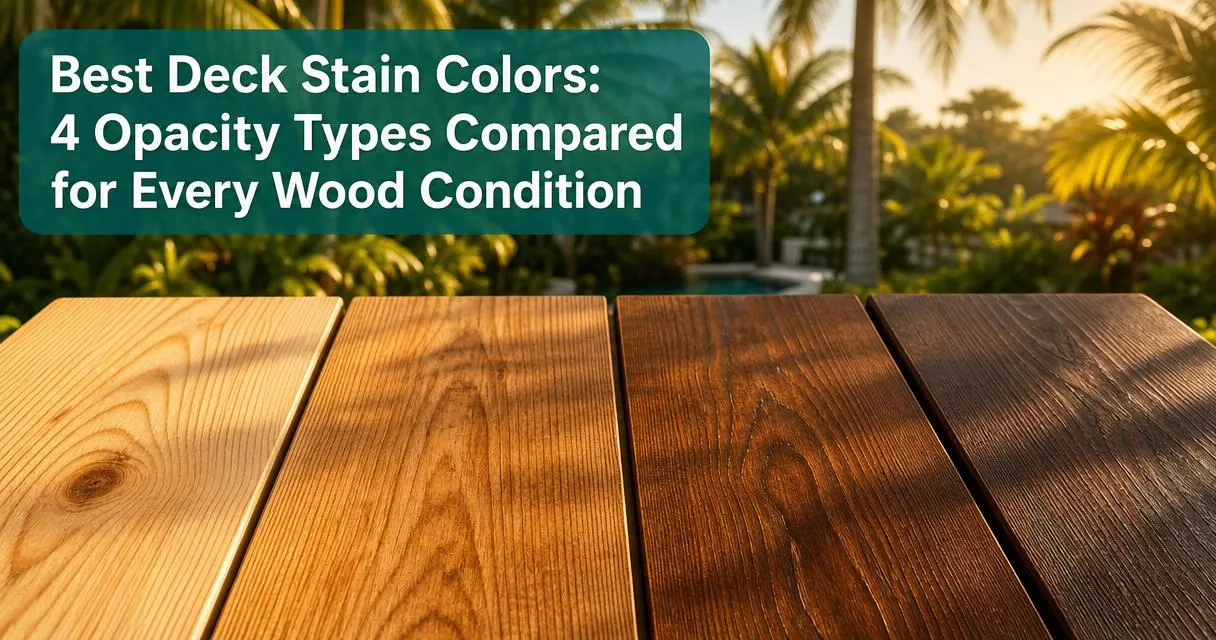
You’re looking at hundreds of deck stain colors online, but the real choice starts with opacity level, not the color swatch. The “best” color depends on whether you have new cedar that deserves to show its grain or a weathered pressure-treated deck that needs flaws hidden. Once you match opacity to your deck’s condition, the color options narrow to a manageable range.
Key Takeaways
- Opacity level controls grain visibility and lifespan from transparent to solid
- Higher pigment loads hide discoloration on older decks, while transparent stains preserve natural grain on premium new wood
- Semi-transparent stains are the most popular choice because they balance grain with UV protection over 2-3 years
- More pigment means better UV protection and longer-lasting color, but less natural wood character shows through
- Test 2-3 color samples on scrap boards or inconspicuous deck areas before committing to full application
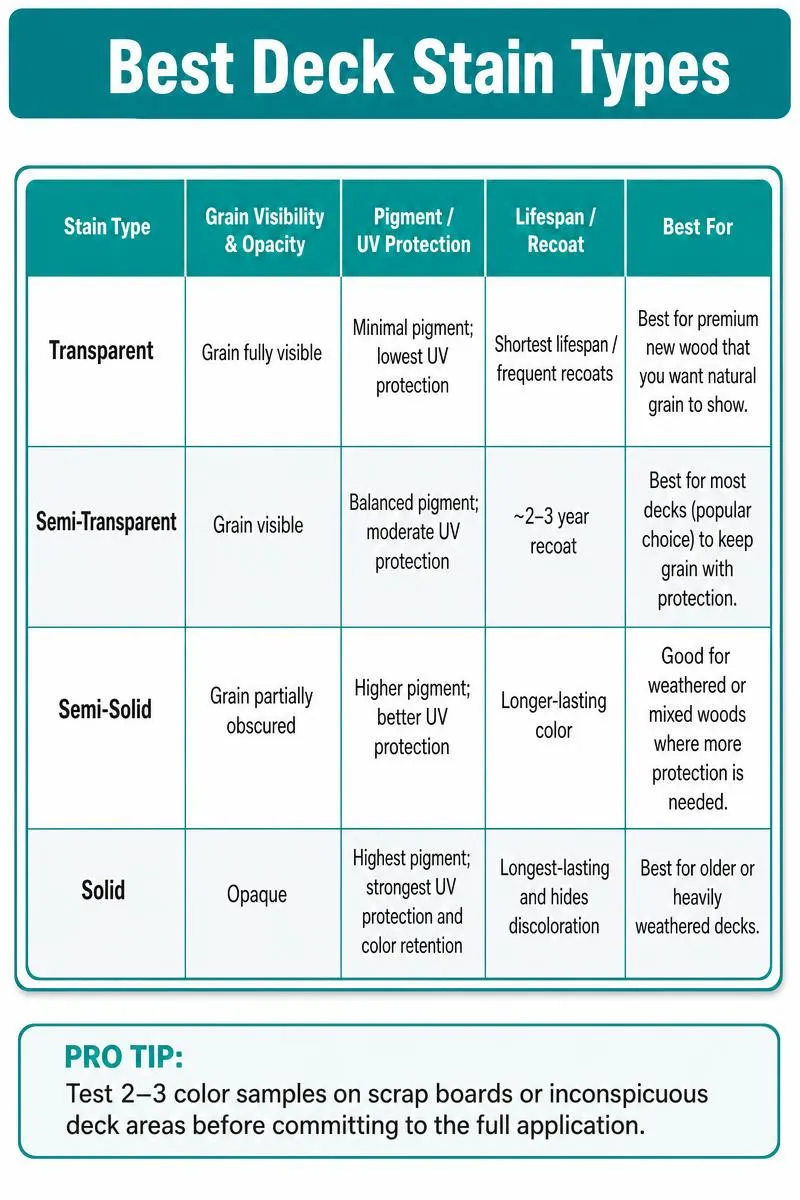
Best Deck Stain Colors at a Glance
| Stain Type | Grain Visibility & Opacity | Pigment / UV Protection | Lifespan / Recoat | Best For |
|---|---|---|---|---|
| Transparent | Grain fully visible; minimal pigment | Minimal pigment · lowest UV protection | Shortest lifespan; frequent recoats | Premium new wood; show natural grain |
| Semi-Transparent | Grain visible; balanced pigment | Moderate pigment · moderate UV protection | ≈2–3 year recoat | Most decks; popular choice |
| Semi-Solid | Grain partially obscured; higher pigment | Higher pigment · better UV protection | Longer-lasting color; less frequent recoats | Weathered or mixed woods |
| Solid | Opaque; grain fully obscured | Highest pigment · strongest UV protection | Longest-lasting; least frequent recoats | Older or heavily weathered decks |
Quick Comparison Table
Transparent Stain:
- Grain visibility is full, showing all natural wood texture through the finish
- UV protection is minimal, leaving wood vulnerable to UV graying
- Re-stain frequency runs every 1-2 years, the shortest interval available
- Best for new cedar, redwood, or premium lumber where grain is the feature
Semi-Transparent Stain:
- Grain pattern stays visible underneath a tinted overlay of moderate pigment
- Moderate pigment blocks UV while showing grain
- Re-stain frequency extends to every 2-3 years between applications
- Best for pressure-treated pine, moderate sun exposure, and typical residential decks
Semi-Solid Stain:
- Faint grain texture remains visible under heavy color coverage
- High pigment load provides strong UV blocking for longer color life
- Re-stain frequency stretches to every 3-4 years before recoating
- Best for older decks with uneven color, partial shade, or visible wear patterns
Solid Stain:
- No grain is visible, producing an opaque paint-like finish
- Full pigment coverage delivers maximum UV protection
- Re-stain frequency reaches every 4-5+ years, the longest interval
- Best for weathered decks, mismatched replacement boards, and heavy defects
Related Reading
Best semi-transparent deck stain
A detailed review of top semi-transparent deck stains, their transparency levels, and how they look on different wood…
What Is Transparent Stain?
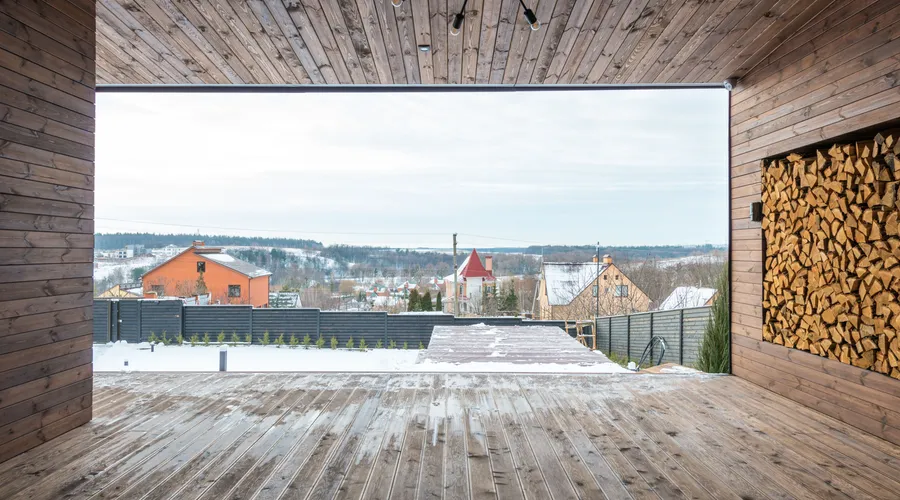
Transparent stains contain minimal pigment and let the full wood grain show through like a tinted clearcoat. You’ll get 1-2 years of protection before UV exposure starts graying the wood again. This makes it the highest-maintenance option available.
The stain penetrates to resist moisture while leaving the wood’s natural character completely visible. Transparent stain works best on new cedar, redwood, or other premium lumber where the grain pattern is worth showcasing.
If your deck has knots, sapwood streaks, or color variation you want to preserve, transparent stain enhances rather than hides those features. Pressure-treated pine looks less appealing with transparent stain because the greenish chemical treatment tint shows through.
Popular transparent colors include:
- Natural cedar tones that warm wood without masking grain
- Honey gold shades that bring out red and amber undertones
- Light oak tones that enhance naturally light wood species
Transparent stains fade gradually rather than peeling. Recoating every year or two is straightforward but frequent.
What Is Semi-Transparent Stain?
Semi-transparent stains add moderate pigment that tints the wood while keeping the grain pattern visible underneath. You get 2-3 years between applications, and the color stays more consistent than transparent options. The pigment load is high enough to even out minor color differences between boards.
This is the most popular deck stain category because it balances grain with UV protection. Semi-transparent stains work especially well on pressure-treated pine. The added pigment neutralizes the green chemical tint while the grain keeps the deck looking like wood rather than painted boards.
Moderate sun exposure won’t fade semi-transparent stains as quickly as transparent versions. Top color choices include:
- Cedar (warm reddish-brown) that makes pine look premium
- Redwood (deeper reddish tone) for richer color saturation
- Dark walnut (rich brown) for a classic, grounded appearance
- Driftwood gray (modern neutral) that complements contemporary outdoor furniture
Walnut and gray shades create contrast against lighter siding for a more designed look.
What Is Semi-Solid Stain?
Semi-solid stains carry heavy pigment loads that leave only faint grain texture visible through dense color coverage. The finish looks closer to paint than wood, but it still penetrates like stain rather than sitting on the surface. You’ll get 3-4 years of protection before needing to recoat.
This makes semi-solid a lower-maintenance choice for decks past their prime. Semi-solid stains hide problems like uneven graying and watermarks on older decks.
Partial shade areas where decks get inconsistent sun exposure benefit from the color uniformity semi-solid stains provide. The heavy pigment also means better UV protection than transparent or semi-transparent options, so the stain itself resists fading longer.
Common semi-solid colors include:
- Chestnut (medium brown with red undertones) for warm, traditional decks
- Dark oak (deep neutral brown) that hides dirt on high-traffic surfaces
- Charcoal (dark gray-brown) for modern exterior palettes
- Mahogany (rich reddish-brown) for a premium look without visible grain
Lighter semi-solid colors exist but show dirt more readily on high-traffic deck surfaces.
Related Reading
A side-by-side comparison of Benjamin Moore’s onyx and tricorn black finishes to help decide between two popular dark…
What Is Solid Stain?
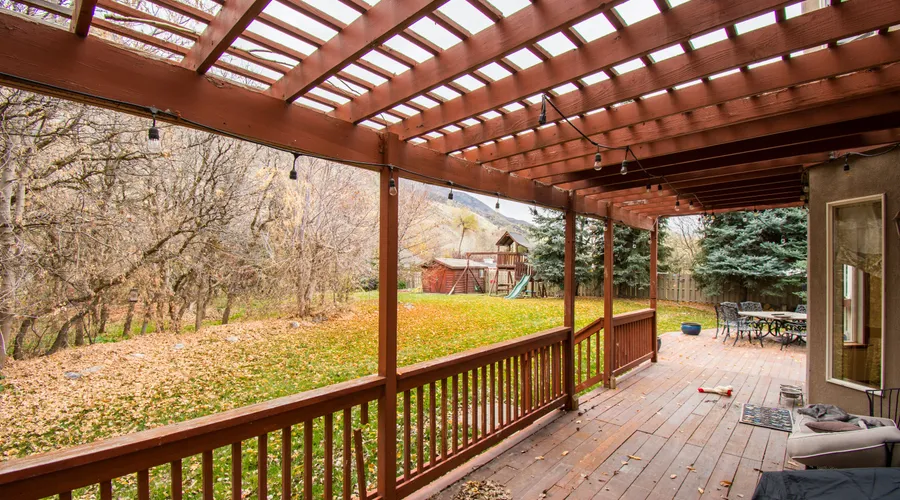
Solid stains deliver full opacity like paint but penetrate into the wood grain rather than forming a surface film. You won’t see any wood grain or texture through the finish, just solid color coverage. The lifespan extends to 4-5+ years before recoating, the longest interval of any stain type.
Solid stain covers any defect including severe weathering, mismatched replacement boards, and minor surface damage. This option makes sense when your deck condition matters more than showcasing wood character.
Weathered decks that have grayed unevenly, boards with water stains or mildew discoloration, and decks with replacement boards that don’t match all disappear under solid stain. You can create uniform appearance even when the underlying wood varies significantly.
Solid stains come in virtually any custom color you can match:
- Traditional wood tones for a classic deck appearance
- Grays and blues that coordinate with contemporary siding
- Greens and earth tones that blend with landscaping
- Custom-matched colors from dozens of options per brand
The color flexibility is much wider than other stain categories since you’re not trying to enhance wood grain.
Head-to-Head: UV Protection & Color Retention
Solid and semi-solid stains retain their color the longest because heavy pigment loads block UV from graying wood. Transparent stains fade the fastest since minimal pigment lets UV penetrate directly to the wood fibers. This causes visible graying within 12-18 months.
Semi-transparent stains fall in the middle with moderate pigment providing 2-3 years before noticeable fading. UV impact varies by deck orientation:
- South-facing decks and full-sun exposures need more pigment to handle intense UV throughout the day
- A transparent stain on a south-facing deck may gray out in one summer
- The same stain on a north-facing or shaded deck could last two years
- Shaded areas and covered porches tolerate lighter opacity since UV is naturally reduced
Darker colors within each opacity category don’t necessarily fade faster than lighter tones. Fading is more visually obvious on dark walnut or mahogany than on natural cedar shades. The pigment load matters more than the color itself for UV resistance.
Head-to-Head: Maintenance & Recoating
Transparent and semi-transparent stains allow the easiest maintenance because you can clean the deck and apply a fresh coat directly over the old stain. The new coat soaks in without stripping and blends with the faded previous layer. This simple recoat process works as long as you stay within the same color family.
Solid stains create more maintenance complexity when you want to change colors or when the old stain starts failing. Switching to lighter opacity requires full stripping because the opaque layer underneath shows through thinner new stain. Even recoating with the same solid color sometimes needs light sanding if the previous coat has built up too much surface film.
Semi-solid stains land between these extremes:
- You can usually recoat without stripping if staying with semi-solid opacity and similar color tones
- Switching to transparent or semi-transparent requires removing heavy pigment first
- Maintenance difficulty increases with each step up in opacity
Head-to-Head: Appearance by Wood Type
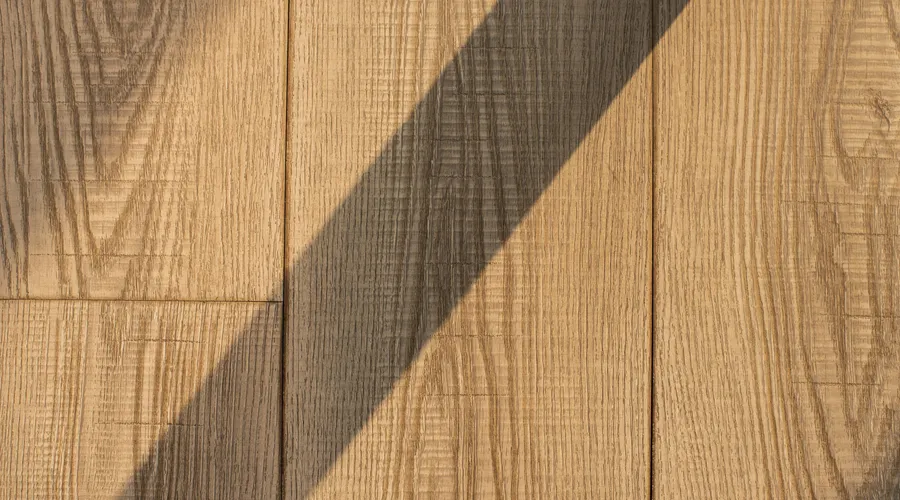
Wood species respond differently to each opacity level. The right stain enhances what your specific lumber already offers.
- Pressure-treated pine benefits most from semi-transparent stain in natural wood tones. The pigment neutralizes the green chemical tint while visible grain keeps the deck looking natural. Transparent stain emphasizes the green tint and chemical stamps instead.
- Cedar decks look best with transparent stain that enhances natural red warmth and prominent grain. Semi-transparent cedar-toned stain also works well, adding UV protection and evening out color variation. Going darker than semi-transparent on cedar wastes the visual appeal you paid extra for.
- Old and weathered wood needs semi-solid or solid stain regardless of species. Heavy pigment creates uniform color that hides gray weathering and board-to-board variation. Transparent and semi-transparent stains can’t cover the gray enough to restore a fresh appearance.
Which Should You Choose?
Match your deck’s condition to the right opacity before narrowing down color options. Here are the most common scenarios:
- New pressure-treated deck: Start with semi-transparent stain in cedar or natural wood tones. This combination minimizes the green chemical tint, provides 2-3 years of protection, and keeps the deck looking like wood. Wait 3-6 months after installation before staining to let the wood dry and chemicals weather off.
- Older deck showing wear: Semi-solid stain in dark walnut or chestnut hides discoloration and uneven graying while extending your recoat interval to 3-4 years. The grain texture still shows faintly to avoid the fully painted look.
- Cedar or premium wood species: Transparent stain in natural cedar tones preserves the grain character you paid extra to get. Accept the 1-2 year recoat frequency as the tradeoff, or step up to semi-transparent for longer intervals with most of the grain still visible.
- Weathered or mismatched boards: Solid stain in a custom color creates uniform appearance regardless of underlying wood condition. You sacrifice all wood character but gain maximum coverage and 4-5+ years between recoats.
- High-sun exposure: Choose semi-solid or solid stain with darker pigment to handle UV bombardment. South and west-facing decks in full sun will fade transparent and semi-transparent stains too quickly. The extra pigment protects stain and wood underneath.
FAQs
1. What is the best color for an outdoor deck?
Semi-transparent cedar or natural wood tones work best for most decks because they enhance the wood grain while neutralizing pressure-treated lumber’s greenish tint. Match the opacity to your deck’s condition first, then pick colors within that range rather than choosing color alone.
2. What are the most popular deck stain colors?
Cedar, redwood, and dark walnut lead in semi-transparent categories, while driftwood gray has grown popular for modern aesthetics. Solid stains trend toward charcoal and earth tones that coordinate with contemporary exterior color palettes. Natural wood tones still outsell grays and custom colors overall.
3. What type of deck stain is best for most decks?
Semi-transparent stain handles most deck conditions and homeowner preferences. It provides visible grain, decent UV protection, manageable 2-3 year recoat intervals, and works on both new and moderately aged wood. Most residential decks fall into the sweet spot this opacity level serves.
4. What deck stain is best for older wood?
Semi-solid or solid stain works best on older weathered wood because heavy pigment hides gray discoloration and uneven aging that lighter stains can’t cover. The opacity also provides better UV protection to slow further deterioration. Choose based on how much wood character you want to preserve versus how much coverage you need.
5. How often should you re-stain a deck?
Recoating intervals depend on opacity level:
- Transparent stains need recoating every 1-2 years
- Semi-transparent stains need recoating every 2-3 years
- Semi-solid stains need recoating every 3-4 years
- Solid stains need recoating every 4-5+ years
High sun exposure shortens these intervals, while shade extends them. Recoat when water stops beading on the surface and starts soaking in immediately.
6. Can you stain over old deck stain?
You can recoat transparent and semi-transparent stains without stripping as long as the old stain isn’t peeling and you’re using similar colors. Solid stains often require stripping before changing colors or opacity levels. Clean and lightly sand the surface before any recoat for best adhesion.
7. How long should you wait to stain a new deck?
Wait 3-6 months for pressure-treated lumber to dry and surface chemicals to weather off before staining. Cedar and other kiln-dried woods can be stained within 2-4 weeks if the surface accepts water readily. Test by sprinkling water on the boards; if it beads up, wait longer.
8. What is the difference between deck stain and deck paint?
Deck stain penetrates into the wood grain and doesn’t form a surface film, while deck paint sits on top like a coating. Stain lets wood breathe and move without peeling, while paint can trap moisture and requires more surface prep. Solid stain offers paint-like coverage with stain application benefits.
9. What is the easiest deck stain to maintain?
Semi-transparent stain offers the best maintenance balance because you can recoat without stripping every 2-3 years, and fading is gradual rather than sudden. Transparent stains need more frequent recoating, while solid stains last longer but require stripping when they eventually fail or you want to change colors.
10. Do darker stain colors fade faster than lighter ones?
Darker colors don’t fade faster, but fading is more visually obvious on dark walnut or charcoal than on natural cedar tones. Pigment load matters more than color darkness for UV resistance. Heavy pigment in semi-solid and solid stains resists fading longer regardless of whether the color is dark brown or light gray.
Final Verdict
Semi-transparent stain in a mid-tone color like cedar, walnut, or driftwood gray is the safest all-around choice for most residential decks. This combination works on new and moderately aged wood, provides visible grain with meaningful UV protection, and recoats without stripping every 2-3 years. You avoid the high maintenance of transparent stains and the commitment of solid coverage.
Match opacity to your deck’s condition before you narrow down color options. A weathered deck won’t look good in transparent cedar no matter how appealing the color swatch looks. New cedar wasted under solid stain defeats the purpose of premium lumber.
Pick the opacity level your wood actually needs, then choose the best color within that category. Your next step is buying sample-size stains in 2-3 colors within your chosen opacity range and testing them on actual deck boards or an inconspicuous section. Real-world testing prevents expensive mistakes.
Fish Hawk, Florida homeowners face intense UV and high humidity that accelerate fading and mildew on deck stains. We can help you choose the right stain opacity and pigment load and make sure the formula includes mildewcide suited to local moisture conditions. Schedule a consultation to match stain type and color to your wood species and sun exposure pattern, see our deck refinishing services for the Fish Hawk, Florida metro area, or call 813-860-8661.