
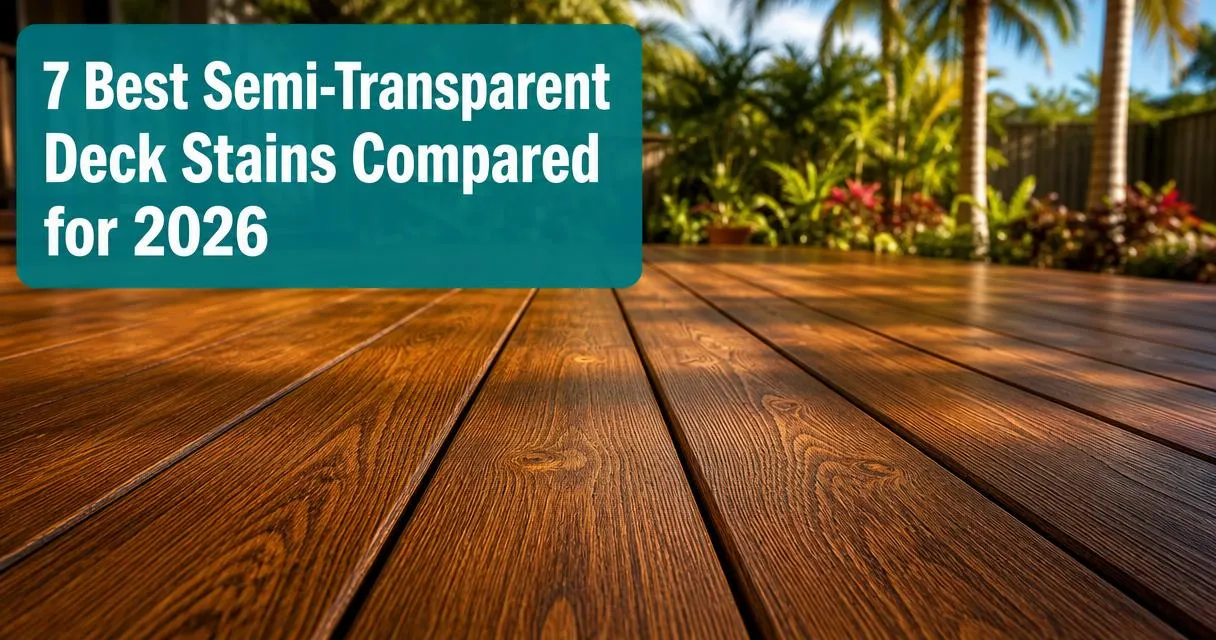
Choosing a semi-transparent deck stain means finding the sweet spot between showing off your wood’s natural grain and protecting it from UV damage and moisture. The right choice depends on whether you’re staining fresh cedar, weathered pressure-treated pine, or something in between. We compare seven popular options across durability, UV resistance, ease of application, and wood compatibility so you can match stain to your deck.
Key Takeaways
- Semi-transparent stains provide moderate UV and moisture protection while revealing wood grain. They fall between clear sealers and solid stains in coverage level.
- Oil-based formulas penetrate deeper into softwoods and typically last 2-3 years on horizontal deck surfaces. Water-based versions offer easier cleanup and lower VOCs but may only last 1-2 years.
- Pressure-treated wood needs penetrating oil-based stain applied in two coats, while lighter pigments enhance natural color on cedar and redwood.
- Decks with significant graying or weathering often look blotchy with semi-transparent stain. Solid stain hides surface imperfections better in these cases.
- Prep quality affects stain longevity more than brand choice. Even premium stains fail on poorly cleaned or inadequately dried wood.
Best Semi Transparent Deck Stain Compared
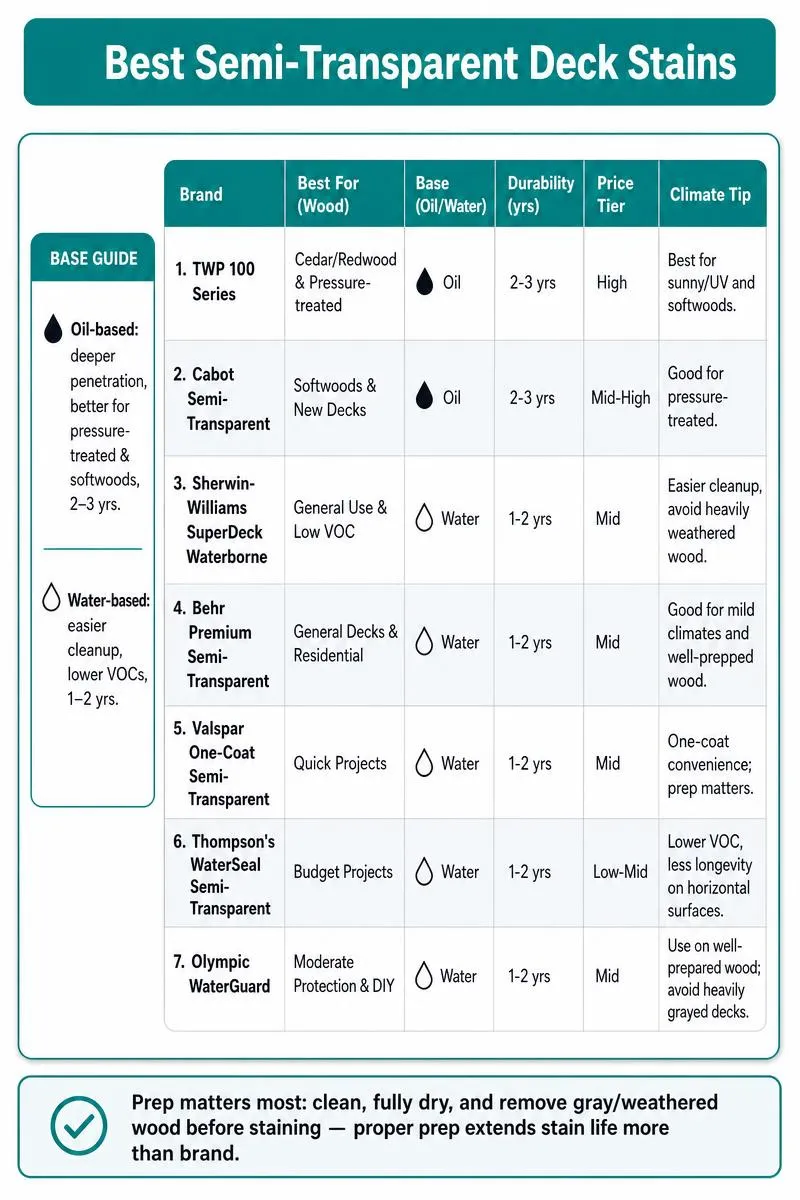
| Brand | Best For | Base | Durability | Price Tier | Climate Tip |
|---|---|---|---|---|---|
| TWP 100 Series | Cedar/Redwood & Pressure-treated | Oil | 2-3 yrs | High | Best for sunny/UV & softwoods |
| Cabot Semi-Transparent | Softwoods & New Decks | Oil | 2-3 yrs | Mid-High | Good for pressure-treated |
| Sherwin-Williams SuperDeck Waterborne | General Use & Low VOC | Water | 1-2 yrs | Mid | Avoid heavily weathered wood |
| Behr Premium Semi-Transparent | General Decks & Residential | Water | 1-2 yrs | Mid | Good for mild climates & well-prepped wood |
| Valspar One-Coat Semi-Transparent | Quick Projects | Water | 1-2 yrs | Mid | One-coat convenience; prep matters |
| Thompson’s WaterSeal Semi-Transparent | Budget Projects | Water | 1-2 yrs | Low-Mid | Lower VOC; less longevity on horizontals |
| Olympic WaterGuard | Moderate Protection & DIY | Water | 1-2 yrs | Mid | Use on well-prepared wood; avoid grayed decks |
Quick Product Comparison
Here’s how the seven stains stack up:
- TWP 100 Series: Oil-based stain that penetrates deep into softwoods. It covers 200-250 sq ft per gallon and lasts 2-3 years.
- Cabot Semi-Transparent: Oil-based stain that enhances cedar and redwood tones. It covers 200-350 sq ft per gallon and lasts 2-3 years.
- Sherwin-Williams SuperDeck Waterborne: Water-based stain that improves adhesion over standard acrylic. It covers 250-350 sq ft per gallon and lasts 1-2 years.
- Behr Premium Semi-Transparent: Water-based stain that resists mildew at budget price. It covers 200-300 sq ft per gallon and lasts 1-2 years.
- Valspar One-Coat Semi-Transparent: Water-based stain that spreads and self-levels easily. It covers 250-350 sq ft per gallon and lasts 1-2 years.
- Thompson’s WaterSeal Semi-Transparent: Water-based stain that shows grain but fades quickly. It covers 200-250 sq ft per gallon and lasts about 1 year.
- Olympic WaterGuard: Water-based stain that beads moisture on vertical surfaces. It covers 250-350 sq ft per gallon and lasts 1-2 years.
Related Reading
A practical comparison of durable floor coatings and when to choose paint versus stain for wood surfaces, helping…
What Is Semi-Transparent Deck Stain?
Semi-transparent deck stain is a pigmented formula that colors wood while allowing the natural grain pattern to show through. Unlike solid stains that hide wood texture completely, semi-transparent stains strike a middle ground. Clear sealers offer minimal color, but semi-transparent formulas add visible pigment.
These stains work best on new or well-maintained pressure-treated wood, cedar, and redwood that still has visible grain and minimal weathering. Translucent pigments enhance natural wood color rather than covering it. This makes them ideal when you want a natural look with more protection than a clear sealer provides.
Semi-transparent stains block moderate UV rays and repel moisture. They remain easy to reapply without stripping. The tradeoff is durability: semi-transparent stains protect less than solid stains and typically need recoating every 1-3 years depending on sun exposure and foot traffic.
High-traffic horizontal deck surfaces wear through semi-transparent stain faster than railings or vertical siding. Full sun fades stain faster than shaded areas in mild conditions. Plan your recoating schedule based on your deck’s specific exposure.
Top 7 Semi-Transparent Deck Stains Compared
Each of these stains excels in specific situations based on wood type, budget, and application priorities.
1. TWP 100 Series
TWP 100 has earned a loyal following among DIYers who prioritize longevity. Oil-based formula penetrates softwoods deeply, particularly pressure-treated pine and fir. It sinks into the wood fibers rather than sitting on the surface, which resists peeling and flaking since it doesn’t form a surface film.
The formula contains a blend of oils and resins that continue protecting even as the surface pigment fades from UV exposure. You’ll typically get 2-3 years on horizontal deck boards in moderate climates, with longer life on railings and vertical surfaces.
The main downsides include mineral spirits cleanup, higher cost than big-box alternatives, and limited availability. You’ll likely need to order online or find a specialty paint dealer.
2. Cabot Semi-Transparent
Cabot has decades of track record with semi-transparent oil-based stains that enhance cedar and redwood without overpowering their natural tones. Alkyd-modified oil bonds to wood effectively, working on both new and previously stained surfaces. It comes in warm earth tones that complement reddish woods.
Coverage varies significantly based on wood porosity. Expect 200 square feet per gallon on rough-sawn cedar versus 350 on smooth redwood.
Cabot performs best with two thin coats rather than one heavy application. The stain dries to the touch in 4-6 hours but needs 24-48 hours before rain exposure. It’s widely available at independent paint stores and some Ace Hardware locations.
3. Sherwin-Williams SuperDeck Waterborne
If you want a water-based option with better durability than most competitors, SuperDeck Waterborne delivers. Hybrid resin improves adhesion and flexibility, reducing the cracking and peeling common with cheaper water-based stains. It cleans up with soap and water and has low odor during application.
The stain works on pressure-treated wood, cedar, and redwood. Hybrid formula suits weathered wood that has aged at least 6 months or has been cleaned to remove mill glaze. You’ll get 1-2 years on horizontal surfaces, potentially longer on vertical applications.
Water-based formula allows easier switching since you’re not locked into oil-based maintenance. You can move to a different stain type later with less surface preparation.
4. Behr Premium Semi-Transparent
Behr Premium offers the best combination of availability and price for homeowners working with a tight budget. Sold exclusively at Home Depot, it provides decent UV protection and water repellency without the cost of specialty brands. Synthetic resin resists mildew growth better than older Behr formulations.
Expect 200-300 square feet per gallon on typical deck boards. The stain dries fast, often ready for light foot traffic within 4-6 hours. Budget price requires frequent recoating, typically every 1-2 years on horizontal surfaces.
For the price point, it performs adequately on pressure-treated decks that need regular maintenance anyway.
5. Valspar One-Coat Semi-Transparent
Valspar’s “one-coat” claim holds true on smooth, non-porous wood. Rough-sawn or weathered decks typically require two coats for even coverage. Water-based acrylic spreads and self-levels with a brush or pad applicator.
It’s sold at Lowe’s, making it convenient for quick project starts. The stain offers moderate durability similar to Behr Premium, with a 1-2 year lifespan on horizontal deck boards. It contains mildewcides and water repellents but penetrates less deeply than oil.
The color selection leans toward cooler gray and brown tones rather than warm cedar shades. Best for homeowners prioritizing convenience and fast application over maximum longevity.
6. Thompson’s WaterSeal Semi-Transparent
Thompson’s is the budget option when you need something immediately available and inexpensive. It’s stocked at virtually every hardware store and big-box retailer. Thin formula reveals wood grain, sometimes too clearly if you have imperfections to hide.
Expect the shortest lifespan of any stain on this list. In sunny climates, water beading often fails and color fades noticeably within about 1 year on horizontal surfaces. The low solids content means less pigment and protective resin compared to premium brands.
It works adequately for low-traffic vertical surfaces like privacy fences or lattice. Decking requires frequent recoating, so consider it a stop-gap solution rather than a long-term strategy.
7. Olympic WaterGuard
Olympic WaterGuard performs better on vertical surfaces than horizontal deck boards. Water-repellent additives bead moisture effectively on railings and posts but wear away quickly under foot traffic. The formula contains moderate pigment levels that show grain while providing basic UV blocking.
Coverage runs 250-350 square feet per gallon on smooth wood. It dries to the touch in 1-2 hours, making it practical for applying two coats in one day. The stain works on pressure-treated wood, cedar, and redwood but requires thorough cleaning and drying before application.
Widely available at Lowe’s and independent retailers at a mid-range price point.
Head-to-Head: Oil-Based vs Water-Based Semi-Transparent Stains
The choice between oil and water-based formulas affects performance, maintenance, and future refinishing options.
Oil-based stains penetrate deeper into wood fibers, especially on softwoods like pine, cedar, and fir. They carry pigments and protective resins below the surface where they resist wearing away from foot traffic. Water-based stains form more of a surface film that can wear through faster on high-traffic areas.
This explains why oil-based lasts 1-2 years longer on deck boards while water-based versions need recoating after 1-2 years.
Cleanup and environmental factors favor water-based formulas:
- Soap and water replaces solvents for brush and tool cleanup
- Significantly lower VOC levels during application
- Less odor and faster drying for quicker return to use
- Easier future product changes when switching stain types later
The recoating commitment matters more than many homeowners realize. Once you use an oil-based stain, maintenance works best with oil. Water-based stains applied over old oil-based finishes often fail to penetrate and can peel. Starting with water-based gives you more flexibility to switch products later.
Related Reading
A clear primer vs sealer guide that outlines sealing and surface-prep principles readers can apply before applying a…
Head-to-Head: Best Stain by Wood Type
Wood species and condition determine which stain formulation performs best.
- Pressure-treated pine needs penetrating oil-based stain in two coats for adequate protection. The wood’s dense grain and chemical treatment make it less absorbent than untreated lumber. Wait at least 3-6 months after installation before staining to let the wood dry and chemical preservatives leach out. Test water absorption by splashing the surface: if water beads up instead of soaking in, wait longer. TWP 100 and Cabot both penetrate pressure-treated wood effectively.
- Cedar and redwood show off their natural beauty best with semi-transparent stains in lighter pigments. Avoid dark colors that hide the grain you paid extra to showcase. These woods contain natural oils that resist some water-based stains. Oil-based formulas bond more reliably to cedar and redwood. Cabot Semi-Transparent and TWP 100 both enhance the warm tones without overpowering them. Apply one coat to sample boards in different colors before committing to 5 gallons of the wrong shade.
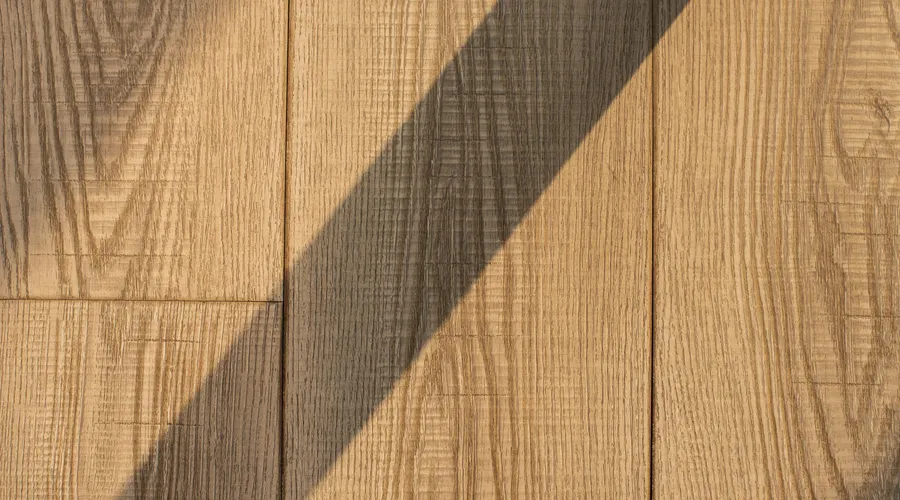
- Older grayed decks present a challenge for semi-transparent stains. UV damage creates uneven porosity that causes blotchy, inconsistent color absorption. The wood grain may show through attractively in some boards while appearing muddy or dark in damaged areas. Solid stain covers uneven porosity better than semi-transparent. Alternatively, use a deck brightener to restore more uniform color before applying semi-transparent stain.
- Composite decking and hardwoods like ipe require manufacturer approval before staining. Most composite materials shouldn’t be stained at all since the surface doesn’t absorb finish and stains just peel off. Dense tropical hardwoods resist penetration and often perform better with specialized hardwood oils. Check manufacturer guidelines before buying any stain for non-standard decking materials.
Which Semi-Transparent Stain Should You Choose?
Match the stain to your specific deck characteristics and priorities:
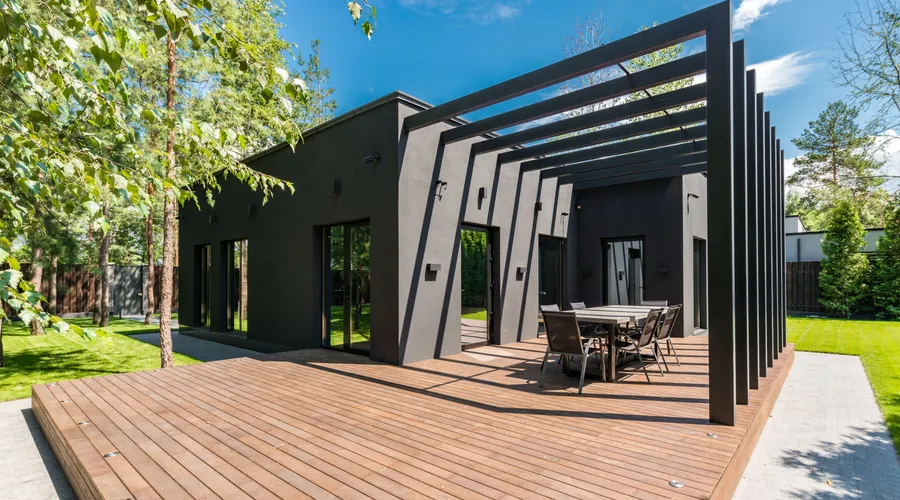
- For a new cedar or redwood deck where you want to enhance natural grain and color, choose Cabot Semi-Transparent or TWP 100. Both oil-based options penetrate well and last 2-3 years on horizontal surfaces. Apply two thin coats for best results and plan on recoating when water stops beading on the surface.
- For pressure-treated pine on a budget, Behr Premium or Valspar One-Coat fit the bill. You’ll sacrifice some longevity compared to premium oil-based stains. Cost savings justify more frequent recoating for many homeowners. Both water-based options clean up easily and provide adequate protection for 1-2 years.
- For low VOCs and easy cleanup, go with Sherwin-Williams SuperDeck Waterborne. Hybrid resin outperforms straight acrylic on durability while maintaining the environmental and convenience benefits. It costs more than Behr or Valspar but delivers better adhesion and flexibility.
- For older decks with graying or weathered wood, you need semi-solid or solid stain instead of semi-transparent. Uneven porosity causes blotchy appearance with translucent stains. Either restore the wood with a deck brightener first, or accept that you need more opaque coverage to achieve uniform color.
- For high-traffic horizontal surfaces, oil-based formulas perform best. TWP 100 and Cabot penetrate deeper and withstand foot traffic better than surface-film water-based stains. The extra durability justifies the higher cost and mineral spirits cleanup when you want to minimize maintenance frequency.
FAQs
1. Which semi-transparent deck stain did Consumer Reports rank as the best?
Consumer Reports testing changes periodically and focuses on different brands depending on the year. Their most recent deck stain tests have favored products like Behr Premium and Cabot for balancing durability with value. Specific rankings shift as formulas change, so check current ratings rather than relying on outdated results. Stain formulations change frequently enough that 3-year-old test data may not reflect current performance.
2. What deck stain do professionals use?
Professional painters and deck contractors typically use TWP, Cabot, or Sherwin-Williams products for client projects because they offer consistent results and good longevity. Oil-based formulas dominate professional use since they penetrate better and last longer on horizontal surfaces, reducing callback complaints. Many pros avoid the cheapest big-box options because marginal cost savings don’t justify increased warranty claims and customer dissatisfaction.
3. Is semi-transparent stain better than solid or clear?
Semi-transparent works best when you want to show wood grain while getting more protection than clear sealer provides. Solid stain protects longer and covers surface imperfections. Clear sealer needs annual recoating due to minimal UV blocking. Choose based on deck condition and aesthetic priorities rather than assuming one type is universally superior.
4. Can you apply semi-transparent stain over an old solid stain?
No, semi-transparent won’t penetrate solid stain and will just sit on the surface looking blotchy. You’d need to strip or sand the solid stain down to bare wood first, which often requires more work than simply maintaining the solid finish. You can go darker from semi-transparent to solid, but not lighter from solid to semi-transparent without complete removal.
5. How long does semi-transparent deck stain last before needing reapplication?
Oil-based semi-transparent stains last 2-3 years on horizontal deck surfaces in moderate climates. Water-based versions typically need recoating after 1-2 years. Vertical surfaces like railings last longer, often 3-5 years. Full sun exposure, high foot traffic, and harsh weather all shorten lifespan. Recoat when water stops beading on the surface and color fades noticeably.
6. What is the best semi-transparent deck stain for pressure-treated wood?
TWP 100 Series performs best on pressure-treated wood. Oil-based formula penetrates treated lumber more effectively than water-based options. Apply two coats after the wood has dried for at least 3-6 months following installation. Behr Premium offers a budget-friendly alternative if you’re willing to recoat more frequently.
Final Verdict
There’s no universal best semi-transparent deck stain because wood type, deck condition, and local climate all influence which product performs optimally. Match oil-based stains like TWP 100 or Cabot to softwoods where you want maximum durability. Consider water-based options like Sherwin-Williams SuperDeck Waterborne when easy cleanup beats extra longevity.
Oil-based outperforms water-based on decks by penetrating deeper and lasting 1-2 years longer before needing recoating. The tradeoff is mineral spirits cleanup, higher VOCs, and less flexibility if you want to change products later. For vertical surfaces like railings where durability matters less, water-based stains work fine and make the job easier.
Before you commit to staining your entire deck, test your chosen stain on a small hidden section or sample board cut from the same wood. Let it weather for a few weeks to confirm you like the color and coverage. Prep quality matters more than brand, even the best stain fails on dirty, wet, or poorly sanded wood.
Based in Fish Hawk, Florida, we help homeowners throughout the Fish Hawk metro area choose and apply the right semi-transparent stain for Florida’s sun and humidity. If you’d rather skip the guesswork, review our deck refinishing services to see how we prepare and stain local wood types. Call us at 813-860-8661 for a free estimate and a recommendation tailored to your deck.