
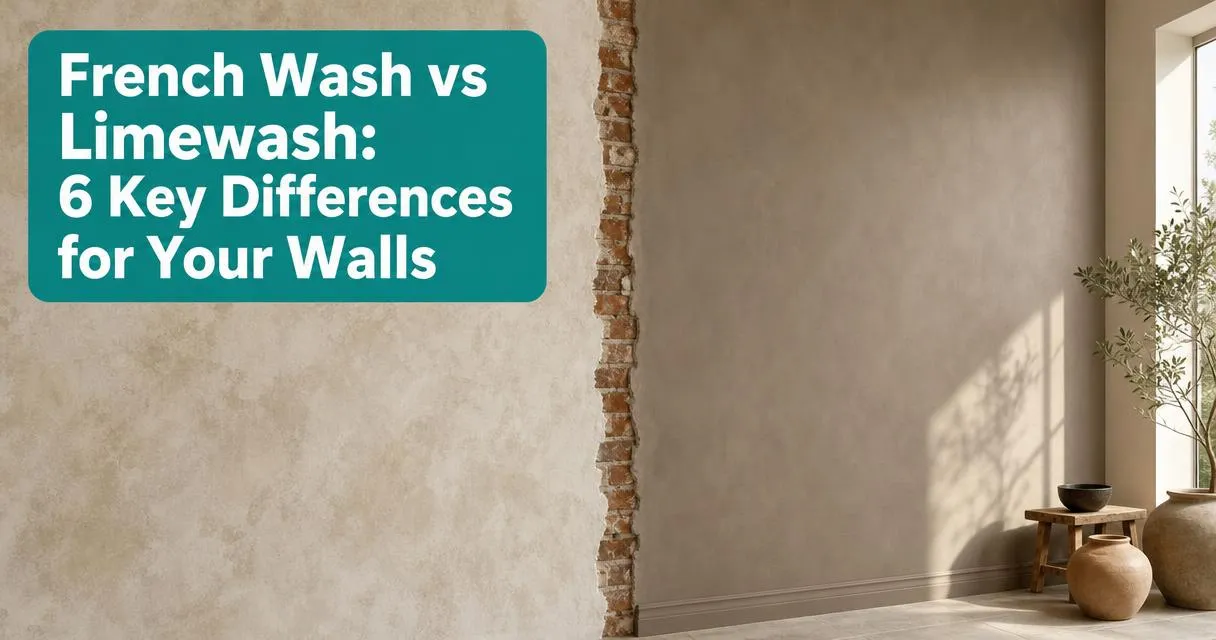
You’re staring at two traditional textured finishes, both beautiful and both trendy. You need to pick one before your painter shows up.
French wash and limewash look similar in inspiration boards but behave completely differently on your walls, especially in a humid climate like Florida. The right choice depends on your surface type, your tolerance for recoating, and whether you want a finish that ages or one that holds its colour.
Key Takeaways
- French wash is a tinted, acrylic-based textured finish; limewash is a mineral coating made from slaked lime, water, and pigment
- Limewash bonds chemically to masonry and penetrates the surface rather than forming a film on top of it
- Limewash develops a natural patina as it ages; French wash holds its colour more consistently over time
- Limewash breathes freely, which protects exterior masonry from trapped moisture damage; French wash is less permeable
- Both finishes work on brick, render, and plaster, but their moisture management differs enough to matter on exteriors
- Limewash typically needs refreshing every 5 to 7 years as part of its expected lifecycle; French wash lasts longer on surfaces that stay dry
- French wash suits interior feature walls and DIY application; limewash is the stronger choice for exterior heritage masonry
French Wash Vs Limewash Compared
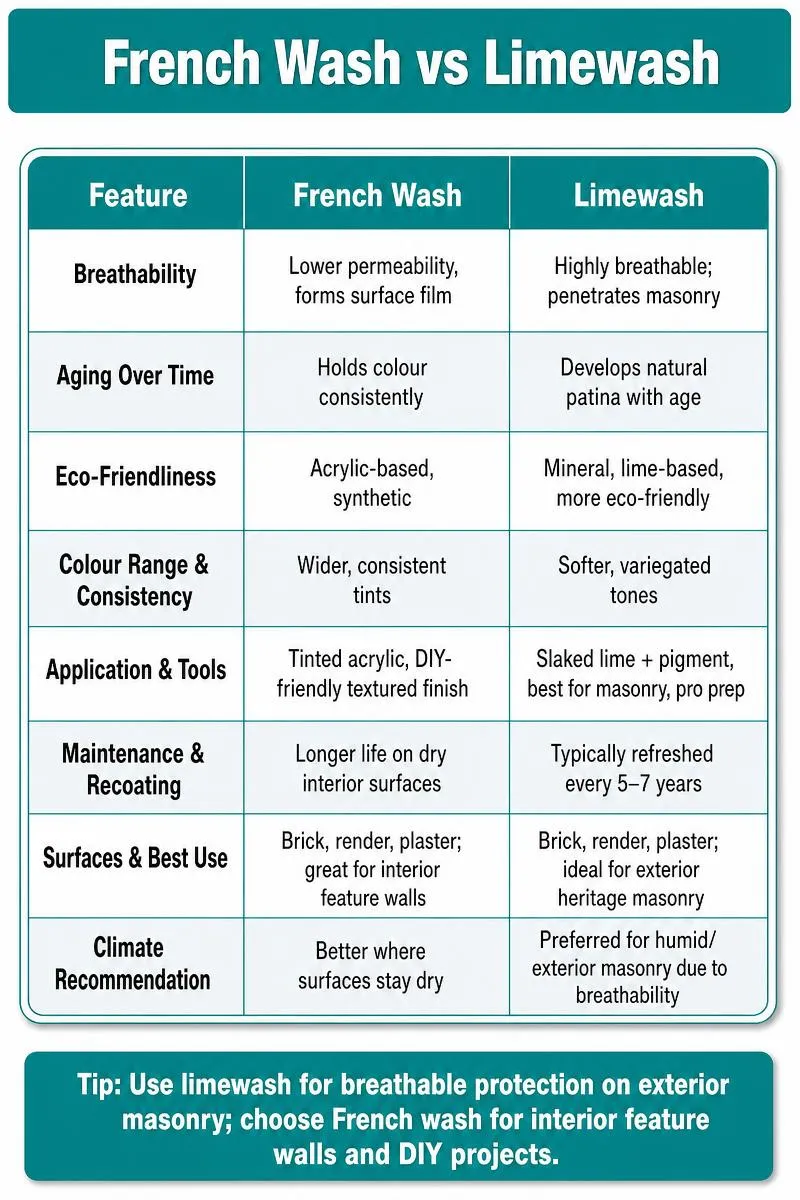
| Feature | French Wash | Limewash |
|---|---|---|
| Breathability | Lower permeability, forms surface film | Highly breathable; penetrates masonry |
| Aging Over Time | Holds colour consistently | Develops natural patina with age |
| Eco-Friendliness | Acrylic-based, synthetic | Mineral, lime‑based, more eco‑friendly |
| Colour Range & Consistency | Wider, consistent tints | Softer, variegated tones |
| Application & Tools | Tinted acrylic, DIY-friendly textured finish | Slaked lime + pigment, best for masonry, pro prep |
| Maintenance & Recoating | Longer life on dry interior surfaces | Typically refreshed every 5–7 years |
| Surfaces & Best Use | Brick, render, plaster; great for interior feature walls | Brick, render, plaster; ideal for exterior heritage masonry |
| Climate Recommendation | Better where surfaces stay dry | Preferred for humid/exterior masonry due to breathability |
Quick Comparison Table
- Composition: Limewash is mineral and lime-based; French wash is acrylic-based and tinted
- Breathability: Limewash allows moisture vapour through; French wash is significantly less permeable
- Aging behaviour: Limewash fades evenly and develops patina over time; French wash holds colour longer but can show localised wear
- Colour consistency: French wash delivers predictable, repeatable colour; limewash produces soft, variable earthy tones
- Best surfaces: Limewash works best on exterior brick, stone, and lime render; French wash suits interior plaster, drywall, and dry render
- Maintenance frequency: Limewash needs periodic recoating every 5 to 7 years; French wash can go longer with cleaning and spot touch-ups
Related Reading
A practical comparison of limewash and plaster, including application, durability, and finish compatibility.
What Is French Wash?
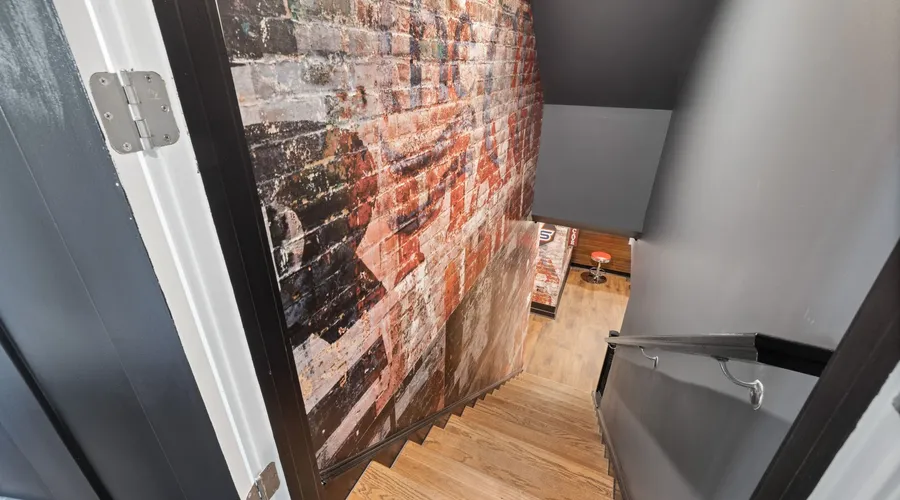
French wash is a tinted, acrylic-based textured wall finish developed by Porter’s Paints. It creates a layered, aged-plaster effect using an acrylic medium rather than a mineral binder, which makes it easy to tint across a wide colour spectrum.
It works best on interior plaster, feature walls, and dry areas of exterior render where moisture exposure is limited. The acrylic film sits on the surface rather than penetrating it, giving you consistent colour across the wall.
French wash delivers a wide colour range, predictable results coat to coat, and a forgiving application process that experienced DIYers can handle. The trade-off is breathability. On exterior walls, particularly in humid climates, the surface film can trap moisture behind it and eventually peel, especially on older masonry that breathes heavily.
What Is Limewash?
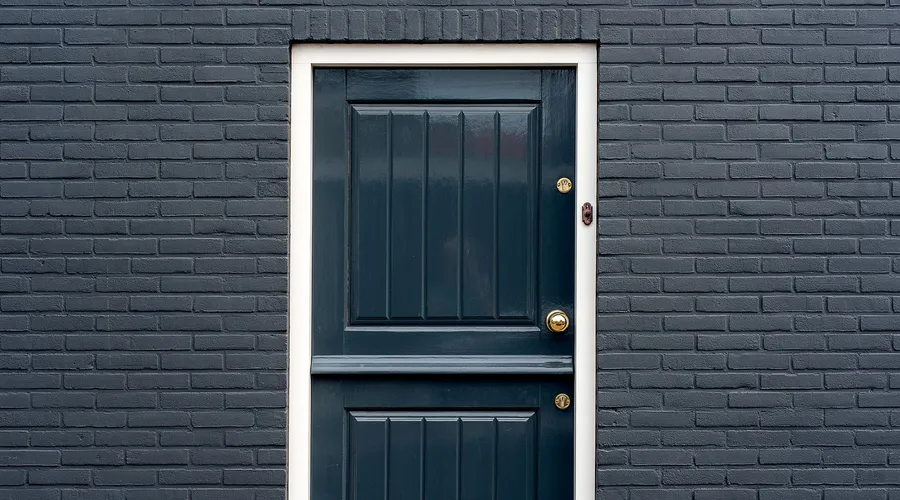
Limewash is one of the oldest wall coatings in use, made from slaked lime mixed with water and natural pigments. It’s a mineral product, not a paint, and that distinction changes everything about how it’s applied and how it ages.
It excels on exterior brick, stone, lime render, and historical masonry because it doesn’t just coat the surface. Limewash bonds chemically to calcium-rich substrates through a carbonation process, becoming part of the wall rather than sitting on top of it. That’s why it’s the preferred finish on heritage and historic masonry homes where breathability is non-negotiable.
Limewash carries minimal VOCs and is made from naturally occurring limestone. It breaks down without environmental harm.
The colour palette skews toward muted, earthy tones. It requires a mineral substrate to bond properly, so it won’t work well on painted or sealed surfaces. Fresh limewash can also rub off before it fully cures, so you need to manage foot traffic and contact with the wall during that window.
Head-to-Head: 6 Key Differences
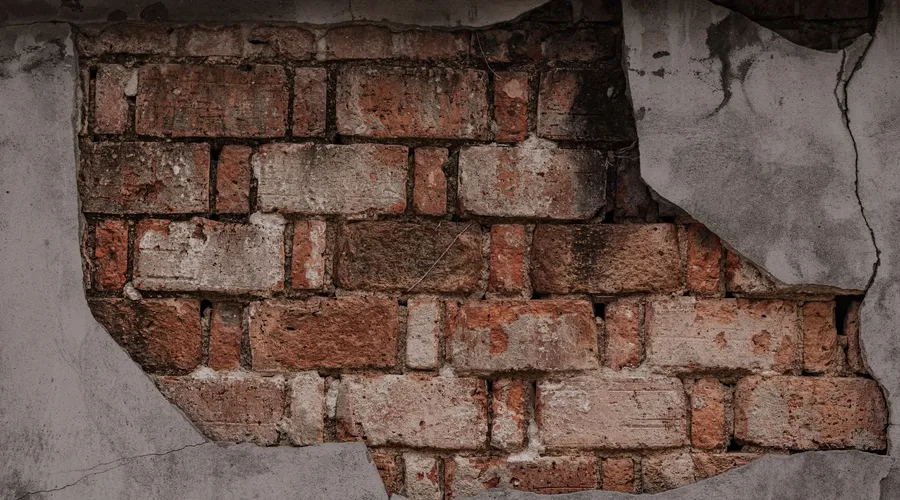
These two finishes overlap visually but diverge sharply in how they perform. French wash forms a film on the surface; limewash penetrates the substrate directly.
1. Breathability
Limewash allows moisture vapour to move freely through the wall surface, which is what makes it safe for masonry in wet climates. French wash forms an acrylic film that slows that vapour movement significantly.
On exterior brick or stone in a humid environment, a non-breathable coating traps moisture behind the film, accelerating spalling, efflorescence, and peeling. Limewash is the clear choice for any exterior masonry application.
2. Aging Over Time
Limewash fades and develops a patina gradually and evenly, which is part of the aesthetic appeal. Many homeowners actually prefer the worn, sun-bleached look that appears after a few years.
French wash holds its applied colour longer, but when it does show wear, it tends to wear in patches at high-contact points like window surrounds and corners. If you want a finish that ages beautifully without looking neglected, limewash has the advantage. If you want consistent colour year after year, French wash is the more reliable choice.
3. Eco-Friendliness
Limewash is made from naturally occurring limestone and carries minimal VOCs. It breaks down without environmental harm.
French wash is acrylic-based, which means it has a higher VOC profile during application. It doesn’t biodegrade the way a mineral product does. For homeowners prioritising low chemical exposure or sustainability, limewash is the clear choice on this dimension.
4. Colour Range and Consistency
French wash can be tinted across a broad palette, including deep, saturated colours that limewash simply can’t achieve. It also delivers repeatable colour from batch to batch, which matters on large surface areas where you need consistent results.
Limewash produces soft, variable tones in mostly ochres, terracottas, off-whites, and muted greys. The variation from one part of the wall to another is a feature, not a defect. If you have a specific colour in mind and need it to look the same across the whole room, French wash gives you more control.
5. Application and Tools
Limewash is applied with a large natural-bristle brush on a dampened surface. The moisture helps the product penetrate and bond with the substrate, and the technique involves working it into the surface rather than just covering it.
French wash is rolled or brushed onto a dry surface and builds up in layers, much closer to conventional paint application. For a confident DIYer, French wash is more approachable. Limewash application is learnable but less forgiving if you apply it to the wrong substrate or skip the dampening step.
6. Maintenance and Recoating
Limewash recoating every 5 to 7 years is built into the product’s expected lifecycle, not a sign of failure. Each new coat actually deepens the patina and reinforces the bond with the substrate.
French wash on a dry interior surface can go longer between maintenance cycles, and spot touch-ups are easier to blend. On exteriors in humid climates, however, the calculus changes. Limewash deepens the mineral bond with each refresh coat, while stripping a peeling acrylic film means starting over.
Which Should You Choose?
- Exterior brick or stone in a humid climate: limewash. The breathability difference is not minor here. It directly affects how long the finish lasts and whether moisture damage accumulates behind it.
- Interior feature wall with a bold or specific colour: French wash. You get more colour options, a consistent result, and an easier application process.
- Historic or heritage masonry home: limewash. The chemical bond with mineral substrates and the authentic aging look both support this choice, and many heritage guidelines actually specify it.
- Smooth plaster or drywall surface: French wash. Limewash needs a calcium-rich mineral substrate to bond correctly; it won’t perform the same way on modern drywall.
- Low-maintenance preference with consistent colour: French wash, on a dry surface. If your priority is set-and-forget colour stability, the acrylic base delivers that more reliably on interiors.
Related Reading
Best exterior paint finish for stucco
Guidance on choosing the best exterior finishes for stucco surfaces, including which coatings work best and why.
FAQs
What is French wash paint?
French wash is a tinted, acrylic-based textured finish developed by Porter’s Paints. It creates a layered, aged-plaster effect on walls and is available in a wide colour range. Unlike limewash, it uses an acrylic binder and sits on the surface rather than penetrating it.
How is limewash different from conventional paint?
Conventional paint forms a film on the surface using acrylic or latex binders. Limewash uses slaked lime that reacts chemically with the substrate through carbonation, becoming part of the wall rather than coating it. That’s what gives limewash its breathability and why it behaves so differently from standard exterior paint.
What are the differences between limewash and whitewash?
Whitewash is typically watered-down latex paint or a chalk-and-water mix. Limewash uses slaked lime as its base, which bonds chemically to masonry.
Whitewash sits on the surface much like diluted paint. Limewash penetrates and reacts with the substrate, which is why the two products age and perform so differently despite looking similar when first applied.
Does Sherwin-Williams sell limewash paint?
Sherwin-Williams doesn’t offer a dedicated limewash product line. Specialised brands like Romabio and Porter’s Paints are the recognised options in this space, and they produce mineral-based limewash formulated for masonry.
Can French wash be used on exterior brick?
Technically yes, but it’s not the ideal choice for exterior masonry. The acrylic film limits breathability, which can lead to moisture buildup behind the coating and eventual peeling, particularly in humid climates. Limewash handles exterior brick in wet conditions significantly better.
How long does limewash last compared to French wash?
Limewash typically needs a refresh coat every 5 to 7 years, though this varies by exposure level and climate. French wash can last longer on interior surfaces or dry exteriors. On humid exteriors, the comparison shifts because a French wash film that begins to peel requires more invasive repair than a limewash refresh, which simply adds a new mineral layer.
Final Verdict
If you’re working with exterior brick, stone, or lime render and you’re in a climate with meaningful humidity, limewash is the technically correct choice. It breathes and bonds. It ages in a way that actually improves the wall over time. The patina is intentional, not a sign of neglect.
If you’re doing an interior feature wall and you want colour control, a wide palette, and a process you can manage on a weekend, French wash delivers all of that. It’s more predictable. It holds its colour longer in dry conditions and doesn’t require a mineral substrate.
Before committing to either finish across a full surface, test a patch in a low-visibility area. Both products look different wet versus dry, and limewash in particular can shift significantly as it cures. A small test area tells you more than any photo.
We’re based in Fish Hawk, Florida, and we help homeowners across the Fish Hawk metro area decide between finishes like French wash and limewash. For exterior masonry limewash is often the smarter choice, and we can bring a sample board and make a recommendation specific to your surface, or you can preview our exterior painting services before we schedule a visit. Call us at 813-860-8661 to request a sample board and a site-specific recommendation.