
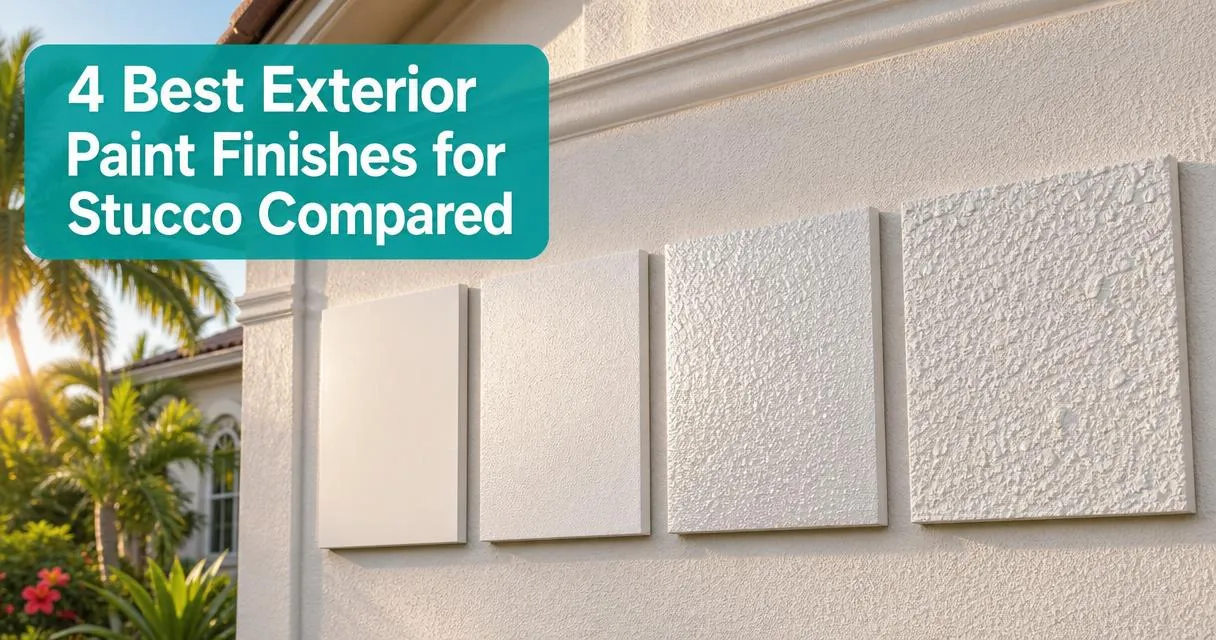
You’re staring at color chips but the sheen selector is what actually matters. Flat hides decades of patching but fails in rain. Satin scrubs clean but spotlights every ripple.
Elastomeric spans cracks but costs twice as much and traps moisture if your stucco breathes the wrong way. The right finish depends on your stucco’s condition, your climate, and how often you’re willing to repaint.
Here’s how flat, low-sheen, satin, and elastomeric stack up on durability, glare, washability, and flaw-hiding.
Key Takeaways
- Flat finish hides texture inconsistencies and old patches better than any other sheen, but absorbs dirt and moisture instead of shedding it
- Satin resists moisture best for humid climates like Florida and the Gulf Coast, where mildew grows faster than flat can dry
- Elastomeric coating bridges hairline cracks up to 1/16 inch and handles driving rain, but costs $50-70 per gallon versus $35-45 for standard acrylics
- Low-sheen splits the difference between flat’s forgiving appearance and satin’s cleanability, making it the safest choice for most homeowners
- Darker exterior colors amplify sheen, so a charcoal satin shows significantly more glare than an off-white satin in direct afternoon sun
- Elastomeric traps moisture if applied over stucco with existing water intrusion or without proper substrate prep
- Flat formulas lack UV stabilizers found in satin and elastomeric, leading to faster chalking in high-sun climates after year five
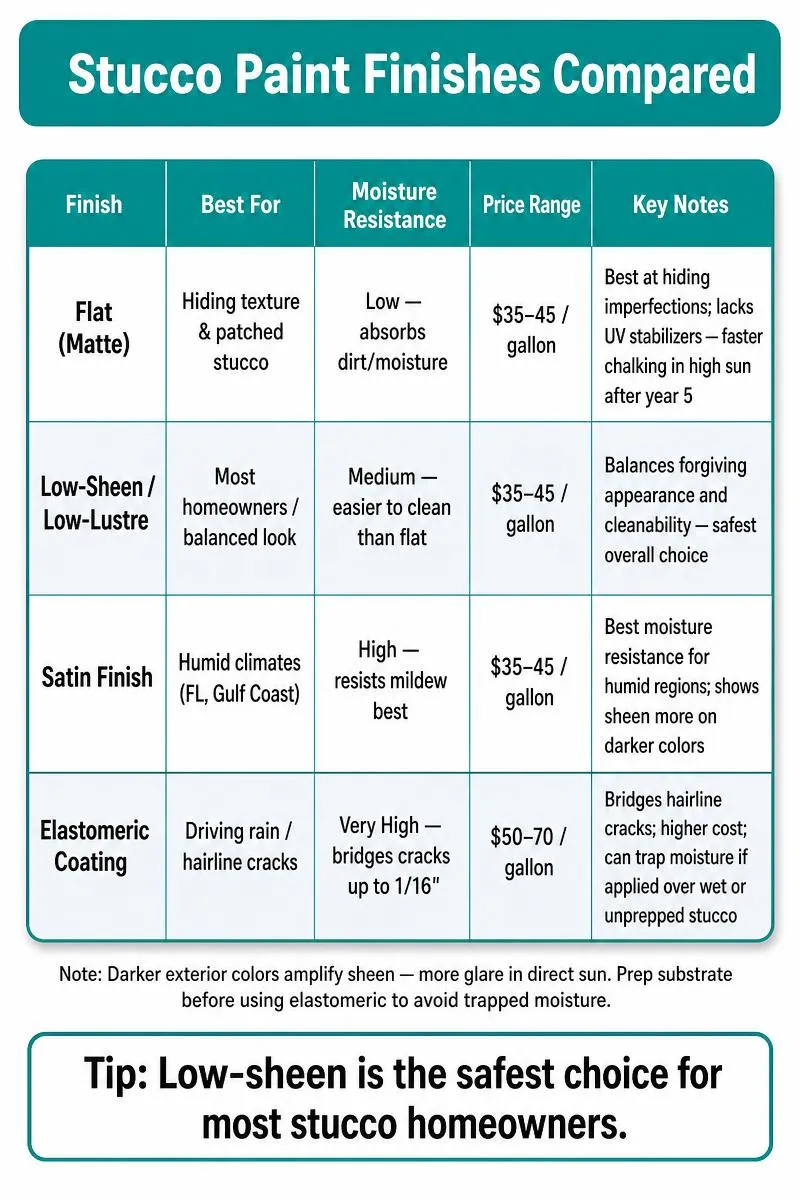
Quick Comparison: Best Exterior Paint Finish For Stucco
| Finish | Best For | Moisture Resistance | Price Range | Key Notes |
|---|---|---|---|---|
| Flat (Matte) | Hiding texture & patched stucco | Low — absorbs dirt/moisture | $35–45 / gallon | Best at hiding imperfections; lacks UV stabilizers — faster chalking in high sun after year 5 |
| Low‑Sheen / Low‑Lustre | Most homeowners / balanced look | Medium — easier to clean than flat | $35–45 / gallon | Balances forgiving appearance and cleanability — safest overall choice |
| Satin Finish | Humid climates (FL, Gulf Coast) | High — resists mildew best | $35–45 / gallon | Best moisture resistance for humid regions; shows sheen more on darker colors |
| Elastomeric Coating | Driving rain / hairline cracks | Very High — bridges cracks up to 1/16″ | $50–70 / gallon | Bridges hairline cracks; higher cost; can trap moisture if applied over wet or unprepped stucco |
Quick Comparison: Finish Performance
- Flat masonry finish delivers the best flaw concealment with zero glare, but requires repainting every 5-7 years in humid zones. It absorbs rather than repels dirt, so pressure washing degrades the surface.
- Low-sheen allows scrubbing without highlighting patches. Expect 7-9 years in moderate climates, but streaks show during application if you don’t maintain a wet edge.
- Satin resists mildew and washes clean, lasting 8-10 years in coastal humidity. The tradeoff is visible glare on south and west walls in afternoon sun, plus every surface flaw becomes a shadow line.
- Elastomeric seals against wind-driven rain and stretches with thermal movement for 10-12 years. It goes on thick, requires backrolling after spray application, and costs nearly double standard acrylic per square foot of coverage.
Related Reading
A practical guide to choosing paints and finishes suited for masonry and concrete exteriors, including durability and…
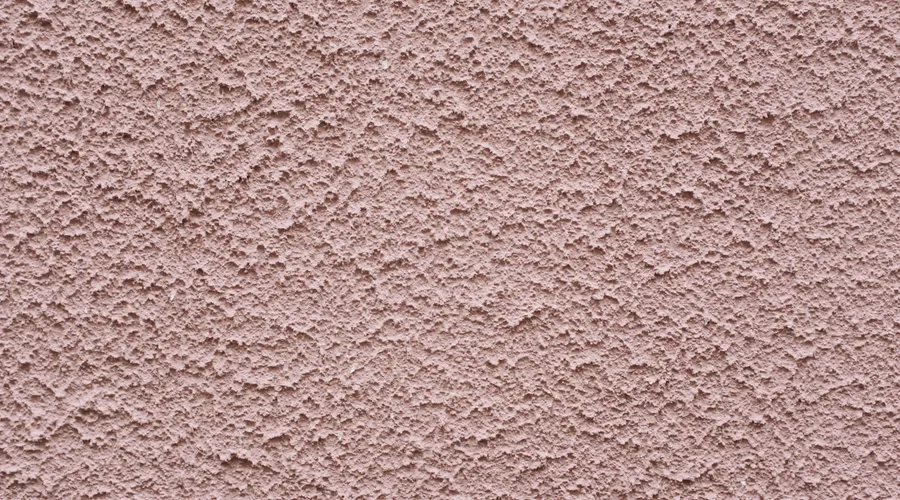
Flat (Matte) Masonry Finish
Flat exterior paint reflects less than 5% of light, creating a chalky, non-reflective surface that reads as pure color without shine. Most brands use less acrylic binder than higher sheens, which reduces the film’s ability to resist water penetration.
This finish excels on older stucco with visible repair patches, uneven texture from multiple coats, or hand-troweled surfaces where inconsistent depth creates shadows. The matte surface hides patches and texture variations, so your eye sees color instead of contour.
The weakness shows up after the first rain. Flat paint fails to shed moisture, so mildew takes hold faster in humid climates. Dirt embeds into the porous surface instead of sitting on top, meaning you can’t pressure wash without removing pigment.
UV degradation happens faster because flat formulas contain fewer resin solids. Chalking becomes visible by year five in Arizona, New Mexico, and Southern California sun.
Low-Sheen / Low-Lustre Finish
Low-sheen sits at 10-25% light reflectance, just enough to allow gentle cleaning without creating mirror-like glare. Some manufacturers label this “eggshell” or “velvet,” though exterior formulations carry more binder than interior versions to handle weathering.
This finish works for homeowners who want slight washability but don’t want their house reflecting afternoon sun into neighbors’ windows. It conceals texture better than satin while resisting mildew better than flat.
The catch is application consistency:
- Uneven roller pressure or overlapping spray passes show as streak marks because the subtle sheen amplifies wet-edge failures
- Darker bands appear where passes overlap, and lighter strips show where coverage thins
- Once dry, these marks don’t disappear, so technique matters more than with flat
- Expect 7-9 years before recoating in mixed climates with moderate rain and sun exposure
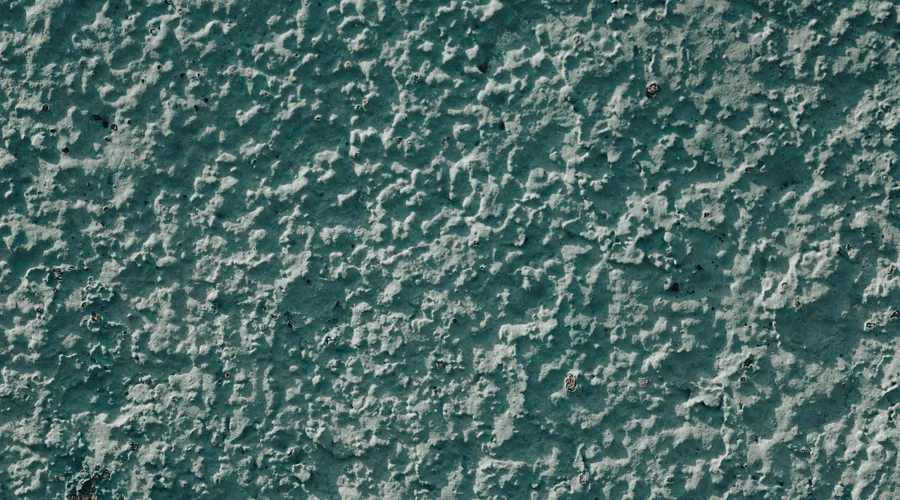
Satin Finish
Satin exterior paint reflects 25-35% of light, creating a noticeable gloss that sheds water on contact. Acrylic and acrylic-latex satin formulas pack more resin per gallon, forming a tighter film that resists moisture and scrubs clean.
This sheen performs best in humid climates where mildew pressure is constant and stucco stays damp after storms. Florida, the Gulf Coast, and Pacific Northwest stucco homes benefit from satin’s ability to dry quickly and resist biological growth. Newer stucco with machine-applied texture handles satin well because the surface is already uniform.
The downside is cosmetic:
- Every ripple, patch edge, and trowel mark catches light and creates shadows
- If your stucco has been repaired multiple times or shows settling cracks that were filled, satin will highlight those repairs instead of hiding them
- Darker colors in satin create significant glare on west and south exposures, enough to bother neighbors or create hot spots that fade faster
- Plan on repainting every 8-10 years, though the film itself remains intact longer than flat
Related Reading
A comparison of limewash and plaster treatments, useful when considering lime-based finishes or limewash-style paints…
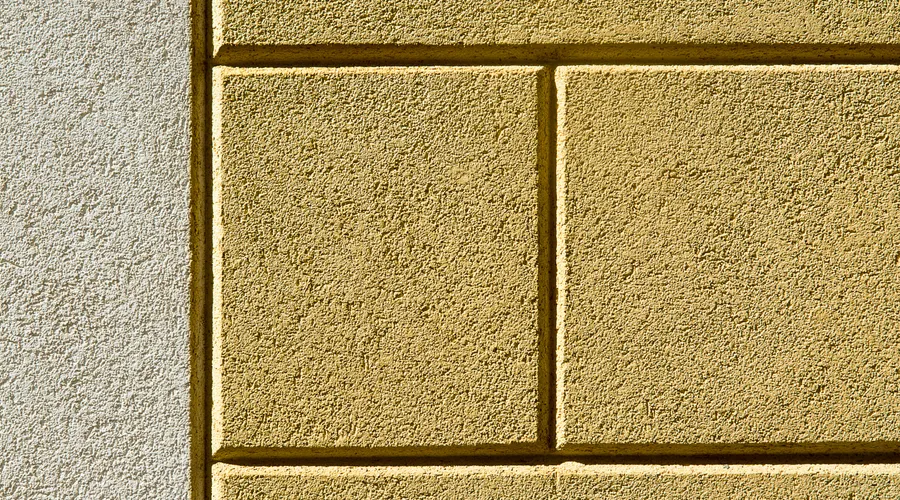
Elastomeric Coating
Elastomeric paint is a rubberized acrylic coating that goes on 10-15 mils thick, about four times the build of standard latex. The dried film stretches up to 300% of its resting length, which lets it bridge hairline thermal cracks.
This coating suits rainy climates like the Pacific Northwest, areas with stucco that shows spiderweb cracking, and EIFS (synthetic stucco) systems that flex more than traditional cement stucco. It creates a true waterproof membrane when applied correctly, so wind-driven rain doesn’t penetrate at all.
The application is more involved:
- Elastomeric must be backrolled after spraying to work the coating into stucco pores, or it peels in sheets without backrolling
- It costs $50-70 per gallon versus $35-45 for standard acrylic, and you’ll use more per square foot because of the thickness
- The biggest risk is trapping moisture in uncured stucco, leading to efflorescence, delamination, or mold growth between the stucco and the sheathing
- The coating lasts 10-12 years in harsh weather but requires proper substrate inspection first
Head-to-Head: Climate and Surface Condition
Climate and surface condition determine which finish wins:
- Flat beats satin in high-sun, low-humidity environments like California’s Central Valley, Phoenix, and West Texas because the matte surface avoids heat absorption and glare
- Satin wins in high-humidity zones because it dries fast and resists dampness that feeds mildew on flat surfaces
- Elastomeric outperforms satin on crack-prone stucco because it spans gaps from substrate movement, while satin just coats over them and shows the crack again within a year
- Satin makes more sense on smooth, newer stucco where no cracking exists and the goal is longevity plus cleanability
Color and Light Reflectance Value (LRV) interact with sheen in ways most homeowners don’t anticipate. A color with an LRV below 20 (charcoal, navy, deep red) in satin finish absorbs heat and reflects sunlight simultaneously, creating both faster fading and blinding glare.
The same dark color in flat absorbs heat but scatters light, so it fades just as fast without the reflective hotspot. If you’re set on a dark exterior, low-sheen offers the best compromise.
Which Finish Should You Choose?
- Older stucco with visible patch repairs, uneven hand-troweling, or multiple texture layers calls for flat or low-sheen. These finishes hide surface inconsistencies, so your eye reads color instead of texture. Expect to repaint every 5-8 years depending on sun and rain exposure.
- Florida, Gulf Coast, and other humid climates need satin or elastomeric to handle constant moisture. Satin dries quickly and resists mildew without the cost and application complexity of elastomeric. Use elastomeric only if you also have cracking or severe rain exposure.
- Arid climates like California, Arizona, New Mexico, and West Texas do well with flat or low-sheen because mildew pressure is low and flaw-hiding matters more than washability. UV resistance becomes the priority, so choose a formula that blocks UV with ceramic microspheres.
- Stucco with hairline cracks wider than a credit card edge but narrower than 1/16 inch requires elastomeric coating. Standard paint bridges nothing, and cracks reappear within months. Elastomeric seals cracks and blocks water.
FAQs
What paint finish is best for stucco?
Low-sheen or satin works best for most stucco homes because it balances washability and moisture resistance. Flat hides imperfections better but fails in humid or rainy climates. Elastomeric handles cracks and extreme weather but costs more and requires careful application.
Should stucco be painted flat or satin?
Use flat if your stucco has visible patches, texture inconsistencies, or you live in a dry climate with low mildew pressure. Choose satin if you face humid conditions, need to wash the surface occasionally, or have newer stucco with uniform texture. Satin outlasts flat in humid climates.
Can you paint directly over stucco?
Yes, if the stucco is clean, fully cured (at least 60 days after installation), and free of efflorescence or loose material. Pressure wash to remove dirt and chalk, let it dry completely, then apply a coat of acrylic masonry primer before your finish coats. Skip primer only if using elastomeric that bonds without primer.
Is it better to spray or roll exterior paint on stucco?
Spray followed by backrolling gives the best coverage and penetration. Spraying alone leaves paint sitting on the high points of the texture, while rolling alone uses three times the paint and takes longer. Spray the surface, then immediately backroll to work paint into stucco pores.
How long does exterior paint last on stucco?
Flat lasts 5-7 years, satin lasts 8-10 years, and elastomeric lasts 10-12 years before you’ll see chalking, fading, or mildew that requires recoating. Actual lifespan depends on sun exposure, rain frequency, and whether you pressure wash the surface. South and west walls fail first from UV exposure.
What is elastomeric paint and do I need it?
Elastomeric is a thick, rubberized acrylic coating that stretches with stucco movement and bridges hairline cracks. You need it if your stucco shows spiderweb cracking, you live in a high-rainfall area, or you have an EIFS system. For smooth, crack-free stucco in moderate climates, standard satin or low-sheen costs less and performs fine.
Final Verdict
Satin or low-sheen is the safest all-around choice for most stucco homes because it delivers washability and moisture resistance without the cost or application complexity of elastomeric. If your stucco is older with visible repairs, lean toward low-sheen, which hides flaws without losing cleanability.
If you’re in a humid climate or want maximum longevity, satin makes more sense. Elastomeric is worth the investment only if you have cracked stucco or face heavy rain exposure that standard paint can’t handle.
Flat works in arid climates where mildew isn’t a threat and flaw-hiding matters more than cleaning, but expect to repaint sooner. Before you choose a sheen, inspect your stucco surface up close. Look for cracks, patch edges, texture inconsistencies, and existing moisture stains. Substrate condition drives finish selection.
Based in Fish Hawk, Florida, we understand how local humidity affects stucco finish choice and longevity. If you would like a hand choosing the right sheen for your stucco in the Fish Hawk metro area, schedule a consultation or estimate for our exterior painting services. Call 813-860-8661 to set up a visit.